Last updated: 4 November 2026 · Written and reviewed by the Journey Via Morocco travel team. Entry rules, advisories and holiday dates change; check official sources before you book.
How do you plan student trips to Morocco? Start six to nine months ahead: set learning goals, choose a trip length (four days for a city and desert taster, eight to ten days for the main regions), pick spring or autumn dates, and request a proposal from a local operator. Then confirm passports and visas, complete your institution’s risk assessment, brief students, and fix final numbers, rooms and dietary needs a few weeks before departure.
This is a practical, step-by-step guide for teachers, university staff and student organizers. If you are still deciding whether Morocco suits your subject, start with our overview of educational themes for student trips to Morocco.
Planning timeline for a student trip to Morocco
| When | What to do |
|---|---|
| 6 to 9 months before | Agree learning goals, dates and budget range with your institution; request itinerary proposals |
| 5 to 6 months before | Choose the itinerary; check every student’s passport and visa needs; start your risk assessment |
| 3 to 4 months before | Confirm group size and supervision plan; arrange group travel insurance; book flights or ferries |
| 6 to 8 weeks before | Collect medical and dietary information, consent forms and emergency contacts; share them with the operator |
| 2 to 4 weeks before | Confirm the final rooming list and timings; hold a pre-departure briefing for students and parents |
| During the trip | Daily check-ins between leaders and the local team; keep group lists and passport copies on every leader |
How long should a student trip to Morocco be?
| Length | Best for | Typical route |
|---|---|---|
| 3 to 4 days | A first taste, weekend-plus trips, groups from Spain | Marrakech or Fes, or Tangier and Chefchaouen |
| 4 to 5 days | Culture plus one night in the Sahara | Fes or Marrakech, the Atlas, Merzouga |
| 8 to 10 days | Study tours covering the main regions | Imperial cities, the Atlas, the Sahara, the coast |
Sample itineraries for student groups
4 days: Fes, the Sahara and Marrakech
- Fes medina with a licensed guide: madrasas, tanneries and craft souks.
- Through the Middle Atlas and the Ziz Valley to Merzouga; sunset in the dunes and a night in a desert camp.
- Sunrise, then the Todra Gorge and the Dades Valley.
- Aït Ben Haddou and over the High Atlas to Marrakech.
This route follows our Fes to Merzouga to Marrakech desert route with an extra day in Fes. For a shorter option, see our 3-day student tour from Fes to Merzouga.
4 days: northern Morocco from Spain
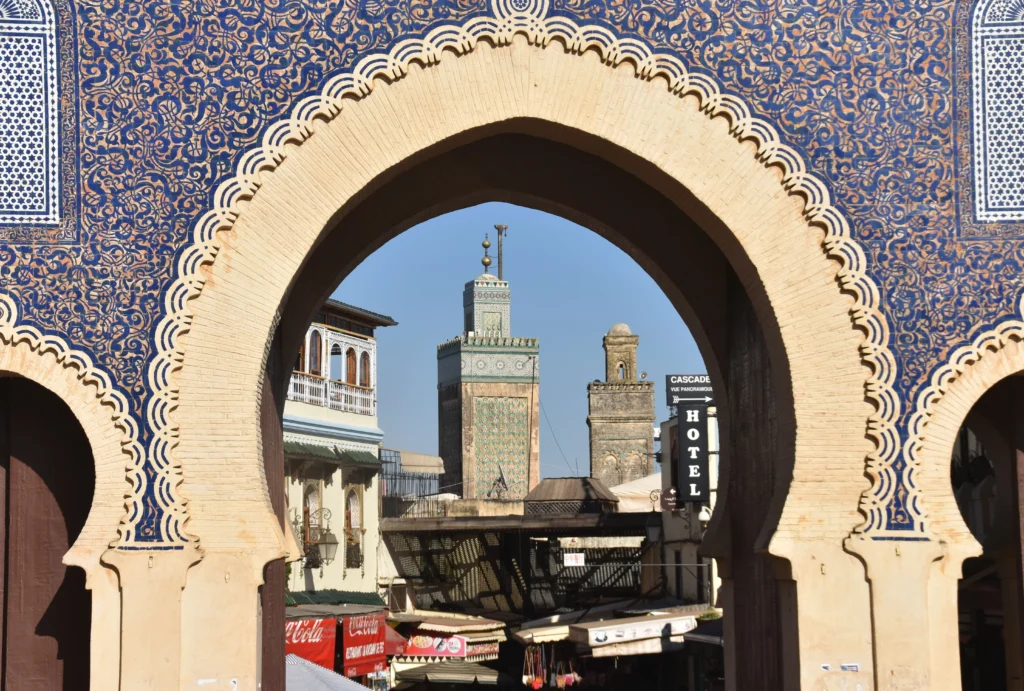
- Ferry from Tarifa to Tangier; walk the Kasbah and the medina.
- Drive to Chefchaouen in the Rif Mountains.
- Tetouan’s medina, then back toward the coast.
- Return ferry to Spain.
Ideas for the region are in our northern Morocco guide and Tangier safety guide.
8 days: the main regions
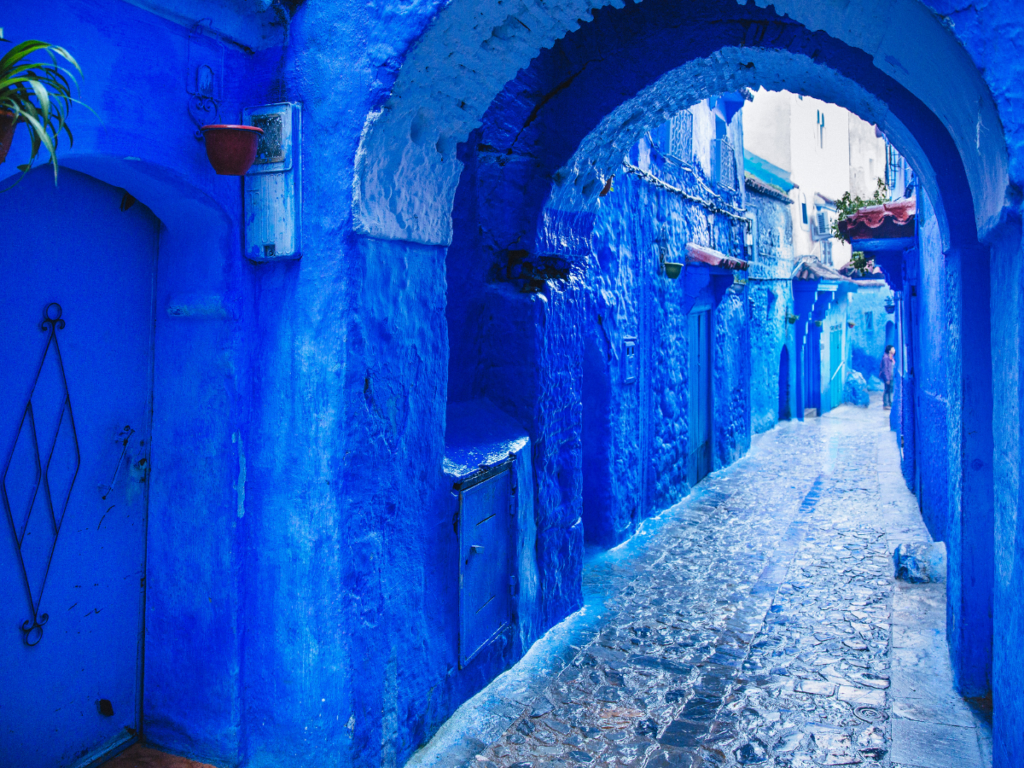
Casablanca and Rabat, Chefchaouen, Volubilis and Meknes, Fes, a night in the Sahara, the southern gorges and kasbahs, and Marrakech. Our 8 day Morocco trip from Casablanca shows a similar route and its driving times.

Student trips to Morocco from Spain
Spain is the most common starting point for European school and university groups. Groups from Madrid and Barcelona usually fly to Marrakech, Fes or Tangier, while groups from Andalusia can cross by ferry from Tarifa to Tangier (about an hour) or from Algeciras to Tanger Med. Weekend trips focus on the north; four days or more makes the Sahara possible, usually by flying in rather than driving from the ferry.
Read our guides to the ferry from Spain to Morocco and planning a Morocco tour from Spain.
Passports, visas and documents
- Passports: every student needs a valid passport. Check the validity your nationality requires.
- Visas: EU, UK, US and Canadian citizens can visit visa-free for short stays, but international students of other nationalities may need a visa even if they live in Spain or elsewhere in Europe. Check each student in our Morocco visa requirements guide.
- Minors: follow your school’s procedures and your country’s rules on consent and travel authorization for under-18s.
- Copies: keep digital and paper copies of passports, insurance and emergency contacts with every leader.
Check the entry rules for every passport in the group well before departure, using Morocco’s official e-visa portal, acces-maroc.ma, and your own government’s travel advice.
Budget: what affects the price of a student trip
Every group trip is priced on its own details, so ask for an itemized quote. The main factors are:
- Group size and the number of free places for leaders
- Trip length and the number of long driving days
- Season and school-holiday demand
- Accommodation level and room configuration
- Meals included, guides, entrance fees and optional activities such as camel rides
- Flights or ferries, which are usually booked separately
Daily spending money is modest in Morocco; see our money in Morocco guide for cash, cards and tipping.
Accommodation, transport and meals
- Accommodation: group-friendly hotels in the cities, and desert camps with shared or private tents. Ask for separate rooms for leaders near the students. Our desert camping guide explains camp types.
- Transport: a private coach or minibus with a professional driver; avoid driving after dark in rural areas.
- Meals: meat is halal as standard and vegetarian meals are easy to arrange; send allergy and dietary lists early, translated into French or Arabic if possible.
- Connectivity: local SIM or eSIM options for leaders are in our eSIM guide.
Safety and supervision
At the time of writing, the US State Department rates Morocco at Level 2, “Exercise Increased Caution”, because of terrorism risk, and the UK FCDO advises vigilance and avoiding demonstrations. Check your own government’s latest advice and complete your institution’s risk assessment. Practical measures that work well for groups:
- A buddy system and fixed meeting points in medinas and markets
- A briefing on etiquette, photography and dealing with sellers before arrival
- Water, sun protection and shade breaks, especially in the desert
- A clear plan for illness or a lost student, shared with the local team
- Emergency numbers saved: police 19, gendarmerie 177 (rural areas), ambulance and fire 15
More detail: is Morocco safe to visit? and is Merzouga safe for tourists? Make sure your group travel insurance covers medical evacuation.
Best time for student trips to Morocco
Spring (March to May) and autumn (September to November) are the most comfortable seasons for cities, mountains and the desert, and they line up with many Easter and autumn school breaks. July and August are very hot inland. During Ramadan, expected to begin around 8 February 2027, daytime services are reduced. See the best time to visit Morocco and our Ramadan guide.
Pre-departure checklist for students
- Passport valid for the trip, plus a copy
- Modest clothing covering shoulders and knees, and a warm layer for desert nights
- Comfortable walking shoes, sunglasses, a hat and sunscreen
- A small amount of cash for snacks and souvenirs
- Any personal medication, in original packaging
- A few words of Darija: “salam” (hello), “shukran” (thank you), “la, shukran” (no, thank you); see our language guide
Requesting a student trip proposal
Send us your dates, group size, students’ ages, learning goals and budget range. Our team will propose a private itinerary covering transport, accommodation, guides and activities, which you can adapt with your colleagues. We plan each trip for your group; we do not run fixed-date student departures. See our Morocco student trips, with two Sahara routes from Marrakech (5 days / 4 nights and 4 days / 3 nights), browse our private Morocco tour packages or contact us.
Frequently asked questions
How far in advance should we plan a student trip to Morocco?
Six to nine months gives time for institutional approval, passport and visa checks, a risk assessment and flight bookings. Shorter lead times are possible for small groups outside peak holidays.
Can students go to the Sahara on a short trip?
Yes, from about four days, starting in Fes or Marrakech, with one night in a Merzouga desert camp. Shorter trips are better focused on one city or northern Morocco.
Are student trips to Morocco suitable for school-age groups?
Yes, with a supervision plan, a risk assessment and an itinerary paced for younger travelers. Many groups choose four- or five-day routes with fewer long drives.
Can we combine Morocco with a trip to Spain?
Yes. Groups often cross from Tarifa to Tangier for a northern Morocco extension, or fly between Spanish cities and Marrakech, Fes or Tangier.