Last updated: 4 November 2026 · Written and reviewed by the Journey Via Morocco travel team. Prayer times and religious holiday dates change each year; check official announcements before you travel.
Is Morocco Muslim-friendly for travelers? Yes. Morocco is a Muslim-majority country where Islam shapes daily life: meat served in restaurants is halal as standard, mosques are found in every neighborhood, the call to prayer sets the rhythm of the day, and Ramadan and the Eids are national occasions. Facilities still vary from one hotel to another, so confirm specifics such as alcohol-free dining or women-only pool times in advance.
This guide is for Muslim visitors and families planning a trip: what to expect from food, prayer, accommodation and dress, how Ramadan changes travel, and the Islamic heritage that makes Morocco special.
Is Morocco Muslim-friendly? Islam in daily life
Most Moroccans are Sunni Muslims following the Maliki school of jurisprudence, and the King holds the religious title of Commander of the Faithful (Amir al-Mu’minin). Sufi traditions, zawiyas (religious lodges) and the shrines of revered figures are part of the religious landscape. For visitors, this means a country where Islamic practice is mainstream and public life adapts to it, while tourism areas also cater to non-Muslim visitors.
Halal food in Morocco
- Meat: meat sold by butchers and served in Moroccan restaurants is halal as standard. Pork is not part of Moroccan cuisine.
- Traditional dishes: tagine, couscous, pastilla, harira, grilled brochettes and fresh bread are everyday foods across the country.
- Alcohol: it is sold only in licensed hotels, bars, restaurants and some supermarkets. Many riads and medina restaurants serve no alcohol at all; if this matters to you, ask before booking.
- International chains and imported products: check labels and certification as you would at home.
Discover more about local dishes in our guide to traditional Moroccan and Berber food.
Mosques and prayer
- Mosques: you will find a mosque within walking distance almost everywhere, from city neighborhoods to Atlas villages. Muslim visitors are welcome to pray; many mosques have a women’s section.
- Prayer times: Morocco’s Ministry of Habous and Islamic Affairs publishes official prayer times on habous.gov.ma, and many apps follow them. The adhan is easy to hear in towns.
- Friday prayer: mosques are full around midday on Fridays and some shops close briefly; plan sightseeing around it.
- On the road: on long drives, such as to the Sahara, drivers stop at towns with mosques; tell your driver your prayer needs and they will plan stops.
- Wudu and prayer space: hotels and riads can usually provide a prayer mat and qibla direction if you ask.
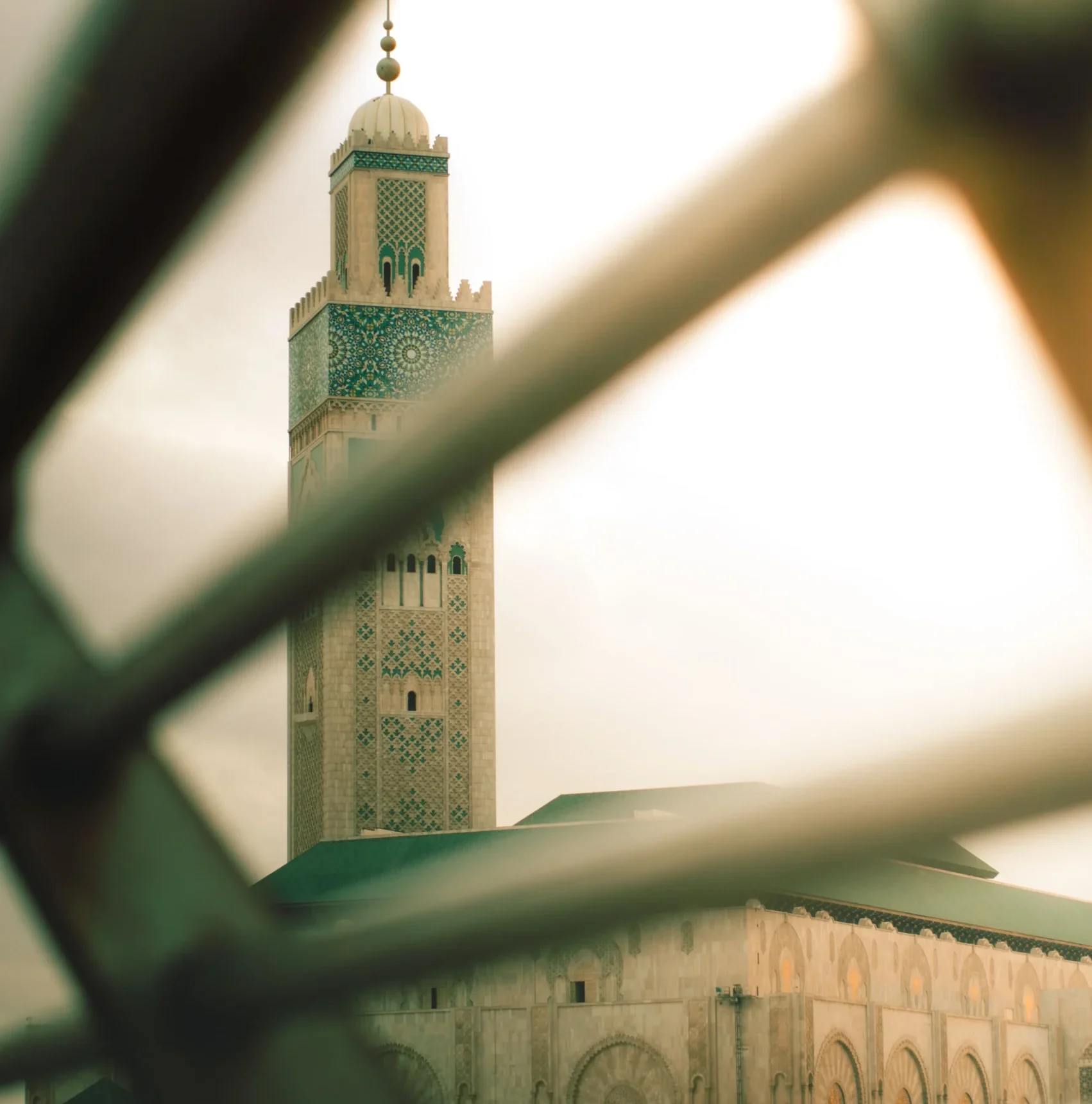
Note for mixed groups: most mosques in Morocco are open only to Muslims. Notable exceptions open to all visitors include the Hassan II Mosque in Casablanca on guided tours.
Islamic heritage to visit
| Place | Why it matters | Where |
|---|---|---|
| Hassan II Mosque | One of the largest mosques in Africa, on the ocean | Casablanca |
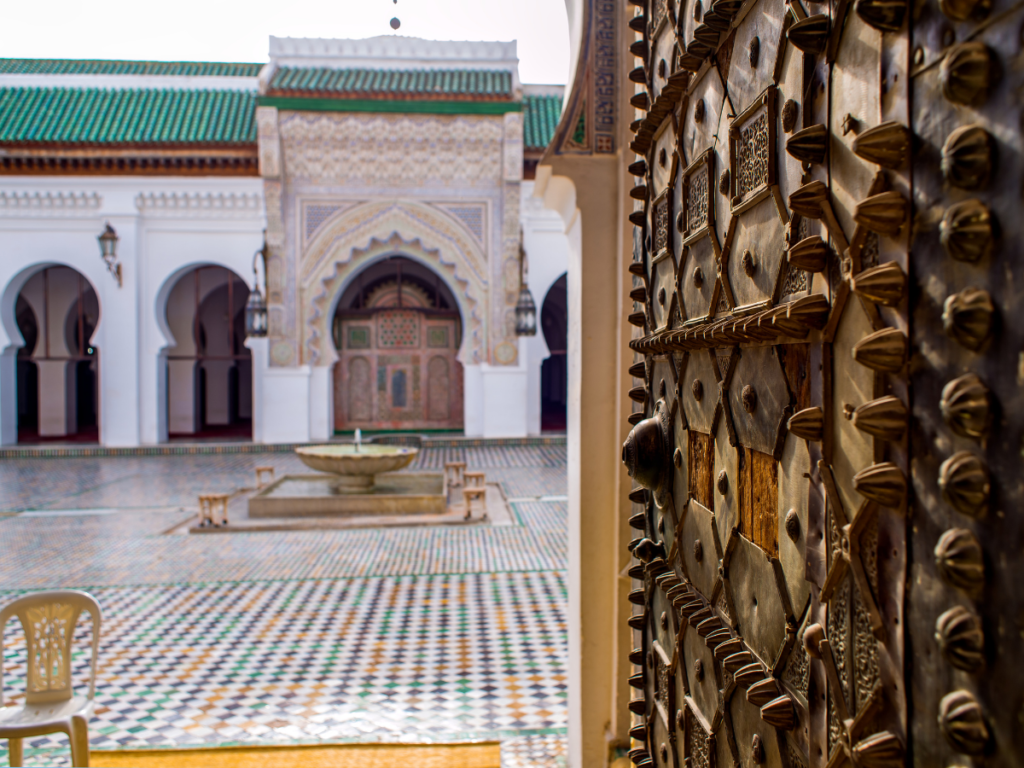
| University of al-Qarawiyyin | Founded in 859 by Fatima al-Fihri; a historic center of learning | Fes medina |
| Zawiya of Moulay Idriss II | Shrine of the founder of Fes | Fes medina |
| Moulay Idriss Zerhoun | Hilltop town around the shrine of Moulay Idriss I | Near Meknes and Volubilis |
| Koutoubia Mosque | Marrakech’s landmark minaret | Marrakech |
| Madrasas | Bou Inania and Al-Attarine (Fes), Ben Youssef (Marrakech) | Fes and Marrakech |
Fes is the heart of Morocco’s Islamic scholarly tradition; our private tours from Fes include Moulay Idriss and Volubilis.
Traveling during Ramadan
Ramadan is a special time to visit as a Muslim traveler: iftar at sunset, busy evenings, Taraweeh prayers in packed mosques and a strong community atmosphere. Ramadan 2027 is expected to begin around 8 February 2027; the exact date is announced by the Ministry of Habous and Islamic Affairs after the moon sighting.
- Many cafes and restaurants serving locals close during the day; tourist restaurants and hotels usually stay open.
- Opening hours for shops and sites are often shorter.
- Long drives are tiring while fasting; split them into shorter days.
- Book Eid al-Fitr travel early, as many Moroccans travel to their families.
Our full guide to Ramadan in Morocco covers opening hours and etiquette.
Muslim-friendly accommodation
There is no national halal-certification scheme for hotels, so facilities differ. Questions worth asking before you book:
- Is the property alcohol-free, or does it serve alcohol in public areas?
- Can you provide a prayer mat and the qibla direction?
- Can you serve suhoor and iftar during Ramadan?
- Are there separate or women-only times for the pool, spa or hammam?
- Are family rooms or connecting rooms available?
Traditional riads are often a good fit: small, family-run, frequently alcohol-free, and built around private courtyards.
Clothing and cultural etiquette
- There is no legal dress code, but modest clothing is the norm, and many Moroccan women wear a headscarf while others do not.
- Public hammams are separated by gender, either in separate sections or at different times.
- Public displays of affection are uncommon.
- Greetings matter: “As-salamu alaykum” is the everyday greeting and is warmly returned.

Muslim family travel in Morocco
Morocco suits Muslim families well: halal food everywhere, a family-centered culture and a wide range of experiences, from Marrakech’s souks and gardens to camel rides in the Sahara. Our guides to the best places in Morocco for family holidays and Morocco with kids help you plan, and a private driver makes prayer stops and family pacing easy.
Practical information
- Visas: rules depend on your passport; see our Morocco visa requirements guide.
- Safety: read is Morocco safe to visit.
- Language: Moroccan Arabic (Darija) and Tamazight are spoken daily, and Standard Arabic is widely understood; see our language guide.
- Weekend: the working week runs Monday to Friday, with Friday afternoons quieter after midday prayer.
Frequently asked questions
Is all food in Morocco halal?
Meat served in Moroccan restaurants and sold by local butchers is halal as standard, and pork is not part of Moroccan cuisine. Imported products and international chains should be checked as you would elsewhere.
Can Muslim tourists pray in Moroccan mosques?
Yes. Muslim visitors are welcome in mosques across the country, including for Friday prayer. Many mosques have a women’s section.
Is alcohol common in Morocco?
Alcohol is available only in licensed venues and some supermarkets. Most everyday restaurants, cafes and many riads do not serve it.
Is Morocco a good destination during Ramadan?
Yes, for Muslim travelers it can be a highlight, with iftar gatherings and lively evenings. Daytime services may be reduced, so plan a gentler pace.
Plan a Muslim-friendly trip
Our team can plan prayer stops, alcohol-free accommodation, halal dining and family-paced routes; contact us with your dates. For routes, destinations and the Sahara in more detail, read our complete guide to halal holidays in Morocco.