
Food in Morocco tells a deeper story once you look past the tourist restaurants, and nowhere is that more true than with Amazigh cuisine, the traditional food of the Berber people who have shaped Moroccan cooking for thousands of years. As an Amazigh guide raised in a village in the High Atlas, I learned to cook couscous by watching my mother roll it by hand before I learned to read. This guide shares what Berber people actually eat, where these dishes come from, and how you can taste real Amazigh food on a trip through Morocco, not the version made for tour buses.
What Makes Amazigh Cuisine Different
Most visitors arrive in Morocco expecting spicy food. Amazigh cooking is the opposite. It relies on slow cooking, layered spices like saffron, ginger, and cumin, and ingredients pulled straight from the land: barley, olives, argan oil, almonds, dates, and mutton. Nothing is rushed. A proper tagine can take two to three hours over low coals, and Friday couscous is often started the night before.
What makes it different from restaurant “Moroccan food” in city centers is context. Amazigh food is cooked for family, for guests, and for hospitality, not for a menu. When you eat with an Amazigh family in the Atlas Mountains or a nomad camp in the Sahara, you’re eating food shaped by geography and generations, not a fixed recipe copied from a cookbook.
What Do Berber People Eat?
Diet changes depending on where in Morocco you are. In the mountains, meals lean on barley, wheat, walnuts, and mutton, food built for cold nights at altitude. In the Sahara, dates, camel milk, and dried meats dominate, chosen because they keep well in extreme heat. Along the coast near Essaouira, Amazigh cooking incorporates more fish and seafood.
What stays consistent everywhere is the format. Meals are eaten from a shared plate, usually with bread instead of cutlery, and guests are always served first and most generously. Refusing food or tea in an Amazigh home is considered impolite, even if you’re full.
Traditional Berber Food: 15 Amazigh Dishes
Here are the dishes I’d put in front of you if you visited my family in the Atlas:
- Tagine, the everyday version, not the tourist one
- Amazigh couscous with seven vegetables
- Amlou, a spread of almonds, argan oil, and honey
- Taguella, bread baked directly under hot sand and coals
- Berkoukes, hand-rolled pearl couscous soup
- Rfissa, shredded msemen bread with lentils and chicken
- Harira, shared across Morocco but common in Amazigh homes too
- Tikta, a wild mountain greens dish specific to the Atlas
- Bissara, a thick fava bean soup
- Zaalouk, cooked eggplant and tomato salad
- Msemen, folded square flatbread
- Baghrir, semolina pancakes served with honey and butter
- Mrouzia, sweet lamb tagine with almonds and raisins for feast days
- Amazigh mint tea, poured from height, three glasses minimum
- Dates and almonds, the traditional Sahara welcome plate
- Food in Morocco: Traditional Berber
Amazigh Couscous
Real Amazigh couscous is steamed by hand, three separate times, over a simmering broth of vegetables and meat. It’s never boiled from a packet. Friday is couscous day in most Amazigh households across Morocco, a ritual that has nothing to do with tourism and everything to do with gathering the family together. Rolling the grain by hand takes years of practice, and it’s one of the first skills passed down to daughters in Amazigh homes.
Berber Tagine
The tagine takes its name from the cone-shaped clay pot, not from one fixed recipe. In Amazigh kitchens, it’s built in layers: meat at the bottom, vegetables stacked on top, then cooked slowly over coals or a low flame. Each village has its own version. In the Atlas, tagines lean heavier, with more root vegetables and preserved lemon. In the Sahara, they’re lighter, often built around dates and dried meat.
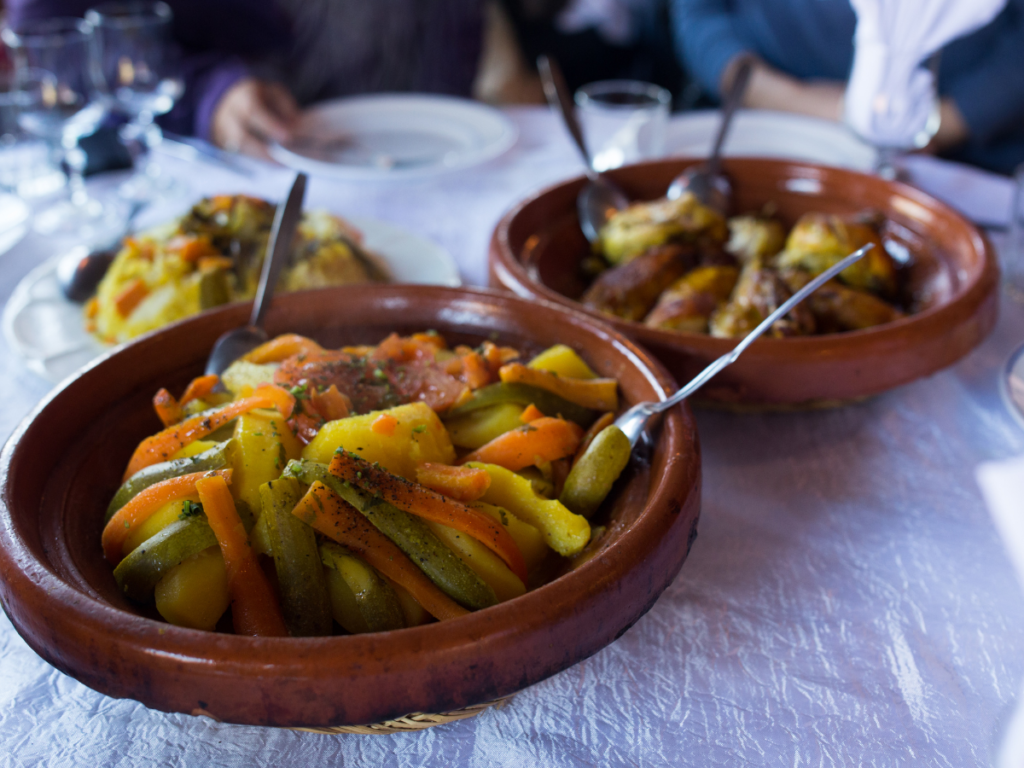
If you’re planning a Morocco desert tour, this is one dish worth trying in more than one region, because the differences are real.
Amlou: Amazigh Almond and Argan Spread
Amlou is made from roasted almonds, pure argan oil, and honey, ground by hand into a paste. It’s one of the clearest, most exportable examples of Amazigh food culture. Women’s cooperatives in the Souss region near Essaouira and Agadir still produce it using traditional grinding stones, and buying directly from these cooperatives supports the same Amazigh communities who’ve made it for centuries.
Amazigh Bread
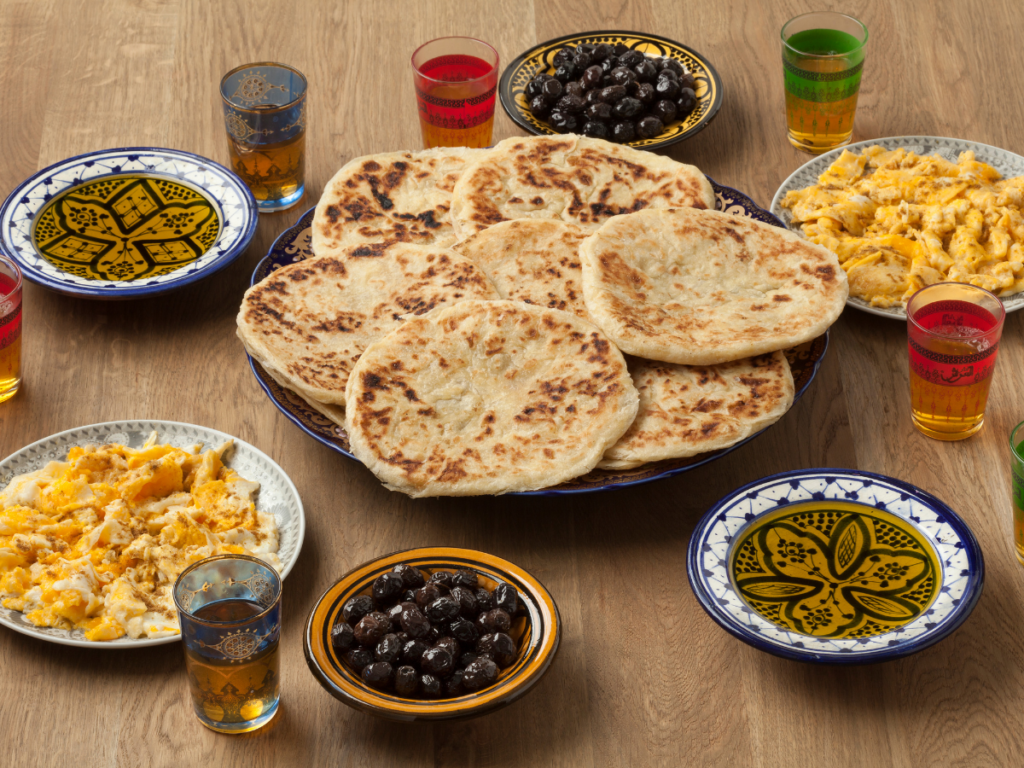
Bread holds a near-sacred place in Amazigh culture. It’s baked daily, often in a shared village oven that several families use in rotation, and wasting it is considered disrespectful. Taguella, baked directly in hot desert sand and coals, is a version most visitors never taste unless they’re on a proper Sahara camp experience rather than a hotel stay.
Berber Tea and Moroccan Mint Tea
What most travelers know as “Moroccan mint tea” has deep roots in Amazigh hospitality traditions that predate the branding. It’s green tea, fresh mint, and sugar, poured from height to build foam on top. In an Amazigh home, tea isn’t a drink, it’s a ritual, and it’s one of the first things offered to any guest, no matter how briefly they’re staying.
Amazigh Food in the Atlas Mountains
Atlas cuisine is heartier, built around barley, walnuts, and wild mountain herbs like thyme and wild mint. This is where dishes like tikta come from, along with thicker, slower-cooked tagines designed for cold nights at altitude. Villages here still bake bread in communal ovens, and staying in a family guesthouse rather than a hotel is the best way to experience it firsthand.
Berber Food in the Sahara
Desert food changes with the climate and the logistics of desert life. Dates, camel milk, dried meats, and bread baked in sand dominate, chosen because they travel well and last in extreme heat. Meals in nomad camps are simple but generous, often centered around one shared tagine and endless glasses of tea after sunset.
Amazigh Food in Merzouga
Merzouga sits at the edge of the Sahara, and its food reflects both desert and oasis influences. Desert camps here typically serve tagine cooked over open fire, followed by mint tea as the closing ritual after a day exploring the dunes. From my experience guiding travelers through Merzouga, this is often the meal people remember most from their entire Morocco trip, not because it’s fancy, but because of where and how it’s eaten, under open sky, after a camel trek, with no restaurant menu in sight.
Amazigh Wedding Food
Food at these celebrations is a direct expression of generosity and family status, and preparation can begin days in advance. If you’re ever invited to one during your travels, consider it a genuine honor.
Best Time to Try Amazigh Food in Morocco
Amazigh food is available year-round, but certain seasons make the experience richer:
- Spring (March to May): Fresh greens and herbs appear in Atlas dishes like tikta.
- Autumn (September to November): Harvest season, best for almonds, walnuts, and argan oil production.
- Winter: Heartier tagines and mrouzia, especially around Amazigh New Year celebrations in January.
- Summer: Desert routes are hot but early morning and evening meals in Sahara camps remain a highlight.
What Travelers Can Expect
Don’t expect restaurant-style plating. Amazigh meals are communal, often eaten from one central dish with bread as your utensil. Portions are generous, and second helpings are expected, not optional. Meals can run long, especially in family homes, where conversation matters as much as the food itself.
Common Mistakes to Avoid
- Assuming all “Moroccan food” is the same as Amazigh food. City restaurant menus often flatten regional differences.
- Refusing tea or bread. It’s read as impolite in Amazigh households, even if you’re full.
- Skipping rural stops on a desert route. The best Amazigh food rarely comes from hotel restaurants.
- Expecting spicy food. Amazigh cooking is about depth of spice, not heat.
- Not asking your guide questions. Most Amazigh guides are happy to explain a dish’s history if you ask.
How to Experience Real Amazigh Food on a Morocco Tour
The most reliable way to taste authentic Amazigh cuisine is through a private, locally guided desert route, ideally one that stops in Atlas villages and Sahara camps rather than only tourist-facing restaurants. At Journey Via Morocco, we’re an Amazigh-owned tour operator, and our Marrakech to Merzouga routes are built around real stops: family-run guesthouses in the Atlas, women’s argan cooperatives near the Souss valley, and desert camps where dinner is cooked the traditional way, over fire, not on a hotel buffet line. Because our guides are Amazigh themselves, the meals aren’t staged. They’re the same food we grew up eating.
Frequently Asked Questions
What is traditional Berber food called? It’s called Amazigh cuisine. “Berber” is a term used mostly outside Morocco, while Amazigh is what the people call themselves and their food and culture.
What do Berbers eat for breakfast? A typical breakfast includes bread such as msemen or khobz, amlou or olive oil for dipping, and mint tea. In the Sahara, dates are often added.
Is Berber food spicy? Not usually. Amazigh cooking focuses on slow cooking and layered spices like ginger, saffron, and cumin rather than heat or chili.
Where can I try authentic Amazigh food in Morocco? The most authentic experiences come from Atlas Mountain villages, Sahara desert camps, and Amazigh-run tour operators, rather than restaurants in city centers aimed at tourists.
Can I try Amazigh food on a private Morocco desert tour? Yes. Routes like Marrakech to Merzouga pass through Atlas villages and desert camps where Amazigh families still cook traditionally, and a local guide can arrange stops most travelers wouldn’t find on their own.
Ready to Taste Real Amazigh Food in Morocco?
If you want to experience Amazigh cuisine the way it’s actually eaten, not staged for tourists, a private, locally guided route is the way to do it. At Journey Via Morocco, we design customized itineraries through the Atlas Mountains and Sahara that include real meals with real Amazigh families, alongside the landscapes and culture that make Morocco worth visiting. Reach out and we’ll build a route around the food, the routes, and the pace that fit your trip. journeyviamorocco.com
