Last updated: 3 November 2026 · Written and reviewed by the Journey Via Morocco travel team. Travel advisories and entry rules change, so check the official sources linked below before you travel.
Is Morocco safe for Jewish travelers? Jewish travelers visit Morocco regularly, and the country’s synagogues, mellahs (historic Jewish quarters) and cemeteries are maintained and open to visitors. Official US advice rates Morocco at Level 2, “Exercise Increased Caution”, for terrorism, without a separate warning for Jewish visitors. Israeli citizens face different entry rules and their own government’s travel warnings, so check those separately.
Morocco’s Jewish history is part of the country’s story, not a footnote to it, and Jewish heritage journeys are among the trips we plan with care. This guide separates three things that are often mixed together, Jewish identity, Israeli nationality and politics, and then covers the main heritage sites and the practical details that make a visit go smoothly.
In this guide
- What official sources say
- Jewish identity, Israeli nationality and politics
- Morocco’s Jewish history
- Jewish heritage sites by city
- Religious practice, symbols and etiquette
- Practical travel advice
- Frequently asked questions
Is Morocco safe for Jewish travelers? What official sources say
| Source | What it says | Applies to |
|---|---|---|
| US State Department | Morocco: Level 2, Exercise Increased Caution, due to terrorism | US citizens, regardless of religion |
| UK FCDO | Be vigilant about terrorism; avoid demonstrations | UK nationals |
| Israel’s National Security Council | Has maintained an elevated travel warning for Morocco since October 2023; check its website for the current level | Israeli citizens |
| Moroccan entry rules | Israeli passport holders have needed an electronic visa; check the official portal before booking | Israeli citizens |
In short: for a Jewish traveler holding a US, UK, EU or Canadian passport, the official advice is the same as for any other visitor from those countries. Israeli citizens should follow their own government’s guidance, which has been more cautious since late 2023, and confirm current entry requirements.
Jewish identity, Israeli nationality and politics: why the difference matters
Questions about Jewish travel to Morocco often blend three separate issues. Keeping them apart gives a clearer picture.
- Jewish identity: Judaism has been part of Moroccan life for well over two thousand years. Morocco’s 2011 constitution names the Hebraic heritage among the components of the national identity, synagogues and cemeteries across the country are cared for, and Jewish visitors come every year for heritage tours and pilgrimages.
- Israeli nationality: Morocco and Israel re-established diplomatic relations in December 2020. Israelis are a separate case from Jewish travelers of other nationalities, with their own entry requirements and their own government’s travel warnings.
- Politics: Since October 2023, events in the Middle East have led to public demonstrations in Moroccan cities. These are political protests, mostly peaceful, and both the US and UK advise all visitors to avoid demonstrations. They are a reason to stay aware of local news, not a statement about how Jewish visitors are received at heritage sites.
We do not make blanket claims in either direction. Most visits to Jewish heritage sites are calm and routine; sensible discretion in busy public places during periods of tension is a reasonable choice, as it would be in many countries.
A short history of Morocco’s Jewish community
Jewish communities lived in what is now Morocco long before the arrival of Islam, and their numbers grew after the expulsions from Spain and Portugal at the end of the 15th century. Many Moroccan cities developed a mellah, a Jewish quarter usually built close to the royal palace; the first was created in Fes in the 15th century. Communities lived not only in the imperial cities but also in Atlas villages and the oases of the south.
In the second half of the 20th century, most Moroccan Jews emigrated, mainly to Israel, France and Canada. Today a small community, numbering a few thousand people and concentrated in Casablanca, maintains synagogues, schools and community institutions. Hundreds of thousands of people around the world trace their family roots to Morocco, and many return to visit ancestral towns and family graves.
Jewish heritage sites in Casablanca, Marrakech, Fes and Essaouira
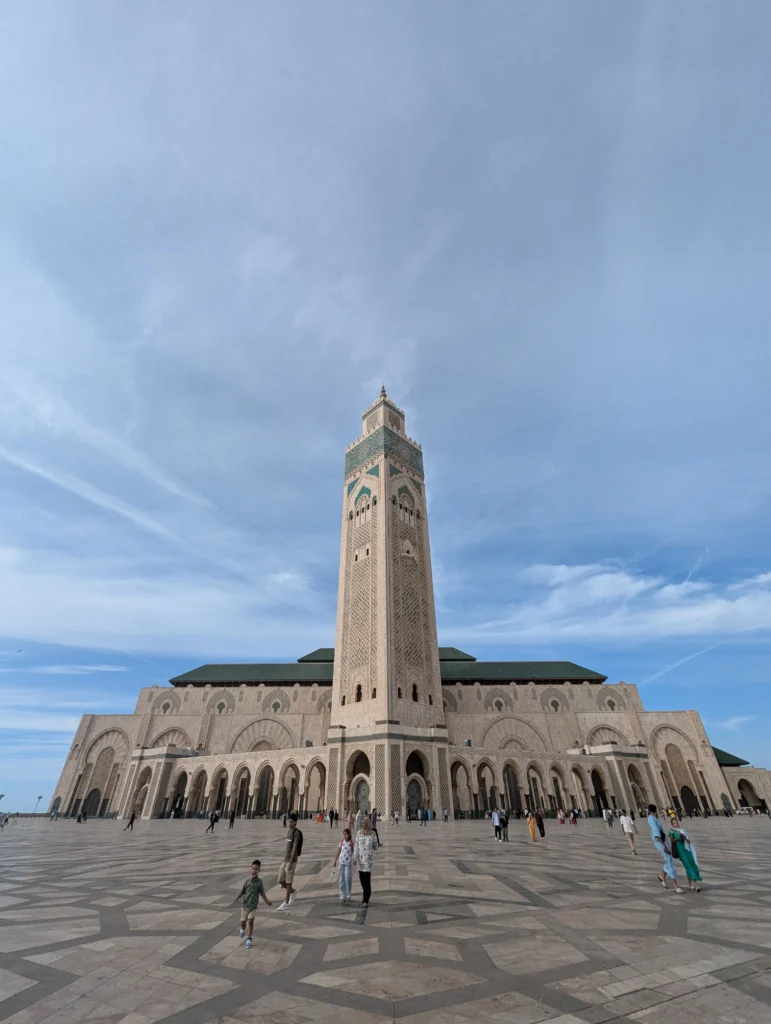
Casablanca
- Museum of Moroccan Judaism: opened in 1997 in a villa in the Oasis district, and often described as the only Jewish museum in the Arab world. Its collection covers religious objects, costume, documents and daily life.
- Temple Beth-El: the city’s best-known synagogue, admired for its stained glass and chandeliers.
- Casablanca is home to most of Morocco’s present-day Jewish community, and the best place for kosher food. Read our guide to Casablanca safety.
Marrakech
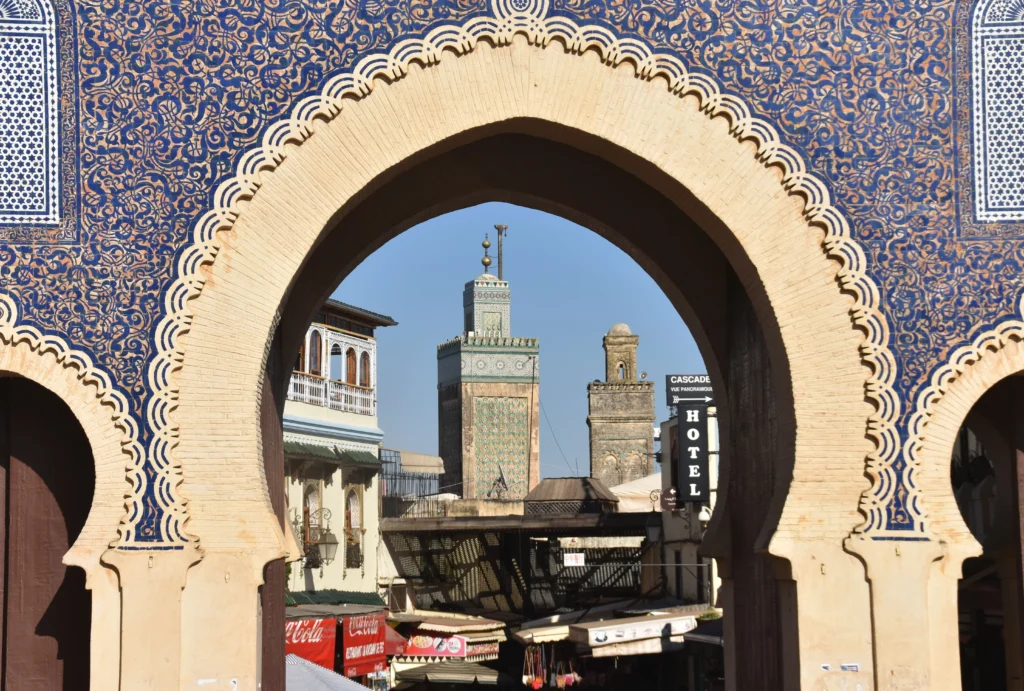
- The Mellah: the historic Jewish quarter beside the Bahia and Badi palaces, with its narrow lanes and spice market.
- Lazama Synagogue: a working synagogue around a tiled courtyard, open to visitors outside services.
- Miara Jewish Cemetery: one of the largest Jewish cemeteries in Morocco, with thousands of whitewashed graves.
- See also our guide is Marrakech safe for Americans.
Fes
- The Mellah of Fes: Morocco’s first mellah, created in the 15th century next to the Royal Palace, with distinctive balconied houses.
- Ibn Danan Synagogue: a 17th-century synagogue that has been restored and can be visited.
- Jewish Cemetery of Fes: rows of white tombs on the edge of the mellah, including the graves of revered rabbis.
- Explore Fes with our private tours from Fes.
Essaouira
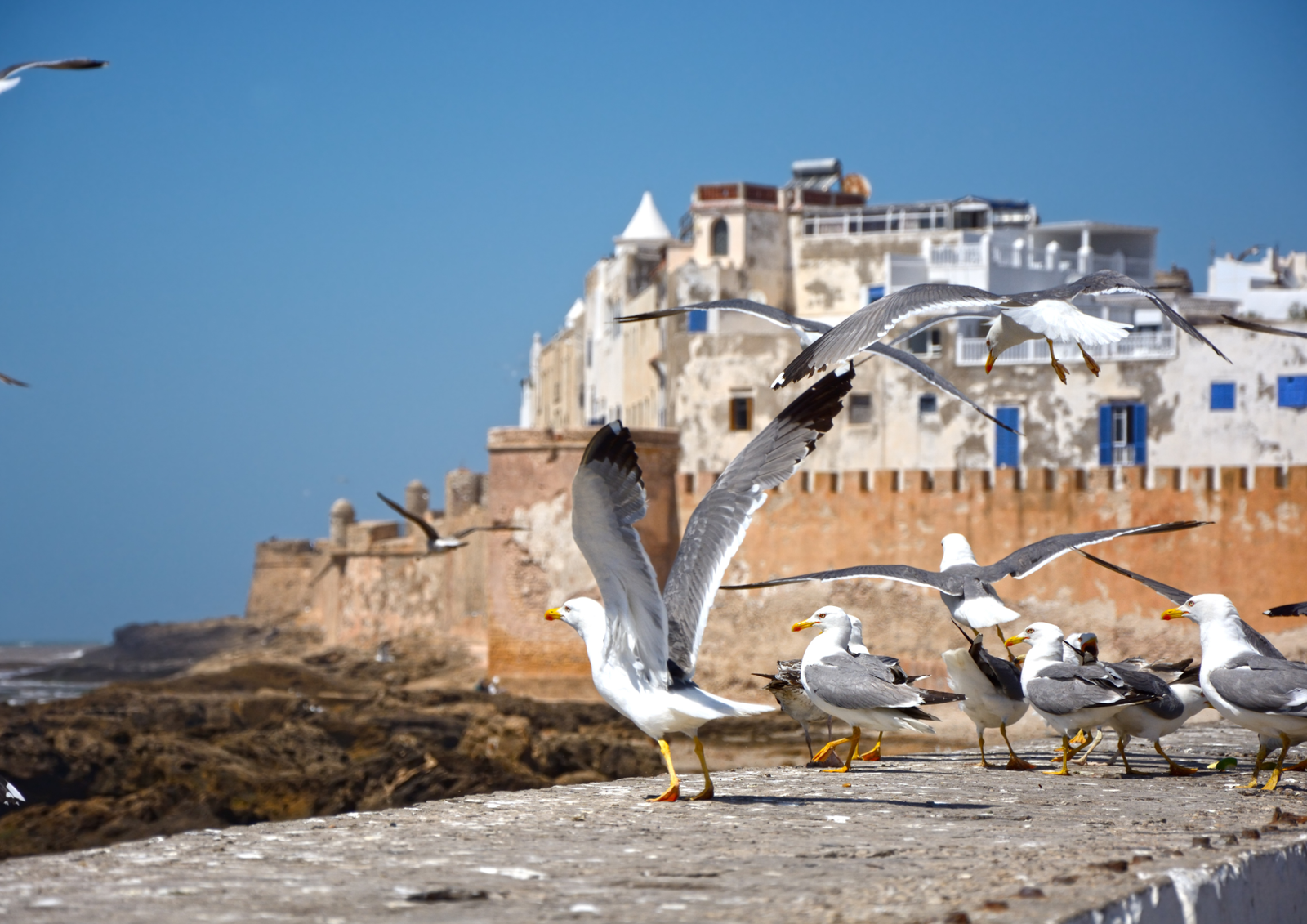
In the 19th century, Jews made up a large share of Essaouira’s population, and the town remains one of the most rewarding places to explore Jewish heritage.
- Bayt Dakira (“House of Memory”): a cultural and spiritual center in a restored house, inaugurated in 2020, which includes the restored Slat Lkahal synagogue.
- Rabbi Haim Pinto Synagogue and the Jewish cemetery: the tomb of Rabbi Haim Pinto draws pilgrims for an annual hiloula.
- Plan your visit with our list of things to do in Essaouira.
The south: Rissani, Erfoud and beyond
The oases of the Tafilalet near the Sahara were once home to Jewish communities too. Our Merzouga Jewish heritage tour combines sites around Rissani and Erfoud with a night in the dunes.
Religious symbols, observance and cultural considerations
- Kippah and religious symbols: wearing a kippah or a Star of David is a personal decision. Inside synagogues and heritage sites it is entirely normal. In crowded public places, some travelers choose to wear a cap over a kippah, particularly during periods of regional tension; this is a matter of discretion rather than a legal requirement.
- Shabbat and holidays: synagogues may be closed to tourist visits on Shabbat and Jewish holidays, and caretakers keep variable hours. Plan visits for weekdays and confirm times locally.
- Kosher food: Casablanca has the most kosher options. Elsewhere, choices are limited; arrange meals in advance through your hotel, the local community or your tour operator, and consider vegetarian meals as a fallback.
- Visiting sites: many synagogues and cemeteries are looked after by caretakers; dress modestly, ask before photographing people, and a small donation toward upkeep is customary.
- Hiloulot: pilgrimages to the tombs of revered rabbis take place on set dates each year and are major community events; they are busy, so book transport and accommodation early.
Jewish heritage tourism in Morocco
A heritage trip can be a few days in one city or a full journey linking Casablanca, Fes, Marrakech, Essaouira and the south. A private itinerary has practical advantages: a guide who knows the caretakers and opening times, flexibility around Shabbat, kosher meal planning, and a lower profile than a large group. Our Jewish heritage tours in Morocco show how a 14-day route can work.
Practical travel advice for Jewish visitors
- Check the latest advice from your own government before you travel; Israeli citizens should also check the National Security Council’s current level.
- Check entry rules for your passport; see our Morocco visa requirements guide and the official Moroccan e-visa portal, acces-maroc.ma.
- US citizens can enroll in the Smart Traveler Enrollment Program.
- Follow local news, and avoid demonstrations and large political gatherings.
- Confirm synagogue and museum opening times before you go, especially around Shabbat and holidays.
- Plan kosher meals in advance if you need them.
- Save the emergency numbers: police 19, gendarmerie 177 (rural areas), ambulance and fire 15.
Frequently asked questions
Is it safe for Jews to visit Morocco right now?
Jewish travelers continue to visit Morocco and its heritage sites. US and UK advice applies to Morocco as a whole and does not single out Jewish visitors. Israeli citizens should follow their own government’s travel warnings, which have been elevated since October 2023. Check current advice before you travel.
Can Israelis travel to Morocco?
Israeli citizens have been able to visit Morocco since relations were re-established in 2020, but they have needed an electronic visa, and direct flights have been affected since late 2023. Check the official e-visa portal and current flight options before booking.
Are synagogues in Morocco open to visitors?
Many are, including the Lazama Synagogue in Marrakech, the Ibn Danan Synagogue in Fes, Temple Beth-El in Casablanca and Slat Lkahal in Essaouira. Opening times vary and some close on Shabbat, so confirm locally.
Can I wear a kippah in Morocco?
There is no rule against it. It is entirely normal at synagogues and heritage sites; in busy public places, some travelers choose to cover it with a cap during periods of regional tension. It is a personal choice.
Where can I find kosher food in Morocco?
Casablanca has the widest choice. In Marrakech, Fes and Essaouira options are limited, so arrange meals in advance with your hotel, the local Jewish community or your tour operator.
Official sources
- US Department of State: Morocco travel advisory
- UK FCDO: Morocco safety and security
- Kingdom of Morocco: official e-visa portal
- US Smart Traveler Enrollment Program (STEP)
If you would like help planning a Jewish heritage journey, from synagogue visits to kosher meals and Shabbat timing, contact our team.