
Every week our team in Marrakech answers the same message from a woman planning her first trip: is Morocco a good idea for me, traveling alone or with friends? It is a fair question. Morocco travel for women is very doable and often deeply rewarding, but it does come with a learning curve: the attention in busy medinas, the decisions about what to wear, and the small daily choices that make a trip calmer.
This guide is written by a locally owned agency that works with female travelers from the USA, the UK, Europe, Australia and Asia all year. It covers safety, dress, how to deal with harassment, how to move through the souks with confidence, which kind of riad to choose, and when a private tour or driver makes the most sense. No scare stories, no sugar-coating, just what we tell our own guests.
Is Morocco safe for women? Yes, for most women Morocco is a safe and welcoming destination, especially in Marrakech, Fes, Chefchaouen, Essaouira and the Sahara. The main issue is unwanted attention, such as comments and persistent touts, not violent crime. Modest dress, a confident pace, well-reviewed riads and a local driver or guide for longer routes reduce it a lot.
What Morocco travel for women is really like
Morocco is a conservative, mostly Muslim country, but it is also one of the most visited destinations in Africa, and women travel here in large numbers: solo backpackers, mother-and-daughter trips, groups of friends, honeymooners and older travelers. You will see Moroccan women everywhere, working in banks, driving taxis in some cities, running cooperatives and guiding in museums.
What surprises many visitors is the volume of interaction in tourist areas. In Jemaa el-Fna, the Fes el-Bali souks or the road up to the Bahia Palace, you will hear “bonjour”, “where are you from?” and offers of help or directions every few minutes. Most of it is commercial, some of it is flirtatious, and a small part can feel intrusive. Outside the big medinas, in the Atlas villages, the Draa Valley or the desert around Merzouga, the pace is far calmer and hospitality is the norm.
Official sources say the same thing in more formal language. The U.S. State Department’s Morocco travel advisory asks visitors to exercise increased caution and notes that harassment of women is among the most commonly reported issues, while Australia’s Smartraveller advice for Morocco mentions unwanted attention at markets, beaches and tourist sites. Read them before you go, then plan around them.
What to wear in Morocco as a woman
There is no legal dress code for visitors, and you will see everything from jeans to maxi dresses. Still, how you dress has a real effect on how much attention you receive, especially in the medinas and rural areas. Our simple rule: cover shoulders and knees, choose loose rather than tight, and keep a light scarf in your bag.
Easy outfits that work everywhere
- Loose linen trousers or a midi or maxi skirt with a T-shirt or long-sleeved blouse.
- A lightweight cardigan, kimono or shirt to throw over a tank top in the medina.
- A large scarf or pashmina: useful for the sun, dust in the desert, cool evenings and visiting religious sites from the outside.
- Comfortable closed shoes or sturdy sandals; medina lanes are uneven and sometimes wet.
- Swimwear is fine at riad pools, hotel pools and beach resorts like Agadir or Taghazout; cover up when you leave the pool area.
Headscarves are not expected from non-Muslim visitors. Non-Muslims cannot enter most active mosques in Morocco anyway; the Hassan II Mosque in Casablanca is the well-known exception, with guided visits where covered shoulders and knees are expected.
Seasons matter too. From December to February the Atlas and desert nights are cold, so pack layers; in July and August Marrakech is very hot, and breathable long sleeves are often more comfortable than bare arms.
Handling harassment and unwanted attention
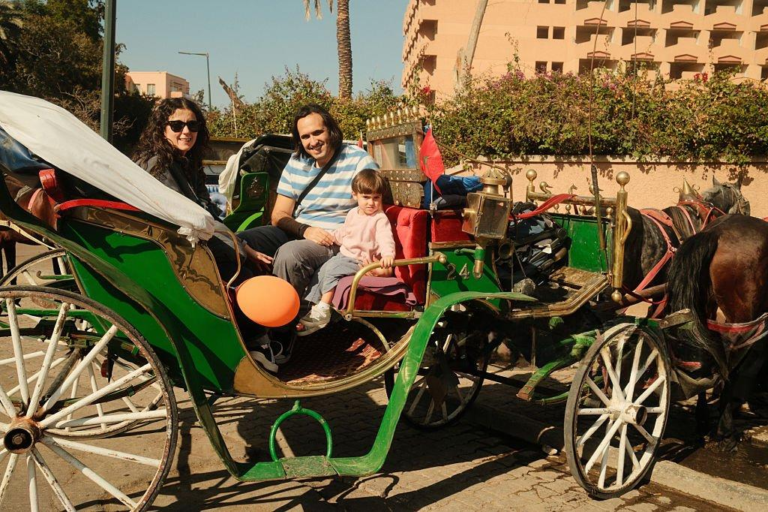
Most unwanted attention in Morocco is verbal and stops once it is clear you are not interested. Moroccan law 103-13, in force since 2018, criminalizes sexual harassment in public spaces, and the tourist police (Brigade Touristique) patrol the main medinas of Marrakech and Fes. The strategies below are the ones our female guides use themselves.
- Keep walking. A polite “la, shukran” (no, thank you) without stopping is usually enough. Long explanations invite conversation.
- Avoid unofficial guides. Young men offering to show you the way, or telling you a street is “closed”, are usually leading you to a shop. Use an offline map or ask a shopkeeper or a woman.
- Use body language. Sunglasses, a purposeful pace and no prolonged eye contact reduce approaches noticeably.
- Raise your voice if needed. If someone touches you or will not leave, say loudly “hchouma” (shame on you) or “safi” (enough). Bystanders almost always step in.
- Know the numbers. Police in cities: 19. Royal Gendarmerie outside cities: 177. Your riad host and our office can help you report anything.
A tip from our guides: if you feel followed in the medina, step into a pharmacy, a café or a carpet shop with women inside and ask for help. Shopkeepers know their streets, and most are genuinely protective of visitors.
How to handle the medinas with confidence
The medinas of Fes, Marrakech, Tetouan and Meknes are UNESCO-listed labyrinths, and getting a little lost is part of the charm. Getting badly lost at dusk is not. These habits make a big difference:
- Take a half-day guided walk on your first morning. An official licensed guide (carrying a badge from the Ministry of Tourism) shows you the main landmarks, so you can explore alone afterwards with a mental map.
- Learn your riad’s nearest landmark. A gate (bab), a fountain or a mosque. Ask your riad to send a staff member to meet you on the first evening.
- Plan evenings. Main squares and streets stay busy until late, but quiet residential lanes empty after dark. Use a petit taxi or ask your riad to walk you back.
- Shop without pressure. Looking is free. Say early that you are “just looking”, and only negotiate if you actually want to buy.
- Carry small change. Coins and 20-dirham notes make tipping and small purchases quick, so you are not pulling out a full wallet.
Women-friendly riads and where to stay
Where you stay shapes your experience more than almost anything else. A good riad becomes your safe base: staff who greet you by name, walk you to the nearest taxi stand and explain which streets to avoid. Here is what we look for when we book accommodation for female travelers:
| What to look for | Why it matters |
|---|---|
| Location near a main street or gate | Shorter walks through quiet alleys at night |
| 24-hour reception or night guardian | Someone always answers the door |
| Recent reviews from solo women | The most honest signal of how you will be treated |
| Airport pickup offered | No negotiating with taxis on arrival |
| Rooftop or courtyard dining | Relaxed evenings without going out |
| Women-run or women-managed | Increasingly common in Marrakech, Fes and Essaouira |
In Marrakech, areas such as Riad Zitoun, Mouassine and the streets near Dar el Bacha are central and lively. In Fes, riads near Bab Boujloud or the Batha area are easy to reach by car. Essaouira and Chefchaouen are compact and relaxed, and are often the places solo women say they enjoyed most.
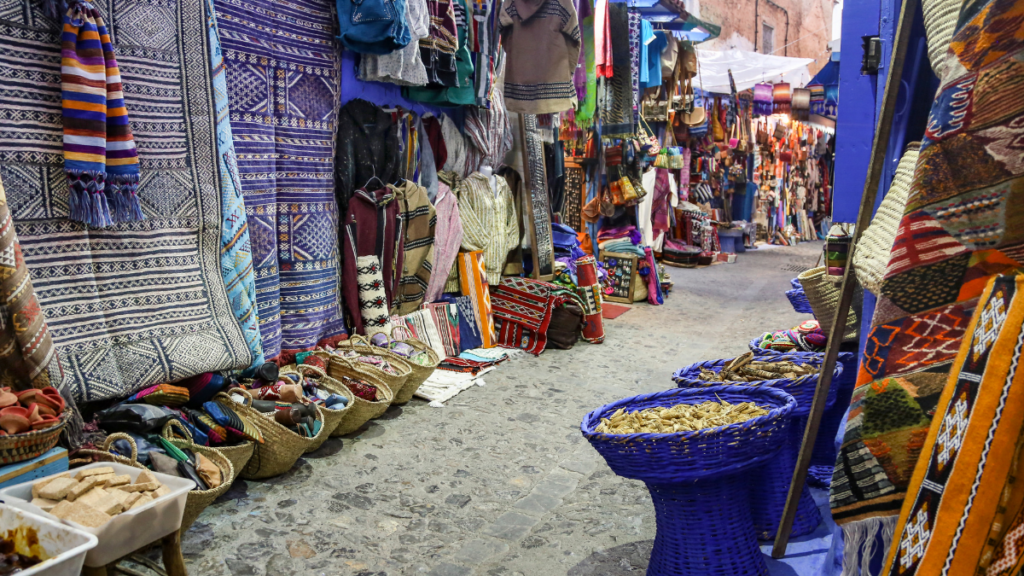
Why many women choose private tours in Morocco
You can travel Morocco independently by train and bus, and many women do. But some routes, like the long drive over the High Atlas to the Sahara or a loop through the Middle Atlas from Fes, are much easier with a private driver. A private tour means no group schedule, no shared minibus with strangers and a driver who knows exactly which café has clean restrooms in Tinghir.
Our drivers are licensed, experienced on mountain roads, and used to traveling with solo women, mothers with daughters and groups of friends. They stay in staff quarters at hotels and camps, so you have your own space and privacy. On request we can arrange female local guides for city tours in Marrakech and Fes.
Popular choices for female travelers include our 3-day Marrakech to Merzouga desert tour for a short Sahara escape, and the 8-day private tour from Tangier to Marrakech for a full loop through Chefchaouen, Fes and the desert. You can also browse all our private Morocco tour packages and adjust any itinerary.
Desert camps and the Sahara
Desert camps in Erg Chebbi are among the most relaxed places in Morocco for women. Choose a camp with private tents and en-suite bathrooms, ideally one where your tour company knows the staff personally. Bring a headlamp, warm layers for the night and a scarf for wind. For more ideas, see our page on the best desert activities in Merzouga.
Practical safety checklist for women in Morocco
- Get a local SIM or eSIM on arrival (Maroc Telecom, Orange and inwi all have airport counters) so maps and messaging always work.
- Share your itinerary and riad addresses with someone at home.
- Use a cross-body bag with a zip and keep your phone out of reach in crowds.
- Drink alcohol only in licensed hotels, restaurants and bars, and watch your glass as you would anywhere.
- Respect Ramadan (expected around February 8 to March 9, 2027): avoid eating or drinking in public during daylight in small towns.
- Ask before photographing people, especially women and children in rural areas.
- Keep a photocopy or photo of your passport; hotels must register guests with it.
Finally, trust your instincts. Morocco travel for women is mostly about small adjustments, not fear. Most women who come with realistic expectations leave talking about the hospitality, the mint tea and the women they met, not the touts.
Plan your trip with a local team
If you would like a trip where the logistics are handled by people who live here, our team in Marrakech can design a private route around your pace, budget and comfort level, with vetted riads, trusted drivers and female guides where possible. Tell us your dates on our contact page and we will send a tailor-made proposal, with no obligation.
Frequently Asked Questions
Is it safe for a woman to travel alone in Morocco?
Yes, many women travel alone in Morocco every year without serious problems. The most common issue is verbal harassment and persistent touts in busy medinas, not violent crime. Dressing modestly, staying in well-reviewed riads, avoiding empty lanes after dark and using a private driver or licensed guide for longer routes make solo travel much more comfortable.
What should women wear in Morocco?
There is no legal dress code for visitors, but loose clothing that covers shoulders and knees attracts less attention, especially in medinas and rural villages. Linen trousers, midi skirts, long-sleeved tops and a light scarf work well. Swimwear is fine at hotel pools and resort beaches. Headscarves are not expected from non-Muslim women.
Do women need to cover their hair in Morocco?
No. Non-Muslim women are not expected to cover their hair anywhere in Morocco, and many Moroccan women do not wear a headscarf either. A scarf is still useful for sun, desert wind and dust, and for visiting the Hassan II Mosque in Casablanca, where modest dress with covered shoulders and knees is expected on guided tours.
How do I deal with harassment in Morocco?
Keep walking, say a firm “la, shukran” (no, thank you) and avoid long conversations with unofficial guides. If someone touches you or will not leave, speak loudly so bystanders notice and step into a shop or café. Sexual harassment in public is a crime under law 103-13. Call 19 for police in cities or 177 for the gendarmerie.