
Why Visit Northern Morocco?
Northern Morocco is where four UNESCO-listed or historically protected medinas, Rif Mountain scenery, and both Mediterranean and Atlantic coastline sit within two to three hours of each other, making it a compact, culturally rich alternative to the Marrakech-Fes circuit. Amazigh, Andalusian, and Spanish colonial influence run through everything here, the architecture, the food, even the languages you hear in the streets. For travelers short on time who still want a guide-led, authentic experience rather than a checklist of monuments, this region delivers real depth in a small footprint. That’s what a well-planned Northern Morocco cities medinas tours is built around.
Best Cities & Medinas in Northern Morocco
Tangier: Explore the Historic Medina
Tangier sits where the Mediterranean meets the Atlantic, and its medina reflects that crossroads history. International writers, diplomats, and traders passed through for centuries, leaving behind a city that feels more cosmopolitan than most Moroccan medinas while still holding onto its old souks and kasbah.
What to See in Tangier Medina
The Kasbah Museum, housed in the former Sultan’s palace, gives context to the city’s layered past before you walk the narrow lanes below it. The Grand Socco connects the medina to the newer city and is where locals gather in the evening. Petit Socco, smaller and quieter, was once the haunt of writers like Paul Bowles and still has that literary café atmosphere. The American Legation Museum, the first American public property outside the US, is tucked into the medina and worth the short visit.
Things to Do in Tangier Beyond the Medina
Cap Spartel and the Caves of Hercules sit a short drive from the city, where the Atlantic and Mediterranean visibly meet. The Tangier corniche is a good place for an evening walk with sea views. From Tangier, the port also gives quick ferry access to Tarifa, Spain, which some travelers combine into a single trip.
Tetouan: Discover Morocco’s Andalusian Medina
Tetouan’s medina was built largely by Muslims and Jews expelled from Spain in the 15th and 16th centuries, and it shows. Whitewashed houses, tiled courtyards, and wrought-iron balconies give it a look unlike anywhere else in Morocco, which is why UNESCO listed it as a World Heritage Site.
What Makes Tetouan Medina Special
The Andalusian layout is denser and more maze-like than other Moroccan medinas, with covered passages and hidden riads that rarely appear on standard tourist routes. Because Tetouan sees far fewer visitors than Fes or Marrakech, the souks feel genuinely local, selling to residents rather than tourists.
Top Things to Do in Tetouan
The Ethnographic Museum, set inside an old fortress, covers Andalusian and Amazigh craft traditions in one visit. The Royal Palace square (viewed from outside) anchors the medina’s main entrance. The nearby artisan school still trains craftsmen in leatherwork, zellige tilework, and embroidery using techniques passed down from Andalusian refugees.
Chefchaouen: Explore Morocco’s Blue Medina
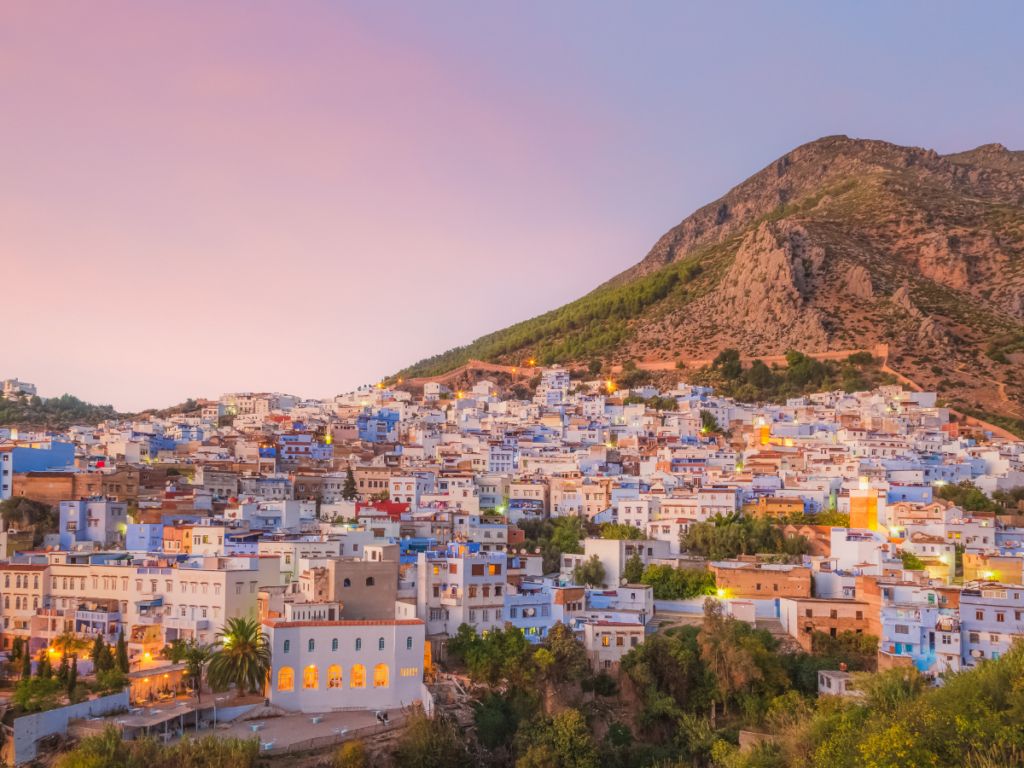
Chefchaouen is the most photographed town in Morocco, and for good reason. Nestled in the Rif Mountains, its blue-washed medina creates a visual experience unlike anywhere else in the country, drawing travelers who come specifically for the color and stay for the mountain calm.
Why Chefchaouen Is Famous
The blue paint is often linked to Jewish refugees who settled here in the 1930s, though the tradition has taken on its own local meaning over time, associated with sky, heaven, and keeping insects away. Whatever the origin, the effect is striking: every wall, staircase, and doorway painted in shades from pale sky to deep indigo.
Best Things to Do in Chefchaouen
Plaza Uta el-Hammam, the main square, is the natural starting point, framed by the Kasbah Museum and its gardens. The Spanish Mosque, a short hike above town, gives a sweeping view over the blue medina at sunset. Ras El Maa waterfall, right at the edge of the medina, is where locals still wash clothes and where you can cool off after walking the hills.
Asilah: Atlantic Medina & Artistic Charm
Asilah sits on the Atlantic coast, an hour south of Tangier, and offers a very different medina experience: whitewashed walls used as an open canvas for murals, painted fresh each summer for the town’s international arts festival.
What to See in Asilah
The medina’s mural-covered walls change yearly, so no two visits look the same. The 15th-century Portuguese ramparts still enclose the old town, and walking them at sunset gives views over the Atlantic. The town’s small fishing port and daily fish market are worth a stop for anyone interested in how the local economy still runs on the sea.
Larache: A Quieter Northern Morocco Medina
Larache rarely appears on standard itineraries, which is exactly its appeal. Its Spanish colonial architecture, quiet main square, and nearby Lixus Roman ruins make it a worthwhile stop for travelers who want to see a Northern Morocco town that hasn’t been shaped around tourism. It works well as a stop between Asilah and Rabat rather than a standalone destination.
Tétouan, Tangier or Chefchaouen: Which Should You Visit?
If you only have time for one, the choice comes down to what you want from the trip. Tangier suits travelers who want history, sea views, and easy international access. Tetouan suits those interested in Andalusian architecture and a medina that still feels local. Chefchaouen suits travelers prioritizing photography, mountain scenery, and a slower pace. With four or more days, all three fit comfortably into one route.
The Best Medinas in Northern Morocco Compared
| Medina | Known For | Best For | Time Needed |
|---|---|---|---|
| Tangier | Port city history, coastal views | First-timers, easy access | 1-2 days |
| Tetouan | Andalusian architecture, UNESCO site | History and architecture lovers | 1 day |
| Chefchaouen | Blue-washed streets, mountain setting | Photography, relaxed pace | 1-2 days |
| Asilah | Coastal murals, arts festival | Art lovers, quieter beach towns | 1 day |
| Larache | Colonial architecture, Roman ruins | Off-the-radar travelers | Half day |
Authentic Experiences in Northern Morocco
Explore the Souks With a Local Guide
A guide who grew up in the region reads a souk differently than a guidebook does. Knowing which stalls sell to locals versus tourists, when the fish market is freshest, or which alley leads to a family-run weaving workshop turns a walk through the medina into something closer to a real introduction to daily life.
Discover Traditional Moroccan Crafts
Northern Morocco’s craft traditions, particularly Tetouan’s zellige tilework and leatherwork, trace back to Andalusian artisans who settled here centuries ago. Visiting a working studio, rather than a tourist-facing shop, shows the actual process behind the tiles and leather goods sold across Morocco.
Taste Local Food in the Medina
Northern Morocco’s food carries more Mediterranean and Spanish influence than the south: fresh grilled fish in Asilah and Larache, Tetouan’s distinct pastries, and dishes that lean on olive oil and seafood rather than the tagines associated with Marrakech and Fes.
Visit Rif Mountain Villages
Beyond Chefchaouen, small Rif villages offer a look at rural Amazigh life, terraced farming, and mountain trails rarely used by tour groups. These stops work well as a half-day addition for travelers already based in Chefchaouen.
Experience Northern Morocco’s Coastal Culture
Between Tangier, Asilah, and Larache, the Atlantic coast shapes daily life here as much as the desert shapes the south. Fishing ports, seafood markets, and beach towns give a different rhythm to a Morocco trip than the inland cities most visitors expect.
Meet Local Artisans
Family workshops in Tetouan and Chefchaouen still train apprentices in embroidery, woodwork, and metalwork using methods passed down for generations. A short visit, arranged through a local guide, usually means direct conversation with the artisan rather than a sales pitch.
Discover Andalusian & Amazigh Heritage
Northern Morocco’s identity sits at the overlap of two cultures: the Amazigh communities native to the Rif, and the Andalusian refugees who reshaped cities like Tetouan and Chefchaouen after being expelled from Spain. Understanding that layered history changes how the architecture, food, and even the local dialects make sense.
Northern Morocco Tours: How to Explore the Region
Private Northern Morocco Tours
A private tour with a local driver and guide gives full control over pace, especially useful given how different Tangier, Tetouan, and Chefchaouen feel from each other. It also allows detours to Rif villages or Larache that fixed group itineraries usually skip.
Small-Group Northern Morocco Tours
Small-group tours suit travelers who want the cost savings of shared transport without losing the personal guiding that makes this region worth visiting. Groups of six to ten people generally still allow for real conversation with the guide and flexibility at each stop.
Custom Northern Morocco Tours for Couples & Families
Families traveling with children often want shorter walking stretches and more time at the coast, while couples tend to prioritize photography stops and slower mornings in Chefchaouen. A custom itinerary lets both adjust pacing, accommodation style, and which towns get the most time.
Best Northern Morocco Tour Itineraries
3-Day Northern Morocco Tour
Day one covers Tangier’s medina and coastline. Day two moves to Chefchaouen for the blue medina and Spanish Mosque viewpoint. Day three returns via Tetouan for a half-day of Andalusian medina and craft workshops before departure.
4-Day Northern Morocco Medina Tour
This adds Asilah to the standard three-day route, giving a full day on the Atlantic coast for the murals and ramparts before heading north to Tangier and inland to Chefchaouen and Tetouan.
5-Day Northern Morocco Tour
A fifth day allows a Rif Mountain village excursion from Chefchaouen or a stop in Larache and the Lixus ruins on the way between coastal towns, without rushing the medina visits in Tangier, Tetouan, or Chefchaouen.
7-Day Northern Morocco Tour
A full week covers all five towns at a relaxed pace, with room for cooking classes, artisan visits, and a full day of mountain hiking near Chefchaouen, plus buffer time for slower mornings and longer meals.
Tangier to Chefchaouen: What Is the Best Route?
The direct drive from Tangier to Chefchaouen takes roughly two hours through Rif foothill scenery. Most guided routes stop in Tetouan along the way, since it sits almost directly between the two and adds only a short detour. Traveling with a guide rather than a shared taxi means being able to stop at mountain viewpoints or small roadside villages that fixed transport schedules don’t allow for.
How Many Days Do You Need in Northern Morocco?
2 Days
Enough for Tangier and Chefchaouen only, with a full day at each and minimal travel time between them.
3 Days
Adds either Tetouan or Asilah to the Tangier-Chefchaouen route, giving a fuller picture of the region’s Andalusian or coastal side.
4-5 Days
Covers all four main medinas (Tangier, Tetouan, Chefchaouen, Asilah) with time for at least one deeper experience, such as an artisan visit or Rif village stop.
6-7 Days
Allows the full region, including Larache and the Lixus ruins, plus slower pacing, cooking classes, and mountain hikes rather than city stops alone.
Best Time to Visit Northern Morocco
Spring (March to May) and autumn (September to November) bring mild temperatures for walking the medinas and hiking near Chefchaouen. Summer gets hot inland but stays comfortable on the Asilah and Tangier coastline. Winter is mild by European standards but can bring rain and cooler evenings in the Rif Mountains, so Chefchaouen and mountain village visits are better planned outside the wettest months.
Where to Stay in Northern Morocco
Riads inside the Tangier and Tetouan medinas put you within walking distance of the souks and main sights. Chefchaouen’s guesthouses, many built into the hillside, often come with rooftop views over the blue streets below. Asilah’s coastal guesthouses suit travelers who want beach access alongside medina exploring, while Tangier also has more modern hotel options for those who prefer that over a traditional riad.
Northern Morocco Travel FAQs
Is Northern Morocco safe for tourists? Yes. Tangier, Tetouan, Chefchaouen, and Asilah are all well-established, well-visited towns with normal tourist safety precautions applying, such as watching belongings in busy souks.
How many days do I need for Northern Morocco? A minimum of three days covers the highlights, but four to five days lets you see all four main medinas without rushing.
Can I visit Northern Morocco without a guide? Yes, but a local guide adds context, particularly in Tetouan and Chefchaouen where the medinas are dense and easy to get lost in, and gives access to artisan visits that aren’t part of self-guided routes.
What language is spoken in Northern Morocco? Arabic and Amazigh are the native languages, with Spanish widely spoken due to historical ties and French used in business and tourism.
Is Chefchaouen worth the detour from Tangier? Yes. It is roughly two hours from Tangier and offers a completely different atmosphere, making it one of the most requested stops in the region.
Discover Northern Morocco With Local Experts
As an Amazigh guide based in Morocco, I build every Northern Morocco itinerary around the towns and routes covered here, adjusted to how much time you have and what you want to see most. Reach out and I’ll help put together a route that fits your trip.
