
This Morocco itinerary for 3 weeks runs from Casablanca to Marrakech in 21 days, with a private vehicle, a local driver and licensed guides in the major cities. You cross the Atlantic coast, the blue streets of Chefchaouen, the medina of Fes, the dunes of Merzouga, the kasbahs of the south and the walled town of Taroudant, then finish in Essaouira and Marrakech. It is built for travelers who want to see Morocco properly, at a pace that leaves room to enjoy it.
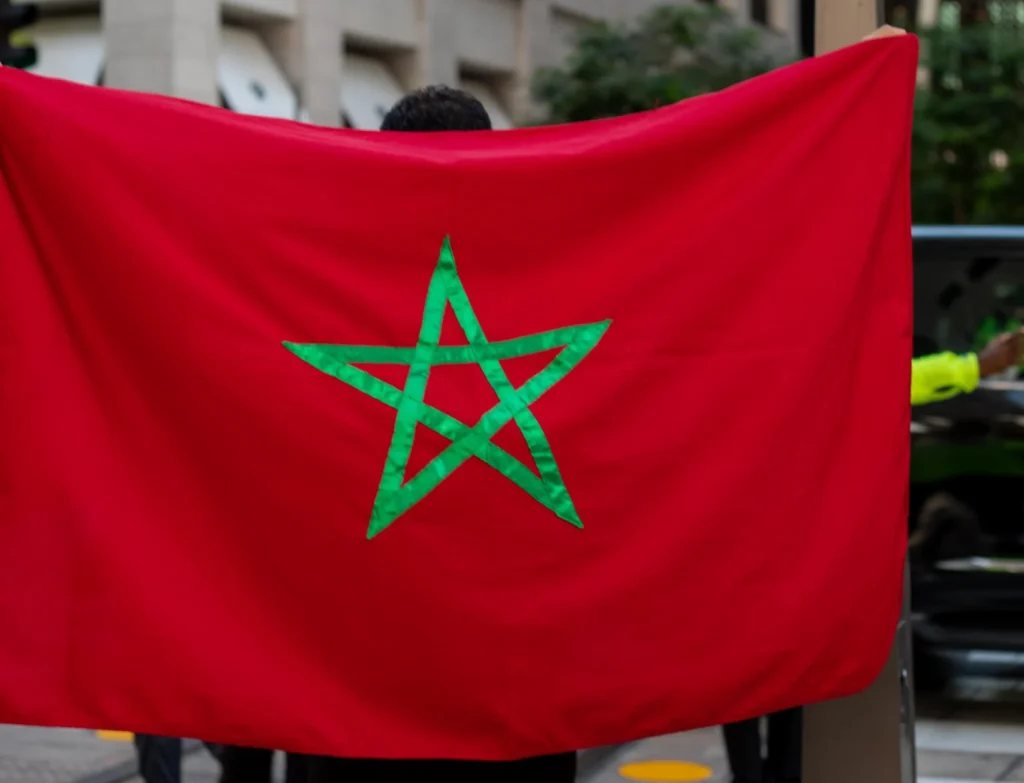
Morocco Itinerary 3 Weeks at a Glance
21-Day Morocco Route from Casablanca to Marrakech
| Day | Route / Main Experience | Overnight |
|---|---|---|
| 1 | Arrive in Casablanca, Hassan II Mosque | Casablanca |
| 2 | Casablanca to Rabat | Rabat |
| 3 | Rabat to Asilah to Tangier | Tangier |
| 4 | Tangier to Tetouan to Chefchaouen | Chefchaouen |
| 5 | Explore Chefchaouen | Chefchaouen |
| 6 | Chefchaouen to Volubilis to Meknes to Fes | Fes |
| 7 | Guided tour of Fes | Fes |
| 8 | Fes to Ifrane to Midelt to Merzouga | Merzouga |
| 9 | Merzouga and Erg Chebbi Sahara | Sahara camp |
| 10 | Merzouga to Rissani to Todra Gorge to Dades | Dades |
| 11 | Dades to Rose Valley to Skoura to Ouarzazate | Ouarzazate |
| 12 | Ouarzazate to Aït Ben Haddou and Ounila Valley | Ouarzazate |
| 13 | Ouarzazate to Draa Valley to Zagora to Tamegroute | Zagora |
| 14 | Zagora to Agdez to Anti-Atlas to Taroudant | Taroudant |
| 15 | Explore Taroudant and the countryside | Taroudant |
| 16 | Taroudant to Agadir to Essaouira | Essaouira |
| 17 | Explore Essaouira | Essaouira |
| 18 | Essaouira to Marrakech | Marrakech |
| 19 | Guided tour of Marrakech | Marrakech |
| 20 | Free day in Marrakech or High Atlas excursion | Marrakech |
| 21 | Departure from Marrakech | None |
Why Spend 3 Weeks in Morocco?
Is 3 Weeks Enough for Morocco?
Yes, and it is one of the few trip lengths that lets you see the whole country without rushing. Three weeks covers the imperial cities, the north, the Sahara, the southern valleys and the Atlantic coast in a single loop.
What Can You See in Morocco in 21 Days?
Casablanca, Rabat, Tangier, Chefchaouen, Fes, Merzouga, Dades, Ouarzazate, Zagora, Taroudant, Essaouira and Marrakech, plus Volubilis, Meknes, Todra Gorge, Aït Ben Haddou and the Draa Valley. Most shorter trips have to pick between the north and the south. This one does not.
Why Travel from Casablanca to Marrakech?
A one-way route means you never repeat a road. Casablanca is a practical arrival point with direct international flights, and Marrakech is an easy place to finish, with plenty of time to rest before flying home.
A Slower Way to Experience Morocco
Most of our days have one main destination and a few well-chosen stops, not five. There are also three rest days built in (Chefchaouen, Taroudant and Essaouira), so you are not living in the vehicle.
Your 21-Day Morocco Itinerary
Day 1: Arrival in Casablanca
Your driver meets you at the airport and takes you to your hotel. Depending on your arrival time, visit the Hassan II Mosque, one of the largest in the world and set right on the Atlantic, then walk the Corniche at sunset. Overnight in Casablanca.
Day 2: Casablanca to Rabat
A short drive of around 90 km brings you to Morocco’s capital. With a local guide you see the Hassan Tower, the Mohammed V Mausoleum and the blue-and-white lanes of the Kasbah of the Udayas, with views over the river and the ocean. Overnight in Rabat.
Day 3: Rabat to Asilah to Tangier
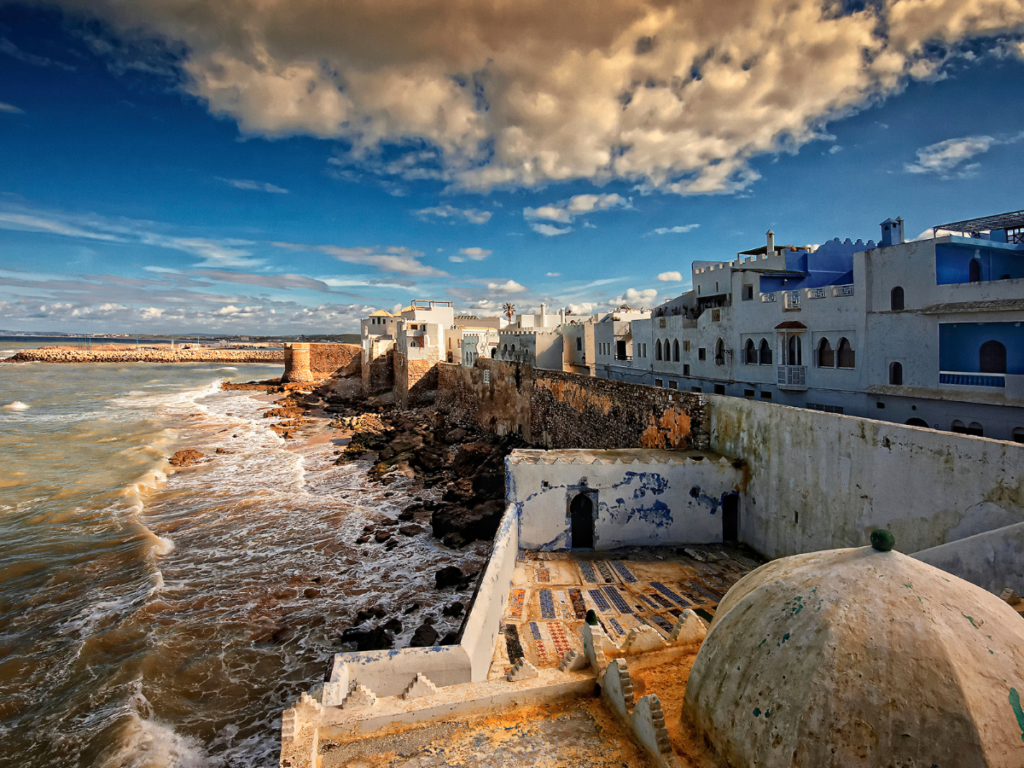
Follow the Atlantic coast north to Asilah, a whitewashed medina known for its murals and sea walls. Continue to Tangier, where you explore the Kasbah and medina of a city that has always looked toward Europe and Africa at once. Overnight in Tangier.
Day 4: Tangier to Tetouan to Chefchaouen
The route heads into the Rif Mountains, with a stop at the Tetouan medina, a UNESCO-listed old town with strong Andalusian roots. You arrive in Chefchaouen in the afternoon, with time to settle in before dinner. Overnight in Chefchaouen.
Day 5: Explore Chefchaouen
A rest day in the blue city. Wander the blue medina at your own pace, visit the kasbah, then walk to Ras El Maa, where the town’s spring runs out of the mountain. If you like to hike, a short Rif mountain walk gives you the best views of the town. Overnight in Chefchaouen.
Day 6: Chefchaouen to Volubilis to Meknes to Fes
Today you cross into the Roman and imperial past. Walk the mosaics of Volubilis, then continue to Meknes, the imperial city of Moulay Ismail, and its monumental Bab Mansour gate. You reach Fes in the evening. Overnight in Fes.
Day 7: Discover Fes with a Local Guide
Fes is best seen on foot with someone who knows it. Your guide takes you through Fes el-Bali, the Bou Inania Madrasa, the area around Al-Qarawiyyin, the tanneries and the artisan workshops, then through the Mellah. Come with comfortable shoes and time to get lost on purpose. Overnight in Fes.
Day 8: Fes to Ifrane to Midelt to Merzouga
The road climbs into the Middle Atlas, with a stop in Ifrane and the cedar forests around Azrou, where Barbary macaques are often seen. After Midelt, you follow the Ziz Valley south and reach Merzouga in the late afternoon. This is a long drive, but a scenic one. Overnight in Merzouga. [confirm: Sahara camp tonight or tomorrow, to match the table]
Day 9: Merzouga and Erg Chebbi Sahara
A full day in the desert. Explore the Erg Chebbi dunes, and add an optional 4×4 desert experience, a visit to Khamlia to hear Gnawa music, and a nomadic family visit for tea and conversation. In the evening, take a camel ride into the dunes for the Sahara sunset, then stay at your desert camp (a luxury camp can be arranged). Wake early for sunrise in the Sahara. Overnight in the Sahara camp.
Day 10: Merzouga to Rissani to Todra Gorge to Dades
Start with the Rissani souk, then drive through the palm oases toward Todra Gorge, where limestone walls rise about 300 metres above the river. Continue through the Todra Valley to the Dades Valley. Overnight in a Dades kasbah or guesthouse.
Day 11: Dades to Rose Valley to Skoura to Ouarzazate
Follow the Valley of Roses and the Road of a Thousand Kasbahs, with a stop at the Skoura oasis and its old earthen kasbahs. You arrive in Ouarzazate in the afternoon. Overnight in Ouarzazate.
Day 12: Ouarzazate to Aït Ben Haddou and Ounila Valley
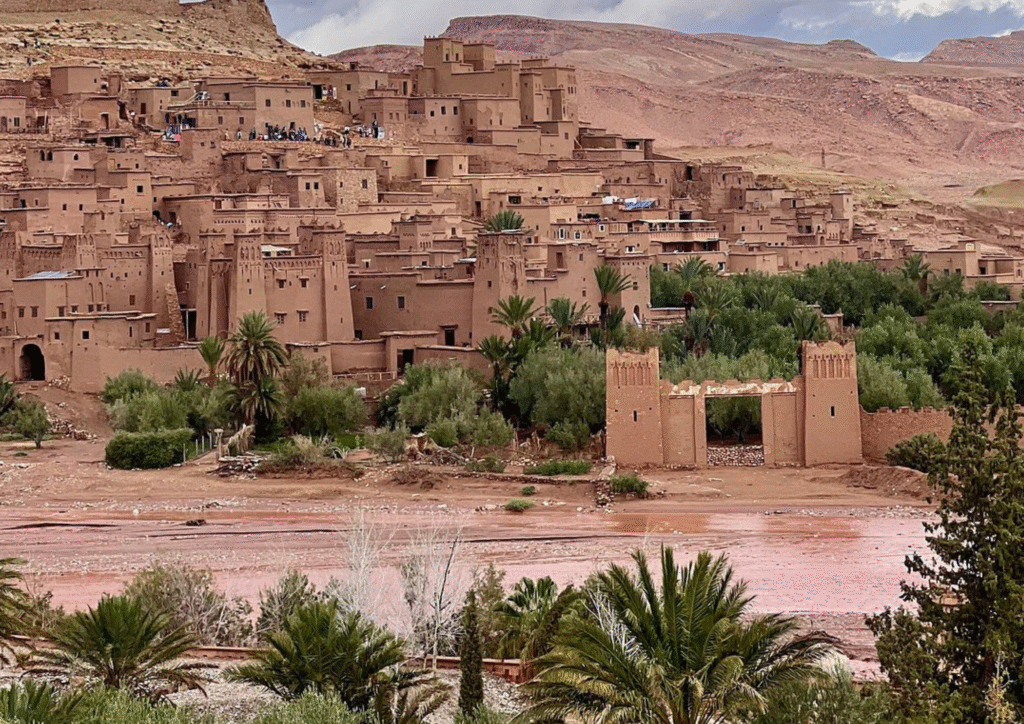
Visit Aït Ben Haddou, the UNESCO-listed ksar, with a local guide who can explain how the village worked and who still lives there. Then drive the Ounila Valley, past kasbahs and Amazigh villages that most tour groups never see. Return to Ouarzazate. Overnight in Ouarzazate.
Day 13: Ouarzazate to Draa Valley to Zagora to Tamegroute
Drive the Draa Valley, Morocco’s longest palm valley, to Zagora. Continue to Tamegroute, known for its green-glazed traditional pottery and its historic library and Quranic school, a quiet piece of religious and cultural heritage. Overnight in Zagora.
Day 14: Zagora to Agdez to Anti-Atlas to Taroudant
A long, scenic travel day through Draa Valley landscapes, Agdez and the Anti-Atlas Mountains, finishing at Taroudant, where you can see the ramparts lit at dusk. [confirm: drive time and route] Overnight in Taroudant.
Day 15: Explore Taroudant
A slow day. Walk the medina, follow the city walls by calèche or on foot, browse the local souks and head into the countryside to meet Amazigh farming families. Plenty of free time. Overnight in Taroudant.
Day 16: Taroudant to Agadir to Essaouira
Drive through the argan region to Agadir, then follow the Atlantic coast north to Essaouira, where the air changes and the sea takes over. Overnight in Essaouira.
Day 17: Explore Essaouira
Walk the medina, the skala and ramparts, and the fishing port with its blue boats. Eat fresh local seafood at the harbor, take a cooking class [confirm: optional extra or included] or spend the afternoon on the beach. Overnight in Essaouira.
Day 18: Essaouira to Marrakech
A short drive through argan country along the scenic Atlantic route to Marrakech. Arrive in the afternoon and enjoy a free evening to settle in. Overnight in Marrakech.
Day 19: Guided Tour of Marrakech
With your guide, visit the Bahia Palace, the Saadian Tombs and the Koutoubia, then move through the medina and souks to Jemaa el-Fna, which is at its best as the light fades. Overnight in Marrakech.
Day 20: Marrakech or Atlas Mountains
Choose between a free day in Marrakech (gardens, hammam, shopping) or a High Atlas excursion to an Amazigh village with a traditional lunch in a family home. Overnight in Marrakech.
Day 21: Departure from Marrakech
Enjoy a final breakfast, use any free time your flight allows, and transfer to Marrakech Menara Airport.
Highlights of This 3-Week Morocco Itinerary
- Casablanca: the Hassan II Mosque and the Atlantic Corniche.
- Rabat: the capital’s Hassan Tower, mausoleum and Udayas kasbah.
- Asilah: a small, painted seaside medina.
- Tangier: a port city with a layered, international past.
- Tetouan: a UNESCO-listed medina with Andalusian character.
- Chefchaouen: the blue town in the Rif Mountains.
- Volubilis: the best-preserved Roman site in Morocco.
- Meknes: the imperial city of Moulay Ismail.
- Fes: the world’s largest car-free medieval old town.
- Ifrane and the Middle Atlas: cedar forests and alpine-style streets.
- Merzouga and Erg Chebbi: Morocco’s tallest dunes.
- Dades Valley: rock formations and kasbahs.
- Todra Gorge: a narrow limestone canyon.
- Ouarzazate: the gateway to the south and Morocco’s film town.
- Aït Ben Haddou: an earthen ksar on the old caravan route.
- Draa Valley: a long green corridor through the desert.
- Zagora: the palm-oasis town at the end of the Draa road.
- Tamegroute: green pottery and a historic library.
- Anti-Atlas: quiet, rugged mountain scenery rarely seen on shorter tours.
- Taroudant: a walled market town often called a smaller Marrakech.
- Agadir: a modern beach city on the coast road.
- Essaouira: a breezy, creative port town.
- Marrakech: the medina, palaces and Jemaa el-Fna.
Experience the Sahara Desert in Merzouga
Why Include Merzouga in a 3-Week Morocco Itinerary?
Because it is the part of Morocco many travelers dream about before they arrive. With 21 days, you have the time to do it properly rather than as a rushed overnight.
Erg Chebbi Dunes
Dunes up to around 150 metres high, changing from gold to deep red through the day.
Camel Trekking
A slow ride into the dunes, timed for sunset, with a local guide.
Desert Camp Experience
Dinner, drumming around the fire and a sky with very little light pollution.
Sunrise and Sunset
The two moments to be in the dunes. Sunset by camel, sunrise on foot.
Khamlia and Gnawa Music
A small village near the dunes where Gnawa musicians perform live, a good way to hear the desert’s musical heritage.
Nomadic Culture
Visit a nomadic family for tea and a conversation about life at the edge of the desert, with your guide translating.
Optional 4×4 Desert Tour
A half-day in the dunes and the surrounding stony desert, for those who want more than the camel ride.
Standard vs Luxury Sahara Camps
Standard camps offer simple tents and shared facilities. Luxury camps offer larger tents, private bathrooms and better bedding. Tell us your comfort level and we will match you to the right camp.
How Many Nights Should You Spend in the Sahara?
One night is the minimum. On a 3-week trip, two nights is a better fit, because it turns a rushed visit into a proper stay. [confirm: this route currently shows 1 Sahara night]
Discover Morocco Beyond the Main Tourist Cities
Amazigh Culture in Morocco
The Amazigh (Berber) people are Morocco’s original inhabitants, and their language, music and crafts shape much of the country outside the big cities. As an Amazigh family company, we introduce you to this side of Morocco through people we know personally.
Traditional Villages
The Ounila Valley, the Draa and the High Atlas villages have a way of life you can only reach by road, with a driver who knows the turns.
Local Food Experiences
Share a home-cooked meal in a village, or take a cooking class in Essaouira.
Moroccan Artisan Crafts
Fes leather and ceramics, Tamegroute pottery, Taroudant silver and Essaouira thuya wood: each region has its own craft.
Kasbahs and Ksour
Earthen fortresses and fortified villages line the valleys of the south. Some are museums, some are guesthouses, and some are still homes.
Local Markets and Souks
Rissani, Taroudant and Marrakech are all working markets, not just tourist stops.
How Long Should You Spend in Each Destination?
Recommended Number of Nights
| Destination | Nights | Why |
|---|---|---|
| Casablanca | 1 | Arrival and Hassan II Mosque |
| Rabat | 1 | Capital, short drive |
| Tangier | 1 | Coastal stop |
| Chefchaouen | 2 | Rest day in the Rif |
| Fes | 1 (add a second if you can) | Largest medina, needs time |
| Merzouga | 1 to 2 | Sahara experience |
| Dades | 1 | Valleys and gorge |
| Ouarzazate | 2 | Aït Ben Haddou and Ounila Valley |
| Zagora | 1 | Draa Valley |
| Taroudant | 2 | Rest and countryside |
| Essaouira | 2 | Coast and relaxation |
| Marrakech | 3 | Medina, free day, excursion |
How Much Driving Is Involved in a 3-Week Morocco Trip?
Morocco is bigger than it looks, and the driving is part of the experience. Times below are approximate and include normal stops. [confirm all times]
Casablanca to Northern Morocco
Casablanca to Rabat is short. Rabat to Asilah and Tangier is a moderate coastal drive.
Chefchaouen to Fes
A long but scenic day with stops at Volubilis and Meknes, so plan for most of the day on the road.
Fes to Merzouga
The longest standard drive on the route, about 460 km, or 8 to 9 hours with stops.
Merzouga to Dades
A medium day with Rissani and Todra Gorge as natural breaks.
Dades to Ouarzazate
A shorter drive along the Road of a Thousand Kasbahs.
Ouarzazate to Zagora
A moderate drive across the Draa Valley.
Southern Morocco to Essaouira
Zagora to Taroudant is a long travel day, and Taroudant to Essaouira via Agadir is another long coastal drive. We build rest days around both.
Essaouira to Marrakech
Roughly 190 km, a relaxed half-day.
Private Morocco Tour vs Independent Travel
Traveling with a Private Driver
You skip the hardest part of Morocco: long distances, mountain roads and parking in old towns. Your driver handles all of it and stops wherever you want.
Renting a Car in Morocco
Possible, but demanding. Mountain roads, police checkpoints and the old city streets can make it stressful on a 3-week loop.
Traveling by Train and Bus
Works well between the big cities, such as Casablanca, Rabat, Fes and Marrakech. It does not reach the Sahara, the Draa Valley or many of the places on this itinerary.
Who Is a Private Tour Best Suited To?
Travelers who want comfort, local knowledge and flexibility: couples, families, small groups and first-time visitors who want to see a lot without managing logistics.
What’s Included in a Private 21-Day Morocco Tour?
- Private air-conditioned vehicle for the whole trip
- Local driver with experience on every road of the route
- Licensed local guides in the major cities
- Airport transfers on arrival and departure
- Accommodation in selected riads, hotels and kasbahs
- Sahara desert camp night(s)
- Camel experience at sunset
- Selected activities as listed in the itinerary
- Breakfast daily
- Water in the vehicle
- WhatsApp support throughout the trip
What’s Not Included?
- International flights
- Travel insurance
- Personal expenses
- Optional activities, such as the 4×4 desert tour or a cooking class
- Lunches and dinners unless specified
- Tips for guides and drivers, which are optional
How Much Does a 3-Week Morocco Trip Cost?
The price depends on your accommodation level, group size, season and the options you choose. We do not publish a single fixed price, because two travelers on the same route can have very different trips.
Budget Morocco Trip
Simple riads and guesthouses, standard Sahara camp.
Mid-Range Morocco Trip
Well-located riads, comfortable kasbahs and a better desert camp.
Luxury Morocco Trip
Boutique riads, a luxury Sahara camp and more private experiences.
What Determines the Price?
- Number of travelers
- Accommodation level
- Season and availability
- Optional activities and extra guides
- Number of nights in the Sahara
Request a Personalized Quote
Send us your dates, group size and preferences, and we will send a clear quote for your own route.
Where to Stay During Your 3 Weeks in Morocco
Marrakech Riads
Traditional houses in the medina with courtyards and rooftop terraces.
Northern Morocco Accommodation
Small hotels and guesthouses in Rabat, Tangier and Chefchaouen, chosen for location and character.
Fes Riads
We choose riads in or near the medina so that evenings are easy and walks are short.
Dades Valley Kasbahs
Earthen-style kasbahs and guesthouses with valley views.
Merzouga Luxury Desert Camps
Larger tents, private bathrooms and good bedding, for a night under the stars with comfort.
Essaouira Riads and Boutique Hotels
Small, light-filled houses a short walk from the sea.
Best Time for a 3-Week Morocco Itinerary
Morocco in Spring
March to May. Green valleys, warm days and comfortable evenings. One of the best seasons for this route.
Morocco in Summer
June to August. Hot in the south and in the cities. The coast and mountains are cooler, and we adjust the Sahara timing.
Morocco in Autumn
September to November. Similar to spring, with pleasant desert temperatures.
Morocco in Winter
December to February. Cold desert nights and possible snow in the mountains, but clear light and fewer crowds.
Best Time for the Sahara
Spring and autumn. Summer is very hot, and winter nights are cold.
Best Time for the Atlas Mountains
Spring and early autumn, when the weather is stable and the trails are open.
Best Time for the Atlantic Coast
Late spring to early autumn, though Essaouira is windy at any time of year.
3-Week Morocco Itinerary for Families
Family-Friendly Pace
Rest days in Chefchaouen, Taroudant and Essaouira give children time to recover between long drives.
Private Vehicle for Families
Your own car means you can stop for snacks, toilets and photos without a group schedule.
Family Accommodation
We choose riads and hotels with family rooms or connecting rooms. [confirm]
Sahara with Children
The camel ride and the dunes are usually the highlight of the trip for kids. We choose camps with suitable facilities and keep the timing relaxed.
Activities for Different Ages
Sandboarding in the dunes, a cooking class in Essaouira, a short hike in the Atlas, and the storytellers and food stalls of Jemaa el-Fna.
3-Week Morocco Itinerary for Couples
Romantic Riads
Small riads with private courtyards, candlelit dinners and rooftop terraces.
Private Sahara Experience
A private tent in the dunes, with a quiet dinner and a sky full of stars.
Sunset Experiences
Camel at sunset in Merzouga, the ramparts of Essaouira and a rooftop in Marrakech.
Essaouira
Slow mornings, sea air and long lunches at the harbor.
Luxury Accommodation
Upgrade selected nights to boutique hotels and luxury camps.
Luxury 3-Week Morocco Itinerary
Luxury Riads and Hotels
Hand-picked properties with strong service and good locations.
Premium Private Vehicle
A newer, more spacious vehicle for long days on the road. [confirm]
Luxury Sahara Camp
Larger tents, private bathrooms and better dining.
Private Guides
A guide dedicated to your group in Fes and Marrakech, not shared with others.
Tailor-Made Experiences
Private cooking classes, artisan visits, a hot-air balloon flight or a private dinner.
What to Pack for 3 Weeks in Morocco
Clothing
Light layers, long trousers or skirts and shoulders covered for medinas and rural villages. A warm layer for evenings and the desert.
Walking Shoes
Comfortable, closed shoes for cobbled medinas and uneven ground.
Sun Protection
Sunglasses, a hat and sunscreen.
Sahara Essentials
A small overnight bag, a scarf for sand and wind, and a head torch.
Mountain Essentials
A warm jacket, a light rain layer and good grip shoes if you plan to hike.
Travel Documents and Money
Passport, travel insurance details and some cash in dirhams for small purchases.
Electronics
Phone, camera, a power bank and a European-type plug adapter.
Moroccan Food to Try During Your 3-Week Trip
- Tagine: slow-cooked stew in a clay pot, with many regional versions.
- Couscous: traditionally served on Fridays, often with seven vegetables.
- Pastilla: a sweet and savory pie, famous in Fes.
- Harira: a tomato and lentil soup, often served at sunset.
- Msemen: layered flatbread, usually eaten at breakfast.
- Moroccan mint tea: the drink of welcome, poured from a height.
- Amazigh cuisine: hearty dishes such as tangia, Berber omelette and bread baked in the sand or a clay oven.
- Seafood in Essaouira: grilled fish straight from the port.
Practical Morocco Travel Tips
Money and ATMs
The dirham is the local currency. ATMs are common in cities but rare in small villages, so carry some cash for the south.
SIM Cards and Internet
Local SIM cards are cheap and easy to buy at the airport or in town. Wi-Fi is common in riads, but weaker in the desert.
Dress and Cultural Etiquette
Dress modestly in medinas and villages. Ask before photographing people.
Tipping
Tipping is customary in restaurants and for guides and drivers. Your guide can advise on amounts.
Driving and Roads
Roads between cities are good, mountain roads are winding, and driving styles are lively. This is one reason most travelers prefer a driver.
Shopping in the Souks
Bargaining is part of the experience. Start low, stay friendly and be willing to walk away.
Avoiding Common Tourist Overpricing
Agree prices before accepting a service, and ask your guide or riad host what a fair price is.
Staying in Contact During Your Tour
You will have a direct WhatsApp line to our team throughout the trip.
Can You Customize This 21-Day Morocco Itinerary?
Yes. This route is a starting point, not a fixed package.
- Start in Casablanca: the default route above.
- Start in Marrakech instead: we can reverse the route.
- Start in Fes: useful if you fly into Fes.
- Start in Tangier: works well if you arrive from Spain by ferry.
- Finish in Marrakech: the default.
- Finish in Casablanca: a good choice for late flights.
- Add more Sahara nights: a second night in Merzouga.
- Add Atlas Mountain hiking: a few days in the High Atlas.
- Add more time in Essaouira: an extra night by the sea.
- Upgrade accommodation: boutique riads and luxury camps.
- Slow down the route: fewer stops and more rest days.
Alternative 3-Week Morocco Itineraries
- 3 weeks from Marrakech: the same loop in reverse, finishing in Casablanca.
- 3 weeks from Casablanca: the route on this page.
- 3 weeks from Fes: start in Fes, head to the Sahara first and finish on the coast.
- Morocco itinerary with more Sahara: adds a second desert night and Zagora or Erg Chigaga.
- Morocco itinerary without the Sahara: swaps the desert for more time in the north, the Atlas and the coast.
- Luxury Morocco itinerary for 3 weeks: see the luxury section above.
- Family Morocco itinerary for 3 weeks: see the family section above.
Frequently Asked Questions About a 3-Week Morocco Itinerary
Is 3 weeks enough for Morocco?
Yes. It is enough to see the main regions of the country without rushing, and it leaves room for rest days.
What is the best 3-week Morocco itinerary?
One that fits your interests and pace. For most first-time visitors, a loop from Casablanca to Marrakech through the north, Fes, the Sahara, the southern valleys and the coast covers the highlights.
Can I visit Casablanca, Fes, Marrakech and Chefchaouen in 3 weeks?
Yes, easily. This itinerary includes all four, along with the Sahara and Essaouira.
Can I visit the Sahara Desert in 21 days?
Yes. This itinerary includes a stay in Merzouga and Erg Chebbi, and you can add more nights.
How many nights should I spend in Merzouga?
One night is the minimum. Two nights give you time for the dunes without a rushed schedule.
Is Merzouga or Zagora better for a Sahara experience?
Merzouga has the bigger, more dramatic dunes and more camp options. Zagora is closer to Marrakech and quieter. On this itinerary you visit Merzouga for the dunes and Zagora for the Draa Valley.
How much does a 3-week Morocco trip cost?
It depends on accommodation level, group size and season. Send us your details for a personalized quote.
Is it better to rent a car or hire a private driver?
For a 3-week loop with mountain roads and long distances, a private driver is easier and less stressful. A rental car gives you freedom, but requires confidence on the road.
What is the best time to visit Morocco for three weeks?
Spring and autumn offer the most comfortable weather across the whole route.
What airport should I fly into for a 3-week Morocco trip?
Casablanca (Mohammed V) is a practical arrival airport for this route, and Marrakech Menara works well for departure. [confirm: open-jaw flights]
Can I customize a private 21-day Morocco tour?
Yes. Dates, route, pace, accommodation level and activities can all be adjusted.
How far in advance should I book a Morocco tour?
For spring, autumn and Christmas, we recommend booking several months ahead, especially if you want a particular camp or riad.
Why Travel With Journey Via Morocco?
Local Moroccan Travel Company
We are based in Morocco, so there is no middleman between you and the people running your trip.
Private and Tailor-Made Journeys
Every trip is private and built around your dates, interests and pace.
Local Drivers and Licensed Guides
Drivers who know the roads and guides who know their cities.
First-Hand Knowledge of Morocco
We drive these routes ourselves and choose places we would stay in.
Amazigh and Local Cultural Experiences
As an Amazigh family company, we can open doors to people, villages and traditions that most visitors never see.
Carefully Selected Accommodation
We choose riads, kasbahs and camps for location, character and service, not only for price.
Personal Support Throughout Your Trip
A direct WhatsApp line to our team, from your arrival to your departure.
Book Your Private 21-Day Morocco Tour
Tell Us About Your Trip
To start, share:
- Travel dates
- Number of travelers
- Arrival airport
- Departure airport
- Accommodation preference
- Interests
- Travel style
