
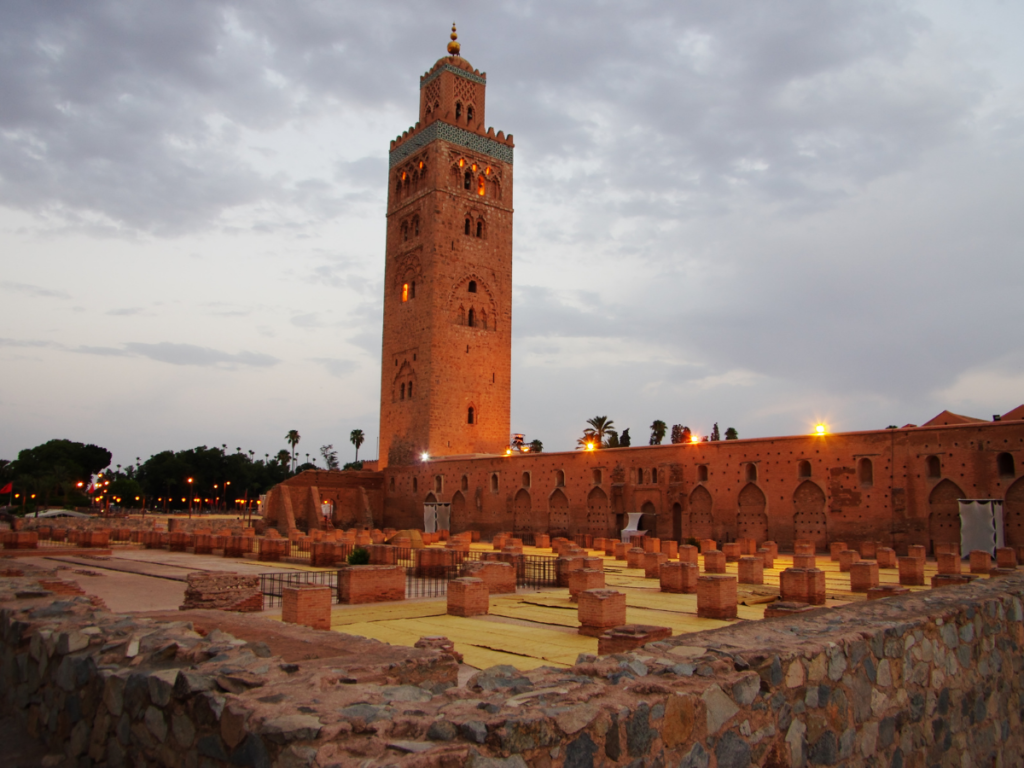
Direct flights from Israel to Marrakech have opened a route that many Moroccan Jewish families have been waiting for since the Abraham Accords. In under five hours, travelers from Tel Aviv can land in a city that still holds the physical memory of a Jewish community that shaped Moroccan commerce, craft, and culture for centuries. As a Moroccan Amazigh guide who has spent over a decade leading travelers through the Mellah of Marrakech, the kasbahs of the south, and the synagogues of Fes, I can tell you this connection is more than a flight schedule. It is a bridge between two peoples who share far more history than most travelers realize.
This guide walks you through everything an Israeli traveler needs to know before booking, from flight logistics to the itinerary that takes you from Marrakech’s old Jewish quarter all the way to the dunes of the Sahara.
Direct Flights from Israel to Marrakech: What Travelers Need to Know
The route between Tel Aviv (TLV) and Marrakech (RAK) has made Morocco one of the most accessible heritage destinations for Israeli travelers in the region. Flight times run close to five hours, and depending on the season, round-trip fares can start well under $250 when booked a few weeks ahead.
What to keep in mind when booking:
- Seasonality matters. Spring (March to May) and fall (September to November) offer the most comfortable weather for both city walks and desert excursions, and this is also when flight frequency tends to peak.
- Entry requirements are simple. Israeli passport holders can currently enter Morocco visa-free for tourism stays, though I always recommend checking the latest requirements with your airline or the Moroccan consulate close to your travel date, since policies can shift.
- Arrival logistics. Marrakech Menara Airport sits just a 15 to 20 minute drive from the medina. I recommend arranging a private airport transfer in advance rather than relying on airport taxis, especially if you’re arriving in the evening.
- Book flexible dates when possible. Prices swing depending on demand, and midweek departures are often noticeably cheaper than weekend flights.
Once you land, Marrakech becomes your gateway not just to Moroccan culture broadly, but specifically to a Jewish history that predates the Alaouite dynasty itself.
Why Israeli Travelers Are Rediscovering Morocco
Morocco was once home to the largest Jewish population in the Arab world, with communities tracing back over 2,000 years. Long before the mass emigrations of the mid-20th century, Jewish Moroccan families were woven into the country’s trade networks, artisanal crafts, music, and cuisine. Many Israeli families today have grandparents or great-grandparents who grew up in cities like Fes, Essaouira, or the Marrakech Mellah, and this journey often becomes deeply personal rather than just touristic.
What draws people back is the sense that this heritage was never erased, only quieted. You still find:
- Traditional Moroccan Jewish recipes served in local homes and restaurants
- Preserved synagogues, some still active, others maintained as historical sites
- Shared musical traditions, particularly in Andalusian and chaabi styles
- Family names and surnames in the Mellah quarters that echo Israeli communities today
As a local guide, I’ve watched this kind of trip shift from a niche interest to one of the most requested cultural itineraries I run each year.
Marrakech: The Starting Point of Your Jewish Heritage Journey
The Mellah of Marrakech
The Mellah, established in 1558, was one of the first Jewish quarters built in Morocco, and it functioned as a self-contained neighborhood with its own markets, bakeries, and synagogues. Walking through its narrow streets today, you can still see the distinct architecture, tighter alleyways and taller buildings than the rest of the medina, a layout designed for community and protection.
Lazama Synagogue
Built in the 16th century by Jewish refugees fleeing Spain after the 1492 expulsion, Lazama Synagogue remains one of the most visited Jewish heritage sites in Marrakech. Its blue and white courtyard is a quiet, striking contrast to the busy medina streets outside, and it gives visitors a real sense of how faith and daily life intertwined in this quarter for generations.
Beyond Heritage Sites
A heritage trip doesn’t mean skipping the rest of what makes Marrakech unforgettable. I always build in time for Jemaa el-Fna at sunset, the spice markets, and a home-cooked meal with a local family, because understanding Moroccan hospitality firsthand adds context to everything you’ll see in the historical sites.
From Marrakech to the Sahara: Discover Morocco Beyond the Cities
Morocco’s story doesn’t end in its cities. Some of the most meaningful parts of a heritage journey happen on the road south, through landscapes that have shaped Amazigh and Jewish communities alike for generations.
The route typically includes:
- Tizi n’Tichka Pass and Ait Ben Haddou. This UNESCO World Heritage kasbah sits along what was once a major caravan route connecting sub-Saharan trade routes to the Mediterranean, a route Jewish merchant families were historically part of.
- Dades Valley and Todra Gorge. Berber villages here still practice traditions passed down for centuries, and the landscape itself, red rock canyons and palm oases, is unlike anything most travelers expect from Morocco.
- Merzouga and the Sahara Desert. A night in a desert camp near the dunes of Erg Chebbi, watching the sunset turn the sand orange and gold, is often the single most memorable part of the entire trip.
I tell every traveler the same thing: Morocco’s heritage doesn’t live only in city monuments. It lives in the mountain villages, the desert communities, and the families who have called this land home for generations, Jewish and Amazigh alike.
The Jewish Heritage Capitals of Morocco
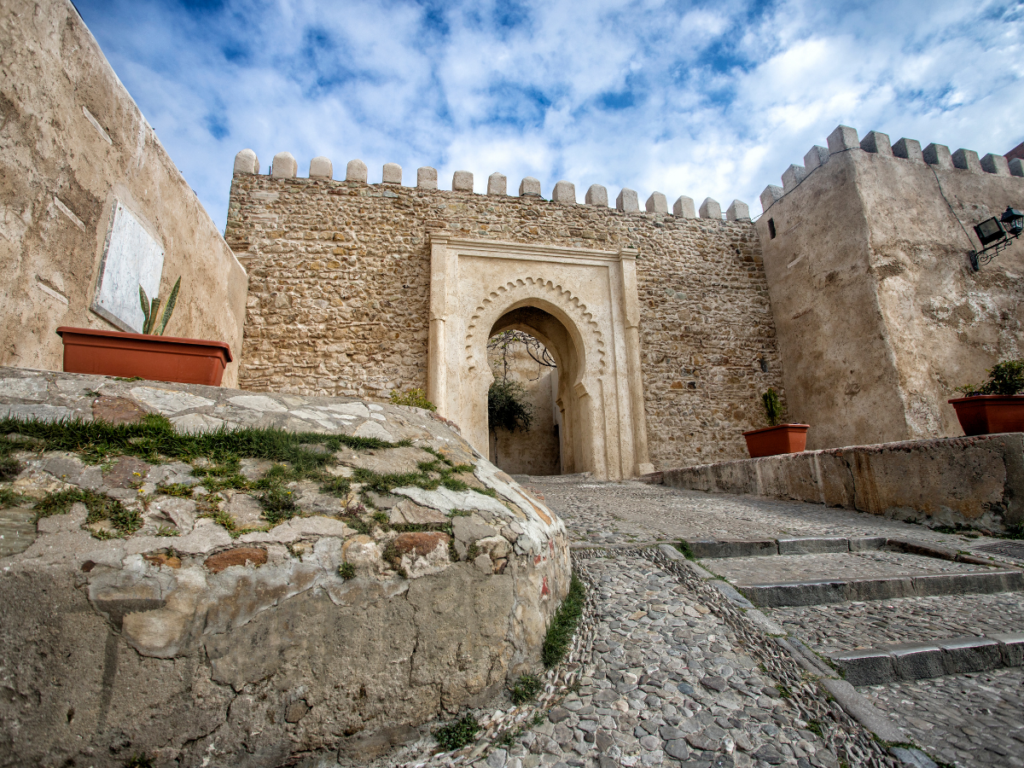
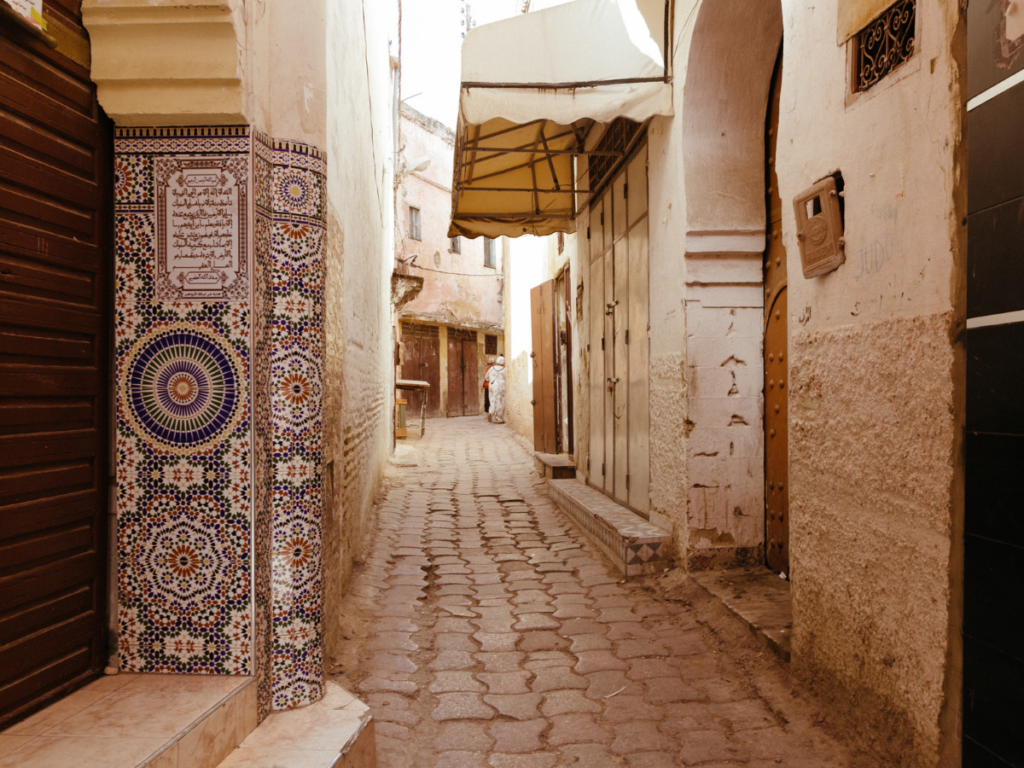
Fes: The Heart of Moroccan Jewish History
Fes holds the country’s most significant concentration of Jewish heritage sites. The Mellah of Fes, one of the oldest in Morocco, houses the Ibn Danan Synagogue, a beautifully restored 17th-century synagogue that remains a cornerstone of Moroccan Jewish history. Nearby, the historic Jewish cemetery, with its distinctive white-washed tombs, offers a quiet, reflective stop for travelers tracing family roots.
Essaouira: The Atlantic City of Jewish Culture
Formerly known as Mogador, Essaouira was once home to a thriving Jewish merchant class that helped establish the city as a major Atlantic trading port. Its multicultural identity is still visible in the architecture and in the coexistence of Muslim, Jewish, and European influences throughout the old town.
Casablanca: Modern Jewish Morocco
Casablanca is home to the Museum of Moroccan Judaism, the only Jewish museum in the Arab world, along with the Beth-El Synagogue, which still serves an active community. This is where you see Jewish Moroccan life not just as history, but as a living, present-day community.
The Ultimate 14-Day Jewish Heritage Journey from Marrakech
For travelers who want to experience this history in full depth rather than a rushed weekend, I’ve built this into a complete two-week private journey:
- Days 1 to 3: Marrakech heritage experience, the Mellah, local synagogues, and cultural immersion with a local family
- Days 4 to 6: Sahara desert adventure through the kasbahs of the south and a night in a luxury desert camp
- Days 7 to 9: Fes and the imperial cities, including the Mellah, Ibn Danan Synagogue, and the ancient medina
- Days 10 to 12: Rabat and Casablanca, including the Museum of Moroccan Judaism
- Days 13 to 14: Essaouira’s Atlantic coastline before returning to Marrakech for departure
This structure lets travelers move at a comfortable pace while covering the full arc of Moroccan Jewish history, from the 16th century mellahs to today’s active communities.
Why Choose a Private Jewish Heritage Tour in Morocco?
A trip built around specific heritage sites benefits enormously from local expertise. Many synagogues and Jewish cemeteries in Morocco are not staffed for casual walk-in tourism, and a guide with established local relationships can arrange access, context, and translation that a self-guided trip simply can’t match.
Working with a private Moroccan tour operator gives you:
- Local knowledge. Guides who understand both the historical context and the practical logistics of visiting active and preserved religious sites
- Flexibility. A private vehicle and a schedule built around your interests, whether that’s extra time in an ancestral hometown or a slower pace through the desert
- Comfort. Carefully selected riads, kasbahs, and desert camps rather than generic tourist accommodations
- Meaning. A journey designed to actually connect you with the history, not just move you past it
Practical Guide for Travelers from Israel
Before your trip:
- Best travel months are March to May and September to November, avoiding peak summer heat in the south
- The Moroccan Dirham (MAD) is the local currency, and ATMs are widely available in cities
- French, Arabic, and Darija are the primary languages, though English is common in tourist areas
- Modest dress is appreciated at religious sites, and it’s respectful to ask before photographing people or active synagogues
During your journey:
- Morocco is generally very safe for travelers, including solo travelers and families
- Private transportation is strongly recommended for the desert route given the mountain roads
- Bring layered clothing, desert nights can be cold even when the days are warm
Frequently Asked Questions
Are there direct flights from Israel to Marrakech?
Yes, direct flights currently connect Tel Aviv (TLV) to Marrakech (RAK), with a flight time of around five hours. Schedules and frequency can shift seasonally, so it’s worth confirming current routes with your airline before booking.
Why should Israelis visit Morocco?
Morocco holds one of the deepest Jewish histories in the Arab world, with preserved synagogues, historic mellahs, and living Jewish communities in cities like Marrakech, Fes, and Casablanca. For many Israeli travelers, it’s also a chance to reconnect with family heritage.
What Jewish heritage sites can I visit in Morocco?
Key sites include the Mellah and Lazama Synagogue in Marrakech, the Ibn Danan Synagogue and Jewish cemetery in Fes, the Museum of Moroccan Judaism in Casablanca, and the historic Jewish quarter of Essaouira.
How many days are needed for a Jewish heritage tour in Morocco?
A full heritage journey typically takes 10 to 14 days to properly cover Marrakech, the Sahara, Fes, Rabat, Casablanca, and Essaouira without rushing between sites.
Can I combine Jewish heritage sites with the Sahara Desert?
Absolutely. A well-designed itinerary connects Marrakech’s Mellah directly to the desert route through Ait Ben Haddou and Merzouga before continuing north to Fes, giving travelers both cultural depth and Morocco’s iconic desert landscapes.
Start Your Private Jewish Heritage Journey from Marrakech
Morocco’s Jewish history isn’t confined to museums or history books. It’s in the courtyards of Marrakech’s Mellah, the synagogues of Fes, and the stories still shared by local families today. As a local Amazigh guide, I’ve spent years building journeys that connect travelers to this history in a personal, unhurried way.
If you’re ready to explore Morocco’s Jewish heritage alongside its Amazigh culture and Sahara landscapes, Journey Via Morocco designs private, fully customized itineraries starting from Marrakech. Reach out and let’s plan a journey built around your story.
