
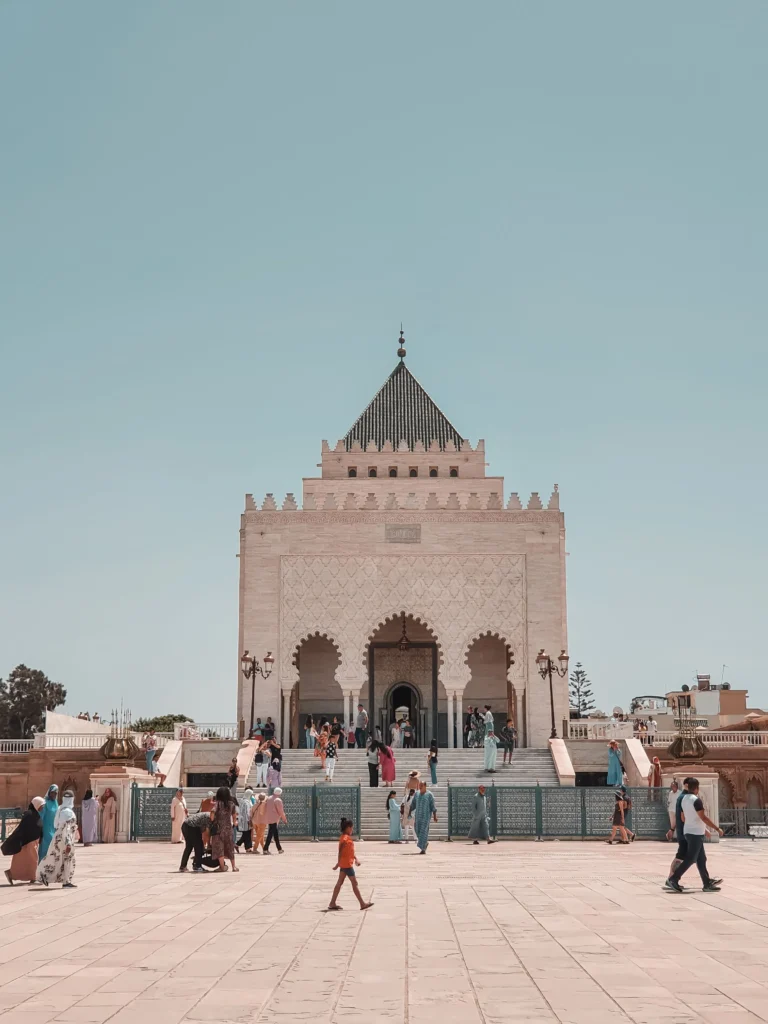
Yes, seven days is enough to see a real cross-section of Morocco if you keep the route compact. The best 7-day Morocco itinerary for most first-time visitors runs from Marrakech over the High Atlas Mountains to the Sahara dunes of Erg Chebbi, then on to Fes. You won’t see everything, and three of the days involve long drives, but you will experience two imperial cities, the mountains, the kasbah valleys and a night in the desert.
Quick answer: One week in Morocco works best on one route, not a tour of the whole country. Spend two days in Marrakech, three days crossing the High Atlas, the Dades Valley and the Sahara at Erg Chebbi, then finish in Fes. Expect roughly 1,000 to 1,100 km of driving (our estimate), with three long road days. To keep it calmer, skip either Fes or the desert.
This guide is written by our local team at Journey Via Morocco. It gives you a realistic day-by-day plan with estimated driving times, explains what you will have to leave out, and compares the other 7-day routes that make sense.
7-Day Morocco Itinerary at a Glance
- Route: Marrakech, Tizi n’Tichka pass, Aït Ben Haddou, Dades Valley, Todra Gorge, Merzouga (Erg Chebbi dunes), Middle Atlas, Fes
- Type: one way. You fly into Marrakech (RAK) and out of Fes (FEZ), or transfer onward from Fes
- Overnights: Marrakech (2), Dades Valley (1), desert camp at Erg Chebbi (1), Fes (2)
- Best for: first-time visitors who want cities, mountains and the Sahara in one week, and who are comfortable with several long days on the road
- Not ideal for: travelers who want a slow pace, families with very young children, or anyone who dislikes long car journeys (see the alternatives below)
| Day | Route | Approx. distance | Driving time (estimate, no stops) | Realistic day with stops | Overnight |
|---|---|---|---|---|---|
| 1 | Arrive in Marrakech | Short airport transfer | Under 30 min | Half day | Marrakech |
| 2 | Marrakech | City only | None | Full day of sightseeing | Marrakech |
| 3 | Marrakech to Aït Ben Haddou and the Dades Valley | About 300 to 330 km | 5.5 to 6.5 h | 9 to 10 h | Dades Valley |
| 4 | Dades Valley to Todra Gorge and Merzouga | About 250 km | 4 to 4.5 h | 6 to 7 h, then camel ride | Desert camp |
| 5 | Merzouga to Fes via the Middle Atlas | About 460 to 470 km | 7.5 to 8 h | 9 to 10 h | Fes |
| 6 | Fes | City only | None | Full day of sightseeing | Fes |
| 7 | Departure from Fes | Depends on your flight | None | Half day or less | None |
All distances and times are approximate. Driving times exclude sightseeing, meals and photo stops, and they change with traffic, roadworks, weather and your exact start and end points. See our Morocco driving times and distances guide for more routes.
Is 7 Days Enough to Visit Morocco?
Seven days is enough for a first visit, as long as you choose one route and accept what it leaves out. Morocco is larger than many visitors expect. Marrakech to the Merzouga dunes is about 550 km by road, and the drive crosses the High Atlas on a winding mountain road. Fes to Merzouga is about 460 km. These distances shape every one-week itinerary.
The honest trade-off is this: in seven days you can comfortably choose two of these three: Marrakech, Fes and the Sahara. Doing all three is possible, as the itinerary below shows, but it means three consecutive driving days and only one full day in each city.
What usually has to wait for another trip:
- Chefchaouen, the blue town in the Rif Mountains. It is about 200 km north of Fes, so it adds roughly two days
- The Atlantic coast, including Essaouira, Rabat and Casablanca
- A second night in the desert, which many travelers would love but which doesn’t fit with Fes in the same week
- Meknes and the Roman site of Volubilis, near Fes
If those places matter more to you than the Sahara, one of the alternative routes further down will suit you better.
The Best 7-Day Morocco Itinerary, Day by Day
Day 1: Arrive in Marrakech and Settle In
Marrakech-Menara Airport is close to the city, so most transfers to the medina or the new town are short. Don’t plan heavy sightseeing on your arrival day. Check in, have a mint tea, and walk to Jemaa el-Fnaa, the main square, in the late afternoon. It changes character at dusk, when food stalls, musicians and storytellers fill the space.
Practical tips:
- Many riads (traditional houses built around a courtyard) are in lanes that cars cannot enter. Your driver or the riad staff will usually walk you and your luggage from the nearest drop-off point
- Change a small amount of money into dirhams at the airport or use an ATM, because small purchases and tips are paid in cash
- Agree on taxi fares before you set off if you are not using a pre-booked transfer
Stay: a riad inside the medina for atmosphere, or a hotel in Hivernage or Gueliz if you prefer wider streets and easier car access.
Overnight: Marrakech
Day 2: Discover the Marrakech Medina, Palaces and Gardens
A guided half day is the easiest way to understand the medina, whose lanes are confusing on a first visit. The Marrakech medina has been a UNESCO World Heritage Site since 1985. A typical day covers:
- Koutoubia Mosque: the city’s best-known minaret. You can admire it from outside, but it is not open to non-Muslim visitors
- Bahia Palace: 19th-century courtyards, painted ceilings and carved cedar
- Ben Youssef Madrasa: a former Quranic school with intricate tilework and stucco. It reopened in 2022 after restoration, so check current opening hours before you go
- The souks: spice, leather, lantern and textile markets north of Jemaa el-Fnaa
- Jardin Majorelle: the blue garden in Gueliz. Tickets are sold for timed entry on the garden’s official website, and the garden has warned visitors about unofficial resellers, so book there in advance
Leave the afternoon flexible for a hammam, a cooking class or a rooftop café, and go to bed early. Tomorrow starts the road trip.
Want more time in the city? See our guide to what to do in 3 days in Marrakech.
Overnight: Marrakech
Day 3: Cross the High Atlas to Aït Ben Haddou and the Dades Valley
- Route: Marrakech, Tizi n’Tichka pass, Aït Ben Haddou, Ouarzazate, Skoura, Dades Valley
- Distance: about 300 to 330 km, depending on where you stay in the valley
- Driving time (estimate): 5.5 to 6.5 hours without stops. Plan for a 9 to 10 hour day
Leave Marrakech early. The road climbs into the High Atlas and crosses the Tizi n’Tichka pass at about 2,260 m, with many hairpin bends and wide views over Amazigh (Berber) villages. In winter, snow can slow or briefly close the pass, so check conditions the day before.
The main stop is Aït Ben Haddou, a fortified earthen village (ksar) inscribed as a UNESCO World Heritage Site in 1987. You need at least an hour to walk up through its lanes to the granary at the top. Lunch is usually nearby. You then pass through Ouarzazate and the palm oasis of Skoura, known for its kasbahs, before reaching the Dades Valley in the evening.
Stay: a family-run guesthouse or kasbah-style hotel in the Dades Valley. Rooms in the gorge section have dramatic views, while hotels near Boumalne Dades are closer to the main road.
Overnight: Dades Valley
Day 4: Todra Gorge and the Road to the Sahara
- Route: Dades Valley, Tinghir, Todra Gorge, Erfoud or Rissani, Merzouga
- Distance: about 250 km
- Driving time (estimate): 4 to 4.5 hours without stops. Plan for 6 to 7 hours before the camel ride
After breakfast, drive east to Todra Gorge, just outside Tinghir, where a narrow river runs between tall limestone walls. A walk along the canyon floor takes 30 to 60 minutes. The road then leaves the mountains and crosses open desert plains to Erfoud and Rissani, gateway towns known for fossils and, in Rissani, a traditional market.
Aim to reach Merzouga by late afternoon. From the edge of the Erg Chebbi dunes, you ride a camel to your camp in time for sunset. If you’d rather not ride, most camps can arrange a 4×4 transfer. Erg Chebbi is Morocco’s best-known sand sea, with dunes rising to around 150 m.
What to expect at camp: dinner, often a tagine, and a night under a very dark sky. Camps range from simple tents with shared bathrooms to larger tents with private bathrooms. Facilities vary by camp and category, so if you need a private bathroom, electricity or heating, confirm it for your specific camp and dates. Pack a small overnight bag; your main luggage stays in the vehicle.
Read more in our Erg Chebbi dunes guide and our guide on how to choose a Merzouga desert tour.

Overnight: desert camp at Erg Chebbi
Day 5: Sahara Sunrise, Then Merzouga to Fes
- Route: Merzouga, Rissani, Erfoud, Ziz Valley, Errachidia, Midelt, Azrou, Ifrane, Fes
- Distance: about 460 to 470 km
- Driving time (estimate): 7.5 to 8 hours without stops. Plan for 9 to 10 hours
Wake early to watch the sunrise from the dunes, then return to Merzouga after breakfast. This is the longest day of the trip, so set off in good time. The road follows the palm groves of the Ziz Valley, climbs over the plateau around Midelt, and enters the cedar forests near Azrou, where you may see Barbary macaques. Watch them from a distance and don’t feed them. Ifrane, a mountain town with alpine-style architecture, makes a good coffee stop before Fes.
Local insight: this is the day where flexibility matters most. A private driver can time the lunch and rest stops around how you feel, and you can rest in the car between viewpoints.
For more detail on this road, see our Fes to Merzouga to Marrakech route guide.
Overnight: Fes
Day 6: A Full Day in the Fes Medina
The medina of Fes el-Bali has been a UNESCO World Heritage Site since 1981 and is one of the largest car-free historic urban areas in the world. Its lanes are narrow and confusing, which is why most first-time visitors take an official local guide for at least half a day. Highlights usually include:
- Bou Inania Madrasa: one of the few religious buildings in Fes open to non-Muslim visitors, with carved cedar and tilework around the courtyard (small entry fee; check opening hours locally)
- The leather tanneries: usually seen from the terraces of the surrounding leather shops
- Artisan quarters for brass, weaving and ceramics
- The Mellah, the historic Jewish quarter, and the gates of the Royal Palace, seen from outside
Two nights in Fes means one unhurried day after three days on the road. In the evening, try a local dish such as pastilla, a sweet-and-savory pie that is a specialty of the city.

Stay: a riad inside the medina, or a hotel in the Ville Nouvelle if you prefer car access to the door.
Overnight: Fes
Day 7: Last Morning in Fes and Departure
With a late flight, you have time for a final walk, a visit to a viewpoint above the medina, or last-minute shopping. Fes-Saïss Airport (FEZ) has fewer international routes than Marrakech or Casablanca, so check flights before you commit to this route.
If you are flying home from elsewhere:
- Casablanca (CMN): about 290 to 300 km from Fes, roughly 3 to 3.5 hours by road. Trains also connect Fes, Rabat and Casablanca
- Marrakech (RAK): a long transfer of around 6 to 7 hours by road or by train. If you must fly out of Marrakech, the round-trip route below is a better fit
Alternative 7-Day Morocco Routes
The best route depends on which airports you can use and what matters most to you. No single week can include Marrakech, the Sahara, Fes, Chefchaouen and the coast without spending most of it in a vehicle.
| Route | Best for | Flights | Long driving days | What you miss |
|---|---|---|---|---|
| Marrakech to Fes via the Sahara (above) | Two imperial cities plus the desert | Into Marrakech, out of Fes (or reverse) | 3 | Chefchaouen, the coast, a slower pace |
| Marrakech and Sahara round trip | One airport, desert and mountains | In and out of Marrakech | 3 | Fes, the north |
| Northern Morocco | Medinas, Chefchaouen, no long desert drives | Into Tangier, out of Casablanca or Fes | 0 to 1 | The Sahara, Marrakech |
| Marrakech, Atlas and coast | Families and slow travelers | In and out of Marrakech | 0 | The Sahara dunes, Fes |
Marrakech and the Sahara Desert (Round Trip)
If your flights go in and out of Marrakech, this loop avoids the one-way logistics. Days 1 to 4 are the same as above. Then:
- Day 5: sunrise at Erg Chebbi, then drive west by the southern road through Alnif and N’Kob towards Ouarzazate, about 350 to 370 km (estimate: 5.5 to 6 hours of driving, 7 to 9 hours with stops). Overnight in Ouarzazate or Aït Ben Haddou
- Day 6: cross the High Atlas back to Marrakech, about 180 to 195 km (estimate: 3 to 4 hours of driving), and enjoy a free afternoon in the city
- Day 7: departure from Marrakech
This splits the return into two manageable days. Driving from Merzouga back to Marrakech in one day is possible but not recommended: it is about 550 km and typically 10 to 13 hours with stops.
Marrakech to Fes via the Sahara
This is the main itinerary in this guide. It also works in reverse, from Fes to Marrakech. If you want the desert crossing without planning the logistics yourself, our private 3-day Marrakech to Fes desert tour via Merzouga covers Days 3 to 5.
Northern Morocco: Tangier, Chefchaouen and Fes
This route suits travelers arriving from Spain or more interested in medinas and mountain towns than in the desert:
- Days 1 to 2: Tangier, then Chefchaouen (about 105 to 115 km, roughly 2 hours)
- Days 3 to 5: Chefchaouen to Fes (about 195 to 200 km, around 3.5 to 4 hours), with a day trip to Meknes and Volubilis
- Days 6 to 7: Fes to Rabat (about 200 km) and Casablanca (about 90 km further) for your flight
You won’t see the Sahara on this route. Adding it from Fes costs at least two more days. See our 5-day northern Morocco tour guide for ideas.
Marrakech, the Atlas and the Coast
For families or anyone who wants short drives, stay based in Marrakech with day trips to the High Atlas villages around Imlil (about 65 km) and to the Atlantic town of Essaouira (about 180 km, roughly 2.5 hours each way). You won’t see the big dunes, but the drives stay short and your hotel stays the same. Our guide to the best places in Morocco for family holidays has more ideas.
Should You Add Chefchaouen to a 7-Day Itinerary?
Only if you drop something else. Our own 7-Day Marrakech to Merzouga Desert Tour sample route includes Fes and Chefchaouen before returning to Marrakech. That covers a lot of ground in a week, so it suits travelers who want to see as much as possible. Our sample routes can be adjusted, so if you prefer fewer stops and shorter driving days, tell us and we’ll reshape it.
How Much Does a 7-Day Trip to Morocco Cost?
There is no reliable single price for a week in Morocco, because the total depends on choices that can change the cost several times over. These are the factors that matter most:
- Season: spring, autumn and holiday periods such as Christmas, New Year and Easter are in high demand, so book riads and desert camps earlier
- Group size: the cost of a private vehicle and driver is shared, so the price per person usually drops as the group grows
- Accommodation category: a simple guesthouse, a boutique riad and a luxury hotel lead to very different budgets
- Desert camp category: standard tents with shared facilities cost less than larger tents with private bathrooms
- Transport: a private driver, a shared group tour, trains and buses, or a rental car
- Guides: official local guides in Marrakech and Fes are usually booked per half day or full day
- Meals: check which meals are included. Desert camps typically include dinner and breakfast
- Private or shared travel: shared tours cost less per person, while private tours give you control over the timing and stops
What a private tour price usually includes: our 7-day tour page, for example, lists pick-up from your accommodation in Marrakech, private air-conditioned transport with an English-speaking driver, an overnight stay in a desert camp with dinner and breakfast, a local guide at Aït Ben Haddou and camel rides. Inclusions differ between tours, so always check the list for the trip you are booking.
What to confirm in any quote: international flights, lunches, entry fees, guides in the cities, drinks and tips are often not included. Ask for the inclusions and exclusions in writing. Deposit and cancellation terms for our tours are set out in our Booking & Payment Policy and Cancellation Policy.
For a personalised price based on your dates, group size and preferred accommodation, request a quote.
Where to Stay During One Week in Morocco
| Stop | Where to stay | Good to know |
|---|---|---|
| Marrakech | Riad in the medina, or a hotel in Hivernage or Gueliz | Riads are atmospheric but often require a short walk from the car. Hotels outside the medina have easier access and often a larger pool |
| Dades Valley | Family-run guesthouse or kasbah-style hotel | The gorge section has the views. Evenings are cool for much of the year |
| Erg Chebbi | Desert camp in the dunes, or a hotel at the edge of the dunes | Camps differ widely in comfort. A hotel night near the dunes is an option for travelers who prefer a solid roof |
| Fes | Riad in Fes el-Bali, or a hotel in the Ville Nouvelle | Medina riads put you close to the sights. Ville Nouvelle hotels are easier to reach by car |
Riad or hotel? A riad is a traditional house built around an inner courtyard, usually with a small number of rooms and breakfast on the roof terrace. Riads suit couples and travelers who want atmosphere. Hotels often suit families better, thanks to larger rooms, pools and car access.
Best Time to Visit Morocco for 7 Days
Spring (March to May) and autumn (September to November) are the most comfortable seasons for an itinerary that combines cities, mountains and the Sahara. Days are warm, desert nights are cool rather than cold, and the long drives are pleasant.
- Summer (June to August): Marrakech averages daytime highs of around 36 to 37°C in July and August, and Merzouga often passes 40°C. A desert trip is still possible, but plan early starts and rest through the hottest hours
- Winter (December to February): Marrakech is mild by day, with average highs of around 19 to 20°C in December, but desert nights can drop close to freezing. Snow sometimes affects the Tizi n’Tichka pass and the Middle Atlas around Ifrane. Days are shorter, which matters on long drives
- Ramadan: in 2027, Ramadan is expected to begin around 8 February and end around 9 or 10 March, depending on the moon sighting. Travel is fine, but some opening hours change and many restaurants close during the day outside tourist areas
The exact figures vary from year to year. For month-by-month detail, see our guides to the best time to visit Morocco and the best time to visit the Sahara Desert.
What to Pack for a Week in Morocco
You’ll go from city streets to a 2,260 m mountain pass and a desert camp in the same week, so pack in layers:
- A warm layer for the desert night: a fleece or light down jacket, even in spring and autumn. In winter, add a hat and gloves
- Comfortable closed shoes: medina lanes are uneven, and sand gets into sandals
- Sun protection: sunglasses, a hat, high-factor sunscreen and a light scarf, which also helps on windy days in the dunes
- Clothing that covers shoulders and knees: appropriate in medinas and villages, and respectful when visiting religious sites
- A small overnight bag for the desert camp, so your main luggage can stay in the vehicle
- A headlamp or phone torch for the camp at night
- Cash in dirhams for small purchases, tips and rural stops, where cards are less widely accepted
- A plug adapter: Morocco uses the round two-pin European plugs (types C and E)
- Motion sickness tablets if you are sensitive to winding roads, especially for the High Atlas crossing
Is a Private Morocco Tour Worth It?
For this itinerary, a private tour or private driver makes the most practical difference on Days 3 to 5, when you spend many hours on the road. It isn’t the only way to travel, and it costs more than shared options, so here is a balanced view.
What a private tour gives you:
- Flexible stops: you decide when to stop for photos, lunch or a walk, instead of following a fixed group schedule
- Your own pace: you can start earlier, take longer at Aït Ben Haddou or skip a stop that doesn’t interest you
- Local knowledge on the road: a local driver knows the mountain roads, the seasonal conditions and the good places to stop
- One planner for everything: hotels, the desert camp, guides and transfers are arranged together
- A route designed around you: the itinerary can be adjusted to your flights, your interests and the people you travel with
When other options make sense:
- Shared group tours cost less per person and suit solo travelers who enjoy meeting others
- Trains work well between Marrakech, Casablanca, Rabat and Fes, but they don’t reach the Sahara
- Self-driving gives you independence, but the mountain roads and long distances are demanding, and medina parking is difficult
Note that a private driver and a guide are different roles. Your driver accompanies you on the road, while official local guides usually lead the walking tours in the medinas of Marrakech and Fes. Our guide to how to get around Morocco compares all the options in more detail.
Frequently Asked Questions
Can you visit the Sahara Desert in 7 days?
Yes. A 7-day trip comfortably includes one night in a desert camp at Erg Chebbi near Merzouga. From Marrakech, plan two days to reach the dunes, with an overnight stop in the Dades Valley, then either continue to Fes or return to Marrakech over two days.
Is 7 days enough for Marrakech and Fes?
Yes. Marrakech and Fes alone make a relaxed week, with time for day trips. Adding the Sahara between them is possible in seven days, but it gives you only one full day in each city and three long driving days.
Can you travel from Marrakech to Merzouga in one day?
It is possible, but we don’t recommend it. The drive is about 550 km over the High Atlas, roughly 9 hours of driving and 10 to 13 hours with stops. Splitting it over two days, with a night in the Dades Valley, lets you see Aït Ben Haddou and Todra Gorge along the way.
What is the best month to visit Morocco?
For a 7-day trip that includes the desert, the most comfortable months are generally March to May and September to November. Summer is very hot in Marrakech and the Sahara, and winter nights in the desert can be close to freezing.
How much money should I budget for a week in Morocco?
It depends on your season, group size, accommodation category, desert camp, transport and how many meals and guides are included. Private tours cost more than shared tours or public transport. The most reliable way to budget is to get a quote based on your dates and preferences.
Is a private Morocco tour suitable for families?
Yes. A private tour lets you set the pace, stop when children need a break and choose family-friendly accommodation. For young children, a route with fewer long drives, such as a Marrakech round trip, is usually more comfortable.
Should I choose a Marrakech round trip or a one-way itinerary?
Choose a Marrakech round trip if your flights go in and out of Marrakech. Choose a one-way itinerary, such as Marrakech to Fes, if you can book open-jaw flights. One-way routes avoid backtracking and let you see a second imperial city, but they depend on flight availability from Fes.
Do I need a 4×4 for this itinerary?
No. The main roads on this route are paved. A 4×4 is only needed for the short tracks into the dunes, which camps and local drivers arrange.
Request a Tailor-Made 7-Day Morocco Itinerary
Journey Via Morocco is a local Moroccan travel agency that plans private and tailor-made trips. If you’d like this itinerary adjusted to your flights, your pace or your interests, send us your travel dates, the number of travelers and the kind of accommodation you prefer. We’ll suggest a route that fits.
