Choosing between the two crown jewels of Morocco Fes vs Marrakech is like trying to pick a favorite spice in a Moroccan tajine. Both are incredible, but they offer completely different flavors. If you’re planning your dream trip to North Africa, you’ve likely realized that these two cities are the bookends to one of the most legendary road trips on the planet.
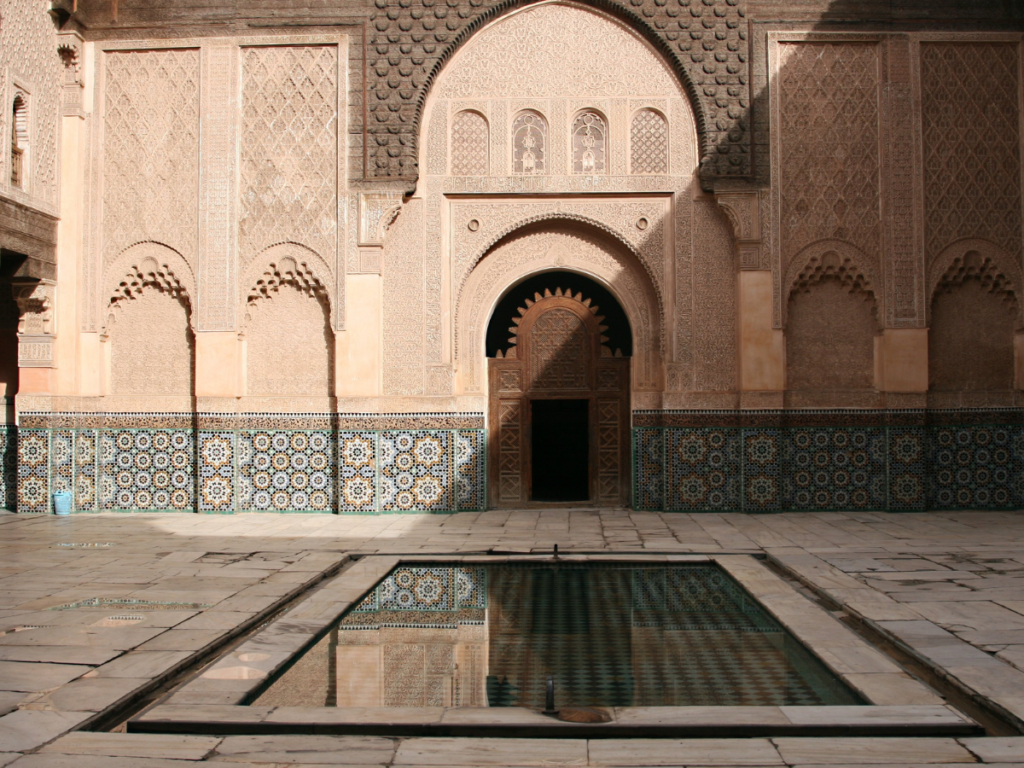
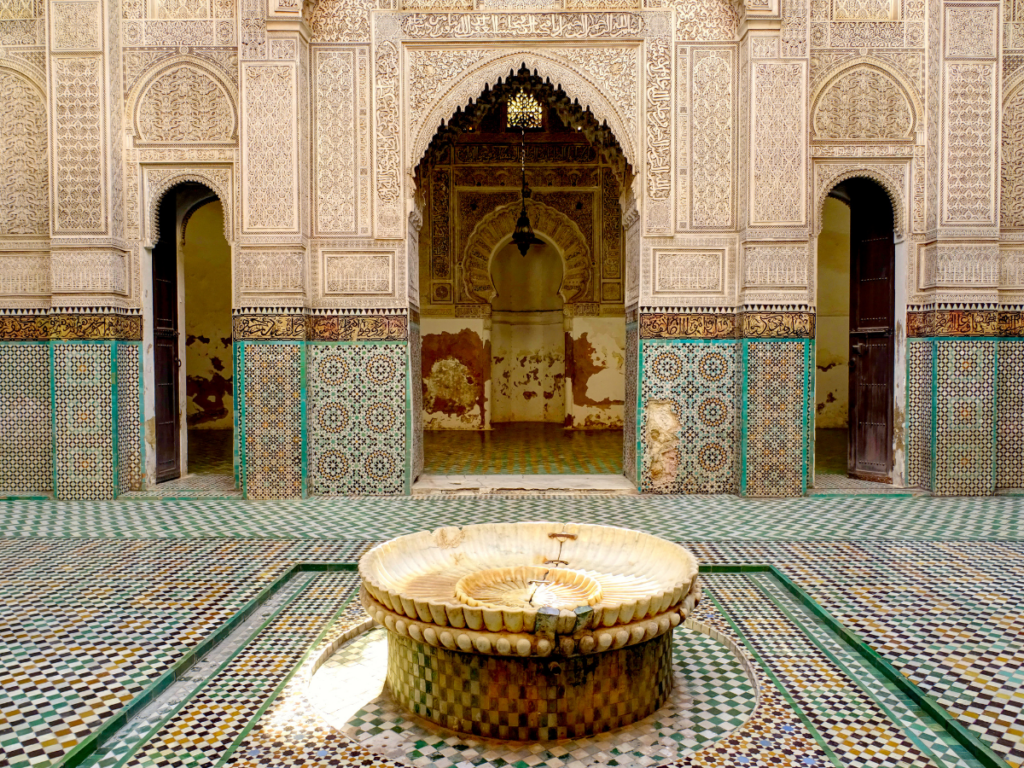
In this guide, we’re going to settle the Fes vs Marrakech debate once and for all. Whether you want to dive into the 9,000 winding alleys of the world’s oldest medina or soak up the glitz and glamour of the “Red City,” I’ll show you how to connect both. By the time you finish reading, you’ll have a clear 3-day roadmap to navigate the Sahara and the survival tips you need to travel like a pro.
Overview of the Fes vs Marrakech Desert Connection
When travelers weigh Fes vs Marrakech, they often think they have to pick just one. But here’s the secret: the best way to see Morocco is by using one city as your start and the other as your finish. This is what seasoned travelers call the “Grand Tour.”
The “Grand Tour” Concept
Instead of flying into one city and staying put, a desert tour between Fes vs Marrakech allows you to see the country’s full spectrum. You start in the lush, green north of Fes, climb through the cedar forests, cross the golden dunes of the Sahara, and end up in the arid, vibrant palm groves of Marrakech. It’s a cohesive journey that covers almost every landscape Morocco has to offer without ever backtracking.
Logistics and Budget
The most popular way to bridge the gap is a 3-day desert trip. You’ll spend about $120 to $150 per person for a shared group tour, which usually includes your driver, van, two nights of accommodation (one in a desert camp!), and most dinners and breakfasts. It’s an incredibly efficient way to travel because your transportation doubles as your sightseeing tour.
Best Time to Visit
To get the most out of your Fes vs Marrakech adventure, timing is everything.
- Spring (March–May): This is the sweet spot. The mountains are green, and the desert heat is manageable.
- Autumn (September–November): The summer “burn” has faded, making it perfect for camel trekking.
- Winter Note: It gets freezing in the desert at night, so bring your heavy layers!
Day 1: From the Imperial Cities to the Middle Atlas
Your journey officially begins! Whether you are heading from Fes vs Marrakech or vice versa, the first day is all about the dramatic shift in scenery.
Departure from Fes
If you start in Fes, you’ll leave the medieval walls behind and head south toward the Middle Atlas Mountains. The air gets cooler, and the scenery turns surprisingly “European.”
Key Stops: Ifrane and the Ziz Valley
- Ifrane: This town is nicknamed “Little Switzerland.” With its red-tiled roofs and snowy winters, it looks more like the Alps than Africa. It’s a great spot for a coffee break and a photo with the famous stone lion.
- Cedars of Azrou: Keep your eyes peeled for the Barbary macaques! These friendly (and cheeky) monkeys live in the ancient cedar forests.
- Ziz Valley: As you descend toward the desert, you’ll hit the Ziz Valley. It’s a massive canyon filled with thousands of date palms. The contrast between the red rocks and green trees is a photographer’s dream.
Starting from Marrakech?
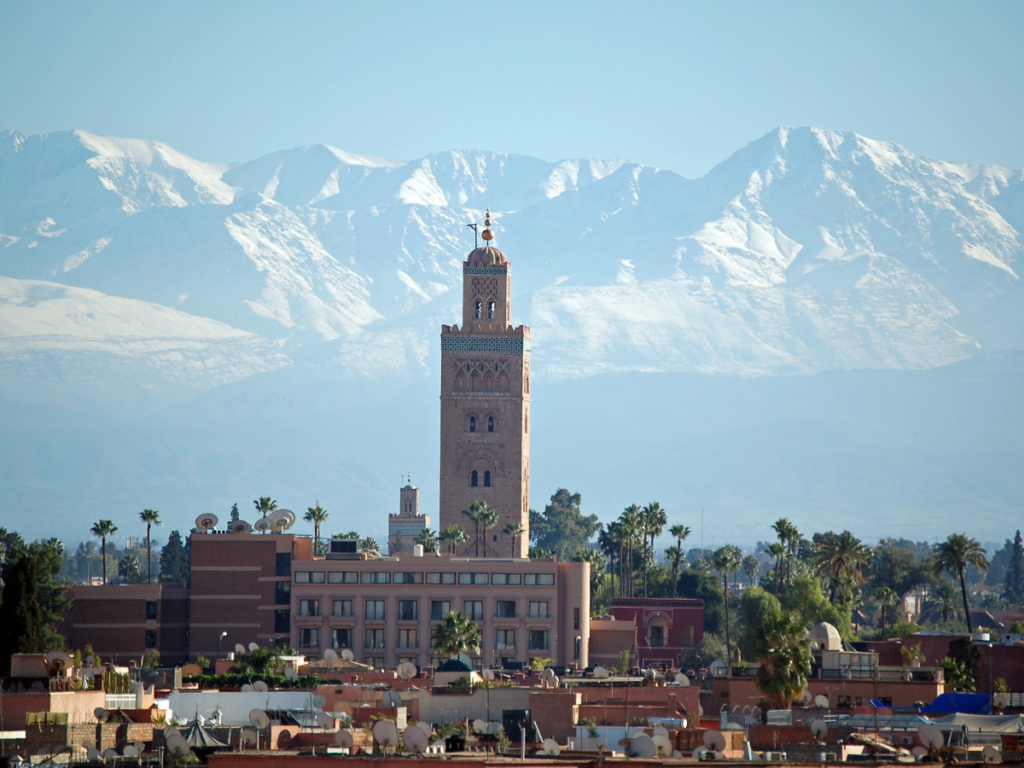
If you’re doing the reverse route (Marrakech to Fes), your first day is equally stunning. You’ll cross the High Atlas Mountains via the Tizi-n-Tichka pass. This road snakes up to 7,415 feet, offering views that will make your heart skip a beat.
Day 2: The Sahara Experience (Merzouga & Erg Chebbi)
This is the day most people live for when comparing Fes vs Marrakech itineraries. Today, you enter the deep Sahara.
Arrival at the Dunes
After a long drive, you’ll reach Merzouga. This tiny village sits right at the edge of the Erg Chebbi dunes. These aren’t just hills of sand; they are towering, orange mountains of dust that change color as the sun moves.
Camel Trekking
As the sun begins to dip, you’ll trade your van for a camel. It’s a slow, rhythmic ride into the heart of the dunes. Watching the sunset from the back of a camel is one of those “pinch-me” moments that makes the whole trip worth it. If you’re comparing Fes vs Marrakech for authenticity, this trek into the quiet sands feels worlds away from the city noise.
Desert Glamping under the Stars
You’ll arrive at your camp just as the stars begin to pop out. Whether you choose a basic tent or a “luxury glamping” setup with a real bed and shower, the experience is magical.
- Traditional Dinner: Feast on tajine and fresh bread by the campfire.
- Berber Music: Most camps feature locals playing traditional drums and singing under the Milky Way.
- The Silence: The most shocking part of the Sahara is the absolute silence. No cars, no Wi-Fi, just the wind.
Day 3: Gorges, Kasbahs, and the “Red City”
Wake up early! The sunrise over the dunes is the opening act for a day filled with history and natural wonders as you finish the bridge between Fes vs Marrakech.
Natural Wonders: Todra Gorge
After your camel ride back to Merzouga, you’ll head to the Todra Gorge. Imagine 300-meter-high limestone walls closing in on a tiny crystal-clear river. It’s a massive canyon where you can walk along the riverbed and feel incredibly small.
Historical Architecture: Ouarzazate and Aït Benhaddou
As you push toward Marrakech, you’ll enter the tours from Ouarzazate “Hollywood of Africa.”
- Ouarzazate: This city is the gateway to the Sahara and home to major film studios.
- Aït Benhaddou: This is the big one. It’s a UNESCO-listed ksar (fortified village) made of red mud bricks. You might recognize it from Gladiator or Game of Thrones. Walking through its narrow, uphill paths feels like walking back a thousand years.
Final Arrival in Marrakech
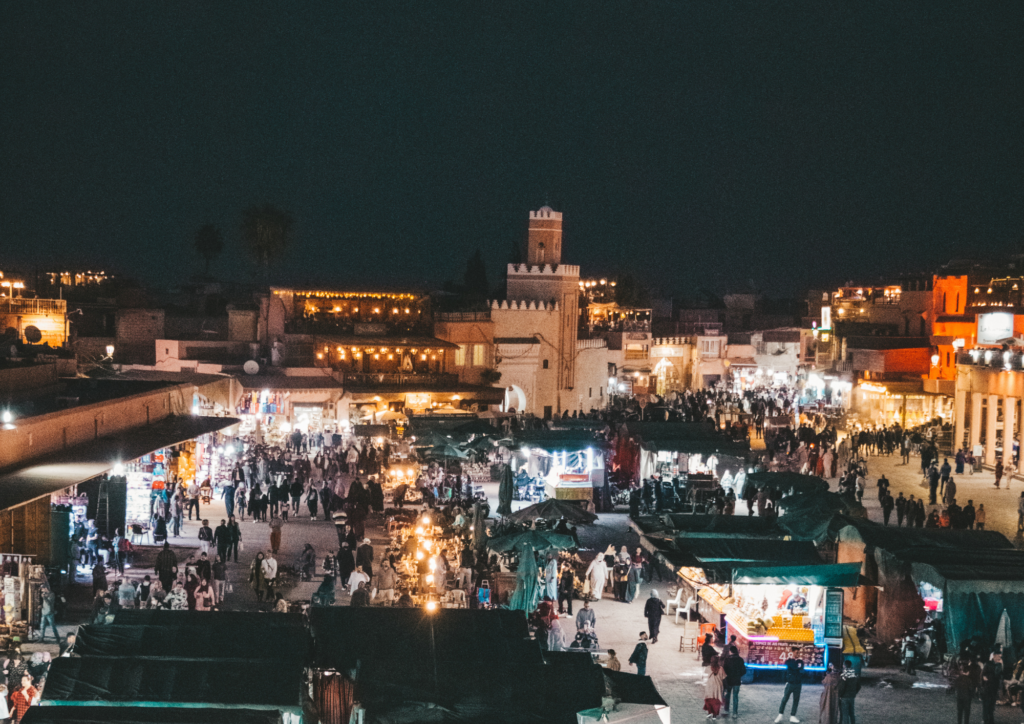
As the sun sets on day three, you’ll descend the final mountain passes and enter the “Red City.” The quiet of the desert is replaced by the roar of motorbikes and the smell of grilled meats. You’ve successfully navigated the gap between Fes vs Marrakech!
Practical “Survival” Tips for the Desert
Morocco is beautiful, but it can be overwhelming. To make your Fes vs Marrakech trip a success, follow these “survival” secrets.
Dress Code and Cultural Respect
Morocco is a conservative country. While you’ll see tourists in shorts, you’ll have a much better experience if you dress respectfully.
- What to wear: Lightweight linen pants, long skirts, and t-shirts that cover your shoulders.
- Sun Protection: The Moroccan sun is no joke. A “Shesh” (traditional desert scarf) is not just a souvenir it’s the best way to keep the sun and sand off your face.
Connectivity and Navigation
Don’t rely on your phone’s signal in the mountains or the deep desert.
- Maps.me: Download the offline map of Morocco before you leave.
- The Medina Maze: In the Fes medina, there are 9,000 alleys. Google Maps will fail you. Use landmarks or hire a local guide for your first day to avoid getting hopelessly lost.
Cash is King
Once you leave the big cities of Fes vs Marrakech, ATMs become rare.
- Small Change: Keep a stash of Moroccan Dirhams for tips, public bathrooms (which usually cost 2 dirhams), and snacks.
- Rural Shopping: In small Berber villages, cards are rarely accepted. If you see a rug or a piece of jewelry you love, you’ll need cash to haggle.
The Verdict: Fes or Marrakech?
So, who wins the Fes vs Marrakech battle?
- Choose Fes if you want authenticity, ancient history, and a slower pace. It’s cheaper, grittier, and feels like “real” Morocco.
- Choose Marrakech if you love energy, luxury riads, world-class shopping, and a vibrant nightlife. It’s more “tourist-friendly” but can be more stressful.
The best answer? Do both. By taking a 3-day desert tour, you don’t have to choose. You get the best of both worlds and a lifetime of memories in between.
Ready to start your Moroccan adventure with journey via morocco?
FAQS
Is it better to start in Fes or Marrakech?
Most travelers prefer starting in Fes and ending in Marrakech. Fes provides a “deep dive” into traditional culture, which can be intense. Moving toward Marrakech feels like a gradual transition into the more modern, tourist-friendly side of Morocco. Plus, arriving in the “Red City” after the quiet desert is a fantastic way to end on a high-energy note.
How much does a 3-day desert tour cost
For a shared group tour, expect to pay between $150 and $250 per person. Private tours offer more flexibility but are significantly more expensive, often ranging from $450 to $900 depending on the number of people and the luxury level of the desert camp.
Is the Fes vs Marrakech desert trip safe for solo women?
Yes, it is generally very safe, especially when booking through a reputable tour operator. While catcalling can happen in the busy medinas, the desert tours are highly professional. Tip: Wear a wedding ring (even if you aren’t married) and dress modestly to significantly reduce unwanted attention.
Can I see the Sahara in just two days?
While 2-day tours exist, they involve 10-12 hours of driving per day. This is exhausting and leaves almost no time to actually enjoy the dunes or the Kasbahs. A 3-day itinerary is the absolute minimum recommended to experience the Fes vs Marrakech connection without feeling like you spent the whole trip in a van.
What is the main difference between the Fes and Marrakech medinas?
The Fes medina (Fes el-Bali) is the oldest and largest car-free urban area in the world; it is a true medieval maze where you will get lost. The Marrakech medina is more “polished,” has wider streets, and is much more focused on commerce and tourism. If you want grit and history, pick Fes. If you want shopping and atmosphere, pick Marrakech.
What activities can I do in the Merzouga desert besides camel trekking?
The Sahara is an adventure playground! popular Desert Activities include:
Sandboarding: Sliding down the massive Erg Chebbi dunes.
4×4 Jeep Safaris: Visiting nomadic families and the Gnawa musicians in Khamlia village.
Stargazing: Since there is zero light pollution, you can see the Milky Way with the naked eye.
Quad Biking/ATV: For those who want an adrenaline rush across the sand.