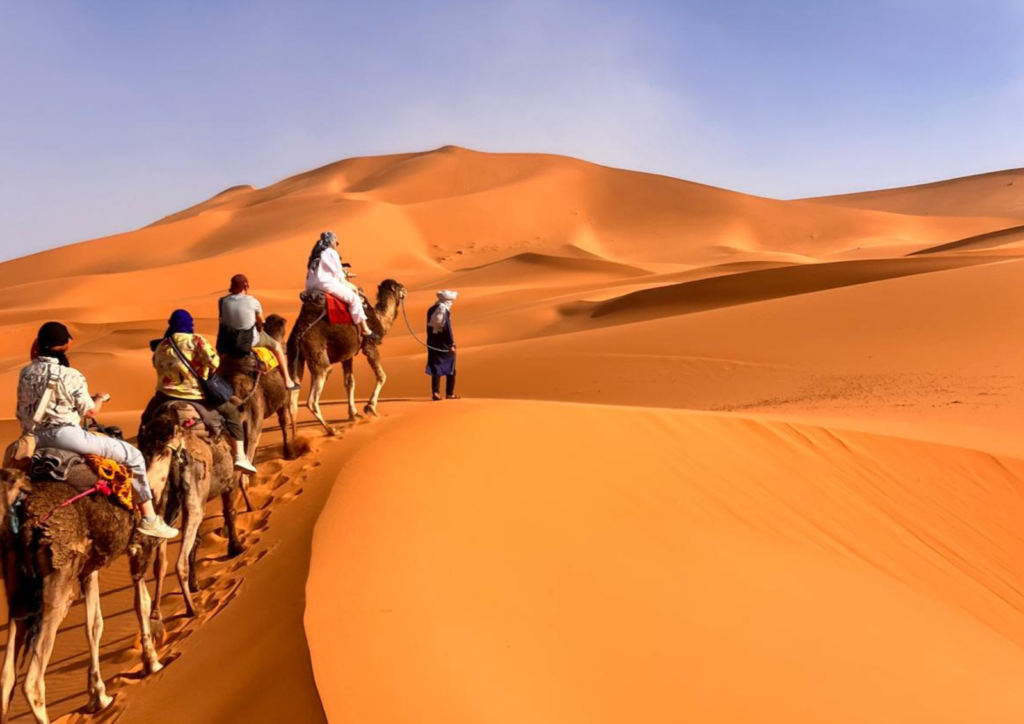
The best time to visit Sahara Desert in Morocco is October or April and once you understand why, planning your trip becomes incredibly simple. These two months hit that sweet spot where the days are warm, the nights are comfortable, and the golden dunes of Erg Chebbi look like something straight out of a dream. Whether you want to ride a camel at sunrise, sleep under a billion stars, or capture jaw-dropping photos of Morocco’s iconic landscape, this guide has everything you need to plan your perfect Sahara adventure.
From Merzouga to Zagora, the Sahara changes dramatically with the seasons. Temperatures can swing from a freezing 3°C on a winter night to a scorching 50°C in the summer sun. Getting the timing right is not just about comfort it is about safety, experience, and making the most of every moment in one of the world’s most extraordinary places.
Based on insights from local guides with over 20 years of experience in the Drâa-Tafilalet region, this 2026–2027 guide breaks down every season, every month, and every reason why your timing matters more than you think.
1. Quick Summary: The Gold Standard Window
If you only have time to read one section, make it this one. Here is the short answer to when you should go:
- Best Overall Months: October and April
- Ideal Weather: Mild days of 20–25°C and cool, bearable nights of 8–15°C
- Peak Season: November to February comfortable days but freezing cold nights
- Avoid If Possible: June to August extreme heat exceeding 45–50°C
These months are considered the gold standard by experienced Sahara travelers and local Berber guides alike. The light during October and April is particularly magical warm and golden, perfect for photography, camel trekking, and simply soaking in the silence of the desert.
2. Detailed Seasonal Breakdown
Spring (March–May): The Blooming Desert
Spring is one of the most visually stunning times to visit Sahara Desert in Morocco. Temperatures rise to a comfortable 25–30°C, and if you are lucky, you will witness something few travelers expect wildflowers blooming inside desert oases, and migratory birds arriving at the Dayet Srji salt lake near Merzouga. The contrast between the golden dunes and patches of green life is absolutely breathtaking.
However, there is one important thing to know: March comes with a warning. The Sirocco winds sweep across the Sahara during this period, bringing sandstorms that can roll in fast and without much notice. Packing a face covering (known locally as a cheche or turban) is not optional in March it is essential. April and May are much calmer and are consistently ranked among the top months to be in the desert.
Autumn (September–November): The Photographer’s Dream
If you are visiting Sahara Desert in Morocco for photography, autumn is your season. The air is warm during the day, nights are pleasantly cool at 12–18°C, and the light at dawn and dusk hits the dunes of Erg Chebbi at the most flattering angles imaginable. Local photographers and travel bloggers often call October the single best month in the entire Sahara calendar.
Autumn also brings the date harvest season to the Draa Valley, which runs along the edge of the desert. Villages come alive with activity, markets are full of fresh Medjool dates, and the whole region has a festive, welcoming energy. If you can visit in October, do not hesitate it truly delivers the complete Sahara experience.
Winter (December–February): Clear Skies and Cold Nights
Winter in the Sahara is surprisingly popular, and for good reason. Days are sunny and comfortable at 18–20°C, which makes daytime camel rides and dune walks genuinely enjoyable. But here is the part most first-time visitors do not expect: nights can drop to 0–5°C. Yes, you read that right. The Sahara can get freezing cold.
The upside? Winter delivers the absolute best stargazing conditions anywhere in Africa. With almost zero humidity and very little atmospheric dust, the Milky Way appears with stunning clarity on clear nights. If astrophotography or stargazing is on your bucket list, visiting between December and February might actually be the ideal time for you just bring serious thermal layers and a warm jacket.
Summer (June–August): The Challenge Months
Let’s be honest summer is the hardest time to visit the Sahara Desert in Morocco. Temperatures regularly reach 45–50°C, and in some years have exceeded that. The midday sun is not just uncomfortable, it is genuinely dangerous. Heatstroke can set in quickly, especially for travelers who are not accustomed to extreme desert conditions.
That said, summer is not completely off the table. Activities are simply shifted to the edges of the day early morning before 9 AM and late evening after 6 PM. Crowd levels are very low, accommodation prices drop significantly, and there is an almost otherworldly feeling to having the vast dunes entirely to yourself. Just make sure you are well-prepared.
3. Merzouga Month-by-Month Weather Comparison
Here is a quick reference table for planning your visit to Merzouga and Erg Chebbi with Us :
| Month | Avg Daytime (°C) | Avg Nighttime (°C) | Rain Risk | Crowd Level |
| Oct–Nov | 23–30°C | 9–18°C | Low | High |
| Dec–Jan | 18–21°C | 3–6°C | Minimal | Peak (Holidays) |
| Mar–Apr | 25–29°C | 10–14°C | Low | High |
| Jun–Aug | 40–50°C | 22–25°C | None | Very Low |
4. Activity-Specific Timing: When to Go For…
Depending on what you want to do most in the Sahara, your ideal timing might differ slightly from the standard recommendation. Here is a quick breakdown by activity:
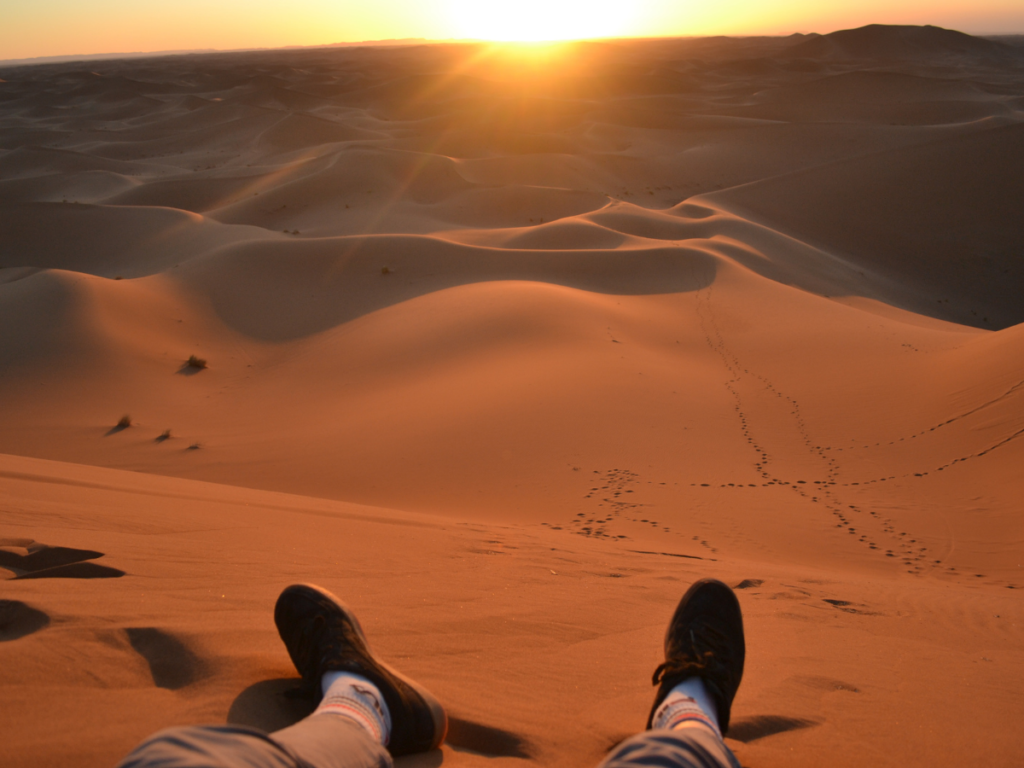
- Milky Way Photography: April through September for the galactic core aim for a new moon night for the darkest skies
- Stargazing: Winter months (December to February) for the crispest, clearest air and maximum sky visibility
- Desert Festivals: August for the Gnaoua music festival in the village of Khamlia; March for the International Festival of Merzouga
- Camel Trekking: October through April this protects both you and the camels from dangerous midday heat exhaustion
5. Choosing Your Destination: Merzouga vs. Zagora
Not all parts of the Moroccan Sahara are the same, and choosing the right base matters a lot.
Merzouga and its famous Erg Chebbi dunes are the classic choice. With dunes soaring up to 150 meters, a rich Berber culture, and the full “sea of sand” Sahara experience, Merzouga is worth every kilometer of the drive from Fes or Marrakech typically around 8–10 hours.
Zagora, on the other hand, is flatter and more rocky what desert experts call “hamada” terrain. It sits closer to Marrakech and works well for travelers with limited time who want a genuine taste of the desert without the long journey. Think of it as a shorter, more accessible intro to the Sahara.
6. Essential Packing List for the Sahara Desert
What you pack can make or break your trip. Here is what experienced Sahara travelers always bring:
- Daytime Clothing: Loose-fitting, light-colored cotton or linen clothes to reflect heat and protect skin
- Nighttime Layers: Thermal underlayers and a heavy jacket especially critical in winter months
- The Cheche (Turban): This versatile cloth is the most practical item you can own in the desert it shields against sun, sand, and cold wind
- Sun Protection: High-SPF sunscreen (SPF 50+), UV-blocking sunglasses, and a wide-brim hat
- Hydration: Drink at least 3–4 liters of water per day; pack electrolyte supplements to prevent cramping
- Footwear: Closed-toe sandals or lightweight hiking shoes never flip-flops on the dunes
7. Safety and Cultural Etiquette
The Sahara is awe-inspiring, but it demands respect from both nature and the local culture.
- Heat Safety: During hot months, stay indoors or in shade between 10 AM and 4 PM. Never underestimate how fast dehydration can hit.
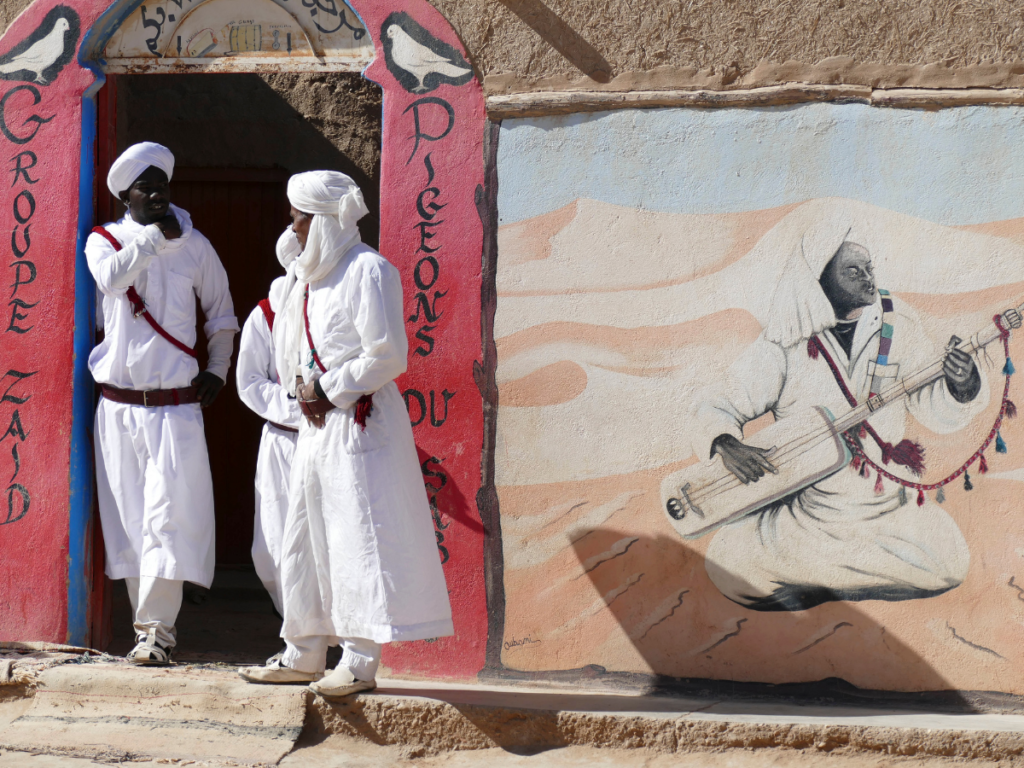
- Photography and Privacy: Always ask permission before photographing local people. The phrase “Mumkin sura, min fadlik?” (May I take a photo, please?) goes a long way.
- Eco-Travel: Use biodegradable soap, carry all trash out of the dunes, and leave the desert exactly as you found it.
- Guided Tours: For first-time visitors, hiring a local Berber guide from Merzouga is strongly recommended they know the terrain, weather patterns, and the best spots that no map will ever show you.
8. Frequently Asked Questions
Is it safe to visit the Sahara in summer?
Yes, but precautions are absolutely non-negotiable. Limit outdoor activity to before 9 AM and after 6 PM, drink water constantly, wear full-body sun protection, and never underestimate the heat. Traveling with an experienced local guide during summer is strongly advisable.
What are the best activities to do in the Sahara Desert in Morocco?
The Sahara Desert in Morocco offers unforgettable experiences for every type of traveler. The top activities include:
Camel Trekking — The classic Sahara experience; best from October to April Sunrise & Sunset Dune Walks — The golden light over Erg Chebbi is absolutely unmissable Milky Way Photography — April to September offers the best galactic core visibility Quad Biking — A thrilling way to explore the dunes around Merzouga Berber Cultural Visits — Explore the village of Khamlia and experience traditional Gnaoua music
Overnight Desert Camping — Sleep under millions of stars in a traditional Berber camp
How many days do I need in the Sahara?
A minimum of 3 days and 2 nights is recommended. This gives you enough time for the long drive from Marrakech or Fes, a sunset camel ride, a full night under the stars, and a sunrise walk over the dunes before heading back.
Does it rain in the Sahara?
Rarely. Annual rainfall in Merzouga is less than 50mm. However, when rain does fall, flash floods can form rapidly in dry riverbeds called wadis. Always check local weather conditions, especially in spring, and never camp in a wadi overnight.
What are the best tours to the Sahara Desert in Morocco?
The best tours to the Sahara Desert in Morocco depart from Marrakech or From Fes toward the golden dunes of Erg Chebbi in Merzouga. The three most popular options are:
2-Day/1-Night — Quick getaway with camel trekking and one desert camp night 3-Day/2-Night — The most recommended; includes the Atlas Mountains and two nights under the stars Private Berber Guide Best for a fully personalized, authentic desert experience For the best conditions, book your tour in October or April and always choose a locally-based Merzouga operator for a more genuine experience.
Ready to Plan Your Sahara Adventure?
The Sahara Desert in Morocco is one of those rare places that changes you. It is not just a destination it is an experience that stays with you long after the sand has left your shoes. Whether you go in the golden light of October, the crisp air of December, or the blooming energy of April, the desert has something extraordinary waiting for you.
Start planning your trip today. Choose your season, pack smart, respect the land and its people, and prepare to fall completely in love with one of the most beautiful places on Earth. The dunes of Erg Chebbi are waiting and trust us, they are absolutely worth it.
Have questions about your Sahara trip? Drop them in the comments below or reach out to a local Merzouga guide to start building your perfect desert itinerary!