
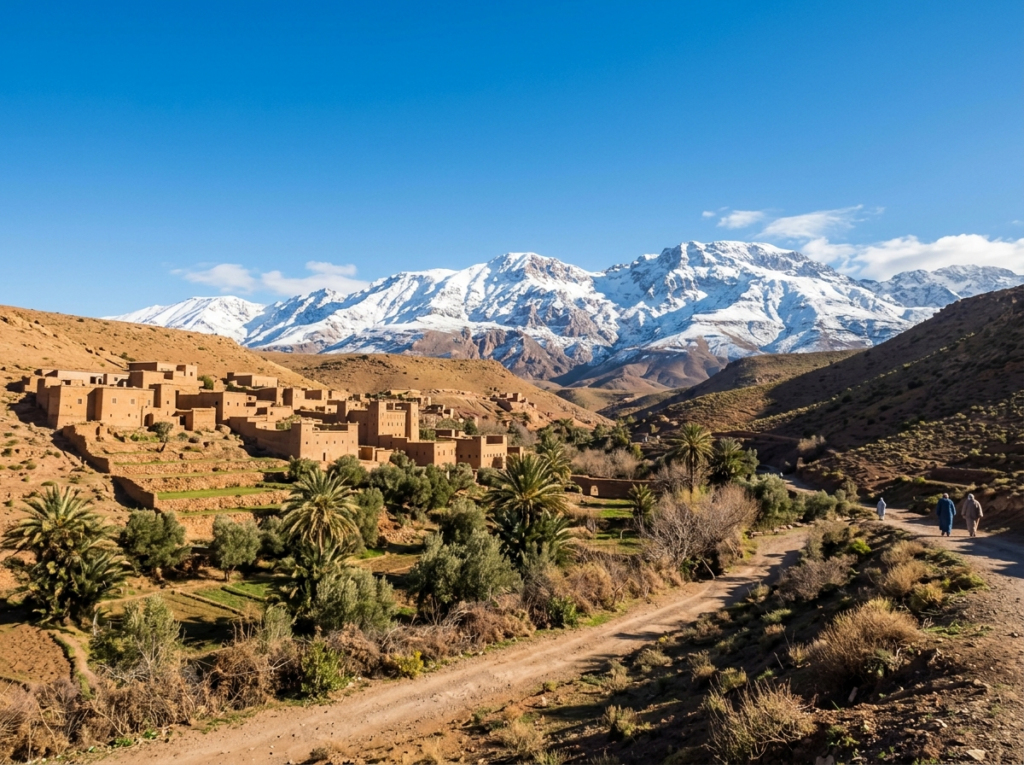
January is a good month to explore Morocco if you want comfortable daytime sightseeing in Marrakech and Fes, a Sahara Desert that feels dramatic rather than punishing, and Atlantic coast towns that stay mild while the rest of the country cools down. The strongest options this month are Merzouga and the Sahara, Marrakech and Fes, the Agadir-Taghazout-Essaouira coast, and the Dades and Todra valleys. Each works for a different reason, and January treats them very differently from one another.
When I plan January journeys for travelers, the first thing I explain is that Morocco does not have one winter climate. It has several, sitting close together on the map, and the right destination depends on what kind of trip you actually want. Where to Go in Morocco in January?
The Short Answer For Where to Go in Morocco in January
If you want culture and walkable cities, base yourself around Marrakech and Fes, where January days are mild enough for hours of sightseeing without the summer exhaustion. If the Sahara is the reason you are coming to Morocco, Merzouga in January offers clear skies and comfortable daytime temperatures, though nights get genuinely cold. For the mildest weather in the country, the Atlantic coast around Agadir stays warmer than inland Morocco, and Taghazout’s winter surf swells draw experienced surfers specifically for this season. The Dades and Todra Gorges are a quieter option that rewards travelers who want dramatic scenery and don’t mind cool air.
None of these are a guaranteed hot-beach experience. January is winter in Morocco, just a mild and highly regional one.
Why January Works for Morocco
The main advantage of January is comfort. You can spend a full day walking through a medina, visiting a kasbah, or exploring a souk without the intense heat that makes summer sightseeing exhausting in Marrakech or Fes. Evenings in the medinas take on a different character too, quieter streets, warm interiors, and a slower pace than the busier travel periods.
After the New Year period specifically, many destinations settle into their calmer winter rhythm, and accommodation can be easier to book, particularly for riads that fill up fast in spring and autumn.
But January has real limitations, and I would rather be honest about them than oversell the month. Inland evenings get cold, especially in Marrakech and Fes. Desert nights in Merzouga can drop close to freezing even when the afternoon felt warm. Higher elevations in the Atlas Mountains see snow and icy conditions, which changes what’s realistic for trekking. The Atlantic coast can bring rain and wind, particularly further north. And if your main goal is lying on a beach in warm water every afternoon, January is not the month for that anywhere in Morocco.
Best Places to Go in Morocco in January
Merzouga and the Sahara Desert
Merzouga and the Erg Chebbi dunes are one of the most rewarding January destinations, largely because the desert light in winter is exceptional. Camel trekking out to a desert camp feels different this time of year: the ride itself is comfortable, sunset arrives with a noticeable chill that most travelers find atmospheric rather than uncomfortable, and sunrise is genuinely cold, cold enough that I always tell travelers to sleep in more layers than they think they’ll need.
The gap between daytime and nighttime temperature is the detail most trip planning misses. Afternoons in the desert can feel pleasantly warm in direct sun, but that heat disappears fast once the sun drops, and camp nights can be sharply cold. This is where the quality of the camp matters more than the photos suggest: ask specifically about tent insulation, blankets, and whether the camp offers reliable heating before you book. A stunning setting doesn’t help much if you’re awake at 3am regretting your packing list.
Getting to Merzouga also deserves real planning. From Marrakech, it’s a long road journey, roughly a full day of driving depending on stops, weather, and road conditions, and I would never treat it as a comfortable one-day transfer. The route works much better broken into stages: Marrakech to Aït Ben Haddou and Ouarzazate, then on through the Dades Valley toward Merzouga. From Fes, the drive is somewhat shorter but still substantial, and benefits from the same approach of breaking up the journey rather than rushing it.
Marrakech and Fes
Both cities work well in January, though for different reasons.
Marrakech is at its most walkable this month. Mornings around Ben Youssef are quiet enough for unhurried photos before the souks fill up, and by late afternoon the light around the Koutoubia and the old city’s ochre walls turns warm and photogenic. Bahia Palace and the surrounding gardens are also easier to enjoy without the crowds or heat of high season.
Fes offers a more immersive version of the same appeal. Fes el-Bali‘s traditional workshops, souks, and centuries-old layout feel especially atmospheric in the cooler months, when walking for hours through the medina doesn’t take the same toll it would in summer.
The catch in both cities is temperature swing. Mornings and evenings are properly cold, and traditional riads, built for a very different climate need, can feel cooler indoors than travelers expect. Before booking, I always recommend asking directly whether the rooms and common areas have working heating, not just whether the property “has heating” on paper.
Agadir, Essaouira, and Taghazout
For travelers prioritizing warmth, the Atlantic coast around Agadir is the mildest part of the country in January. It’s a practical base for relaxed days, coastal walks, and sunshine without the intensity of summer heat.
Taghazout, just up the coast, is a different kind of draw. January sits inside the Atlantic’s winter surf season, with stronger swells and cooler water that experienced surfers specifically travel for. A wetsuit is essential, and this is not the month I’d recommend for someone learning to surf for the first time; the conditions reward experience rather than forgive inexperience. Imsouane, nearby, offers a gentler alternative for those still building confidence.
Essaouira, further along the coast, is worth including for a completely different pace. Its ramparts, fishing harbor, and medina reward slow exploration rather than beach time, and it’s a good stop for travelers who want character over resort comfort.
None of these towns should be sold as a guaranteed hot-beach holiday. The Atlantic in January is mild by Moroccan standards, not tropical.
Dades and Todra Gorges
This is the region I think most January guides underplay, and it’s genuinely one of the most rewarding stretches of the country this time of year.
The route through Aït Ben Haddou, Ouarzazate, the Dades Valley, and Todra Gorge sits at the intersection of mountain and desert landscapes, and January’s lower winter light makes the scenery feel especially sharp and dramatic. The gorges are also far more comfortable for walking now than during the extreme heat of summer, when hiking here is much less appealing.
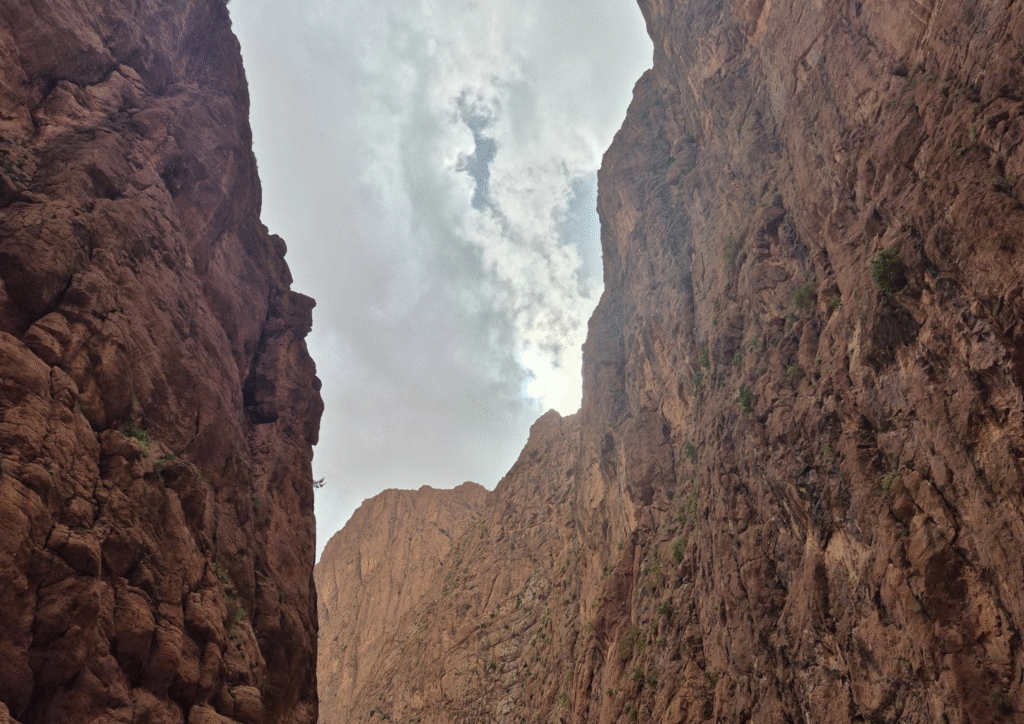
Todra Gorge in particular rewards a slower visit, with towering canyon walls and paths worth spending real time on rather than rushing through. The caveat is that mountain weather changes quickly in winter: rain can leave some trails muddy, and higher roads in the surrounding areas can see snow or ice. I generally recommend shorter walks scheduled during the warmest part of the day, ideally with a local driver who’s tracking current road conditions.
Where I Would Not Focus in January
January doesn’t treat every part of Morocco the same way, and it’s worth being direct about where the month works against you.
High-altitude trekking in the Atlas Mountains is a genuine winter environment in January, with snow and icy conditions that require proper equipment and current local knowledge, not casual planning. If your itinerary depends on a beach holiday with guaranteed warm swimming, no region of Morocco will reliably deliver that in January. And assuming desert nights will feel like desert days is one of the most common planning mistakes I see; pack and plan for the cold, not just the sun.
An overly ambitious itinerary is the other trap. January’s shorter comfortable daylight window and occasional weather disruptions mean a route that looks fine on paper in summer can feel rushed in winter.
What to Pack for Morocco in January
I always tell travelers to pack for three climates, not one: daytime sun, cold evenings, and a Sahara that swings sharply after dark.
A practical layering system covers most of it: a lightweight base layer, a wool or fleece mid-layer, and a windproof or waterproof outer layer. Add comfortable walking shoes with good grip for medina cobblestones, warm socks, and a proper jacket for desert nights specifically. A light rain layer is worth having for the coast and north. Sunglasses and sunscreen still matter, since Moroccan winter sun can feel stronger than the cool air suggests.
One more thing worth repeating: don’t assume every riad heats the way a European hotel does. Ask before you book, especially for stays in Fes, Marrakech, or smaller mountain properties.
Morocco January Weather: What to Expect
| Region | Typical January experience |
|---|---|
| Agadir | Mild and relatively sunny, with cooler evenings |
| Marrakech | Pleasant afternoons, cold mornings and nights |
| Fes | Cooler than Marrakech, with a higher chance of rain |
| Merzouga | Sunny, comfortable days and very cold nights |
| Dades/Todra | Crisp daytime air, cold after sunset |
| High Atlas | Cold, with snow possible at elevation |
Actual conditions vary year to year, so treat this as a general pattern rather than a forecast for specific dates.
Frequently Asked Questions
Is Morocco warm in January?
Morocco can feel pleasantly warm in direct winter sun, but January is still winter. Coastal areas like Agadir are the mildest, while Marrakech, Fes, the mountains, and the Sahara all get noticeably cold after sunset.
Is January a good time to visit the Sahara Desert?
It can be, if you prepare for cold nights. Daytime desert activities like camel trekking are usually comfortable, but Merzouga’s nighttime temperatures drop sharply, so a well-insulated camp and warm layers matter more than the daytime weather suggests.
Where is the warmest place in Morocco in January?
Agadir and the surrounding Atlantic coast are generally the mildest mainstream destinations in the country during January, though evenings there still cool down.
Does it rain a lot in Morocco in January?
It depends on the region. Coastal and northern areas see more winter rain than the south, while the Merzouga area tends to stay considerably drier. Mountain regions can have more unsettled and unpredictable weather.
Plan Your January Trip to Morocco
For a first January visit, a route that works well combines Marrakech, Aït Ben Haddou, the Dades Valley, Merzouga, and on to Fes, giving you culture, mountain and desert scenery, and the Sahara without rushing any one stretch.
Traveling privately makes it much easier to adapt driving days, accommodation choices, and desert timing to the weather and your own pace, rather than following a fixed group schedule. If the Sahara is the centerpiece of your trip, a private Marrakech to Merzouga desert tour lets you break the journey properly instead of treating it as a single long transfer. And if you’d rather build the whole route around your own dates and interests, I can help [plan a custom Morocco itinerary] with pricing quoted in USD.
January in Morocco moves at a different rhythm than the rest of the year: cooler air, clear winter light, quieter medinas, and a Sahara that feels especially vast once the sun goes down.
