
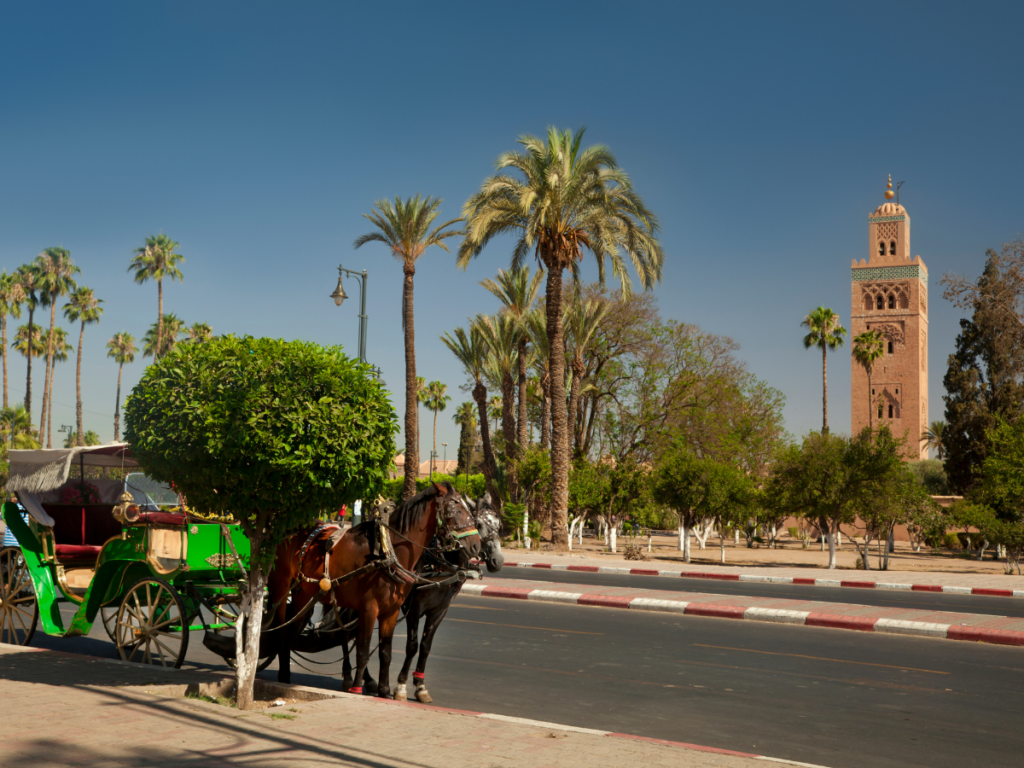
If you have six days in Morocco and want to see more than just Marrakech, this private morocco atlas mountains desert merzouga 6 day itinerary, through cedar forests and imperial cities, and finally into the blue streets of Chefchaouen before ending on the Atlantic coast in Casablanca. Traveling with a private driver rather than a fixed group tour, you set your own pace, stop where you like, and skip the crowded shared minibuses that dominate the standard Marrakech–Merzouga loop.
This route covers the Ourika Valley, Tizi n’Tichka pass, Aït Ben Haddou, the Dades and Todra valleys, Merzouga and Erg Chebbi, the Middle Atlas cedar forests, Fes, Chefchaouen, and Rabat — a genuine south-to-north journey across the country rather than a there-and-back desert trip. It suits couples, families, first-time visitors, and photographers who want a broad, efficient introduction to Morocco’s landscapes and cities in a limited amount of time.
Route at a glance: Marrakech → Ourika Valley → High Atlas Mountains → Aït Ben Haddou → Dades Valley → Todra Gorge → Merzouga → Middle Atlas → Fes → Chefchaouen → Rabat → Casablanca
6-Day Morocco Itinerary at a Glance
| Day | Route | Overnight |
|---|---|---|
| Day 1 | Marrakech → Ourika Valley → Marrakech | Marrakech |
| Day 2 | Marrakech → High Atlas → Aït Ben Haddou → Dades | Dades Valley |
| Day 3 | Dades → Todra Gorge → Aït Hani → Ziz Valley → Merzouga | Sahara Camp |
| Day 4 | Merzouga → Middle Atlas → Cedar Forest → Ifrane → Fes | Fes |
| Day 5 | Fes → Chefchaouen | Chefchaouen |
| Day 6 | Chefchaouen → Rabat → Casablanca | Casablanca |
Route Overview
The geographic logic of this trip is straightforward once you see it laid out: you climb into the High Atlas, drop into Southern Morocco’s kasbah country, push on to the Sahara, cross back through the Middle Atlas, spend time in an imperial city, cut north into the Rif Mountains, and finish on the Atlantic coast. Each day has a distinct landscape, so the trip never feels repetitive — a real advantage over itineraries that simply bounce between Marrakech and the desert and back.
Why Choose This Private 6-Day Morocco Itinerary?
A Private Route from Marrakech to Casablanca
Because the tour starts in Marrakech and ends in Casablanca, you never have to backtrack. This one-way structure is more efficient than round-trip desert tours that return you to your starting city, and it works especially well if you’re flying home from Casablanca’s Mohammed V Airport.
High Atlas Mountains and Sahara in One Journey
Few short itineraries manage to combine serious mountain scenery with a full desert camp experience. This route does both, plus imperial cities and the Rif, without feeling rushed.
Merzouga and Erg Chebbi Without Backtracking
Rather than driving to Merzouga and doubling back the same way, this itinerary continues forward through the Middle Atlas toward Fes — meaning every driving day introduces new scenery.
Fes and Chefchaouen Included
Many 4–5 day Sahara tours skip the north entirely. Adding Fes and Chefchaouen gives you Morocco’s most historic medina and its most photographed town in the same trip.
Flexible Stops With a Private Driver
A private vehicle means you can ask to stop for photos, adjust timing around meals, or linger somewhere longer than planned — options a shared tour simply doesn’t offer.
Best for: couples, families, first-time visitors, photographers, and travelers who want a broad Morocco experience in a limited amount of time.
Day-by-Day 6-Day Morocco Itinerary
Day 1 — Marrakech → Ourika Valley → Marrakech
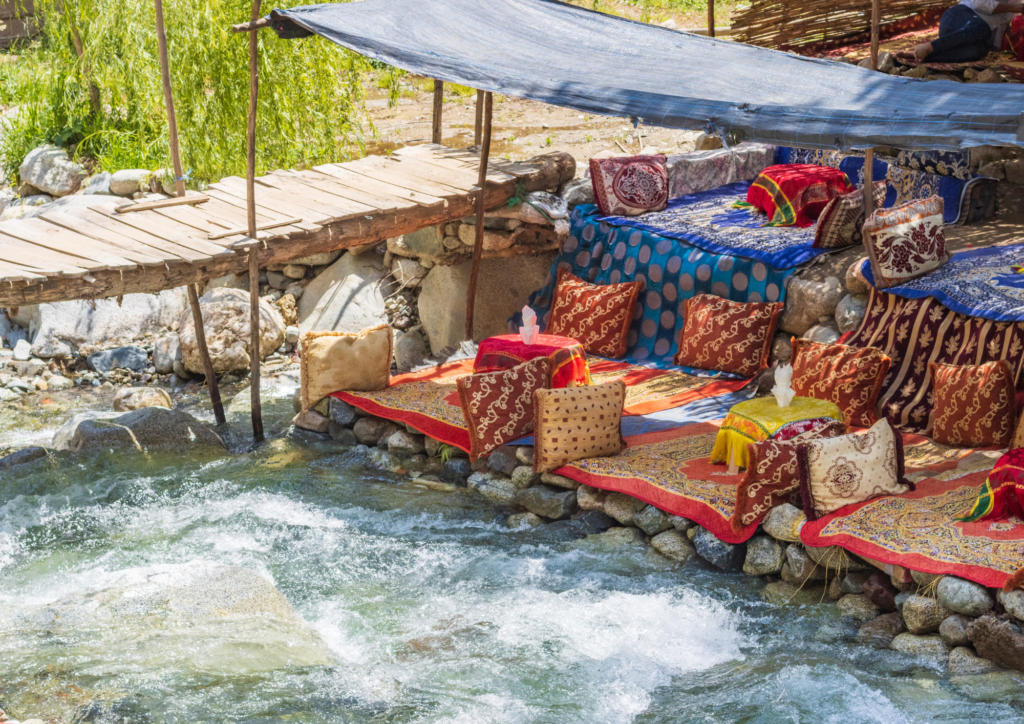
Discover Ourika Valley in the High Atlas Your driver picks you up in Marrakech and heads roughly an hour southeast into the Ourika Valley, a green, river-carved corridor into the High Atlas foothills that makes an easy, scenic introduction to the mountains.
Amazigh Villages and Mountain Landscapes Along the way you’ll pass traditional Amazigh (Berber) villages built into the hillsides, with terraced fields and walnut and olive groves lining the valley floor.
Setti Fatma and Optional Short Hike The village of Setti Fatma, at the head of the valley, is the starting point for a short walk toward a series of waterfalls — a good leg-stretch without requiring serious hiking gear.
Local Market and Cultural Stops Depending on the day of the week, you may pass through a local souk, and there’s usually a stop at an argan oil cooperative where you can see the traditional pressing process.
Driving Time & Distance The round trip from Marrakech is short — roughly 1 to 1.5 hours each way — leaving plenty of time to walk and relax in the valley.
Overnight in Marrakech You return to Marrakech in the late afternoon or evening. This first day is intentionally light, easing you into the trip before the longer driving days ahead.
Day 2 — Marrakech → High Atlas → Aït Ben Haddou → Dades Valley
Crossing Tizi n’Tichka Pass Leaving Marrakech, the road climbs steadily into the High Atlas via the Tizi n’Tichka pass, one of the highest and most scenic mountain roads in Morocco, with switchbacks offering sweeping valley views.
Aït Ben Haddou Kasbah On the far side of the pass, you’ll stop at Aït Ben Haddou, a UNESCO World Heritage fortified village (ksar) of earthen buildings that has appeared in numerous films and remains one of Morocco’s most recognizable landmarks.
Ouarzazate and the Road South The route continues through Ouarzazate, sometimes called the “door of the desert,” known for its film studios and as a gateway town toward the southern valleys.
Valley of Roses Further along, the road passes through the Valley of Roses, a region famous for its rose cultivation and, if timed for the spring harvest, its rose-water production.
Arrival in Dades Valley The day ends in the Dades Valley, known for dramatic rock formations, kasbahs, and river-carved gorges.
Driving Time, Distance & Stops This is one of the longer driving days, roughly 6–7 hours including stops, so expect a full but rewarding day on the road.
Overnight in Dades Valley
Important entities: Tizi n’Tichka, High Atlas, Aït Ben Haddou, Ouarzazate, Skoura, Valley of Roses, Dades Valley.
Day 3 — Dades → Todra Gorge → Aït Hani → Ziz Valley → Merzouga
Dades Valley Morning An early start lets you see the Dades Gorge’s rock formations in good morning light before continuing east.
Todra Gorge The route passes through Todra Gorge, where sheer rock walls rise several hundred meters on either side of a narrow road — one of the most photographed canyons in Morocco.
Aït Hani and the High-Mountain Landscapes Beyond Todra, the road climbs through the small village of Aït Hani and across high plateau landscapes that feel remote and sparsely populated.
Ziz Valley and the Route Toward the Sahara Descending toward the Sahara, the road follows the Ziz Valley, a long ribbon of palm groves cutting through otherwise arid terrain.
Arrival in Merzouga By late afternoon you reach Merzouga, on the edge of the Erg Chebbi dunes.
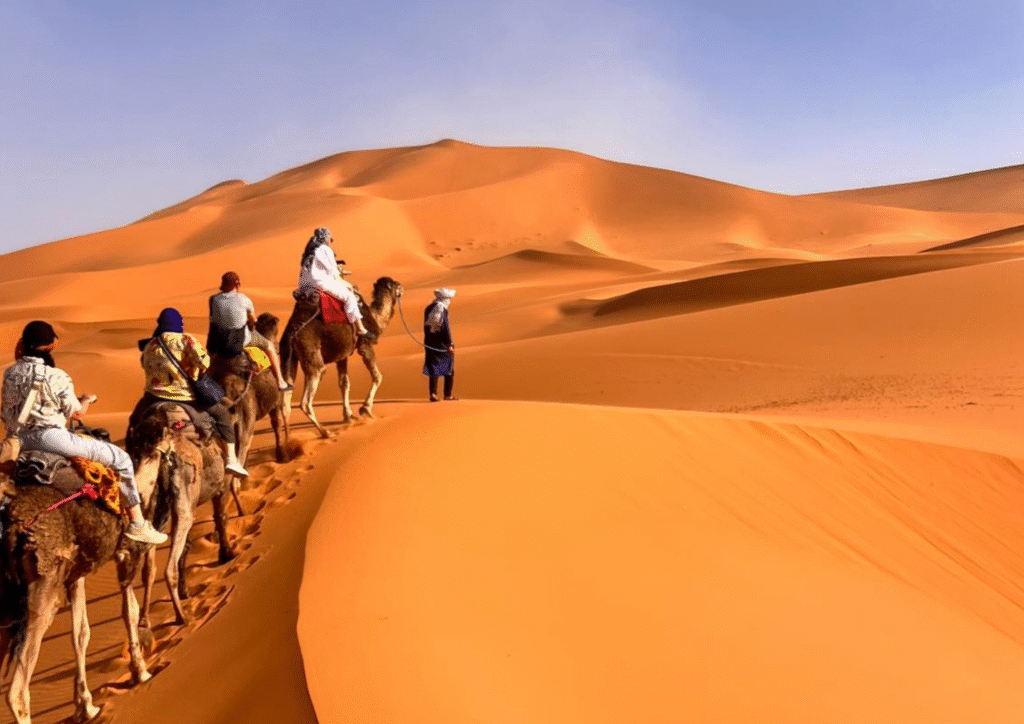
Camel Trek Through Erg Chebbi From here, a camel trek carries you into the dunes toward your desert camp — a slow, quiet transition from the roadside world into the Sahara.
Sahara Sunset Watching the sun set over Erg Chebbi’s dunes is one of the signature moments of this itinerary.
Overnight in a Desert Camp Traditional Sahara camps here typically offer shared or private tents, a communal dinner, and Berber music around the fire.
Driving Time & Distance Expect roughly 5–6 hours of driving plus the camel trek at the end.
This day connects several of Morocco’s most iconic landscapes in a single continuous route, which is part of what makes this itinerary distinctive.
Day 4 — Merzouga → Middle Atlas → Cedar Forest → Ifrane → Fes
Sahara Sunrise Many travelers opt to watch sunrise over the dunes, either from camp or via a short camel ride, before heading back to Merzouga by vehicle.
Leaving Merzouga and Crossing Morocco From Merzouga, the road heads north, retracing part of the Ziz Valley before turning toward the Middle Atlas.
Ziz Valley and Middle Atlas Landscapes The scenery shifts gradually from desert to palm groves to increasingly green, forested mountains.
Cedar Forest Near Azrou and Ifrane, the route passes through Morocco’s cedar forests, home to Barbary macaques that are often visible right along the roadside.
Ifrane — Morocco’s Alpine-Style Town Ifrane’s stone chalets and orderly streets feel distinctly European, a striking contrast to the desert landscape of the same morning.
Arrival in Fes The day ends in Fes, one of Morocco’s four imperial cities and home to the largest car-free urban area in the world.
Driving Time, Distance & Breaks This is the longest driving day of the trip, roughly 6–7 hours, though the changing scenery helps it pass quickly.
Overnight in Fes
What makes Day 4 special? This is the day travelers move from Sahara dunes to cedar forest and mountain scenery within a single day — a dramatic shift in landscape that few itineraries pack into 24 hours.
Day 5 — Fes → Chefchaouen
Morning Departure from Fes Depending on your preference, you can spend the morning exploring the Fes medina before departing, or leave early to maximize time in Chefchaouen.
Journey Through the Rif Mountains The drive north climbs into the Rif Mountains, a greener, less-visited range than the Atlas, with a noticeably different character.
Exploring Chefchaouen’s Blue Medina Chefchaouen’s old town, painted in shades of blue, is one of the most photographed places in Morocco and rewards slow, unhurried wandering.
Plaza Uta el-Hammam The town’s main square is a good starting point, ringed by cafés and the old kasbah.
Souks and Local Crafts Chefchaouen is known for woven textiles, leather goods, and local crafts, sold in small shops throughout the medina.
Scenic Viewpoints A short walk up to the Spanish Mosque above town offers panoramic views over the blue rooftops, especially at sunset.
Free Time in Chefchaouen The afternoon and evening are left open for wandering, photography, and relaxing after several long driving days.
Overnight in Chefchaouen
Day 6 — Chefchaouen → Rabat → Casablanca
Leaving the Rif Mountains The final day heads south and west, leaving the mountains behind for the Atlantic coast.
Rabat — Morocco’s Capital A stop in Rabat, Morocco’s political capital, breaks up the drive and offers a very different atmosphere from the cities visited earlier in the trip.
Hassan Tower The unfinished 12th-century minaret and its surrounding columns are one of Rabat’s key landmarks.
Kasbah of the Udayas This fortified, whitewashed neighborhood overlooking the river mouth is one of Rabat’s most atmospheric corners.
Mohammed V Mausoleum Located near the Hassan Tower, this mausoleum houses the tombs of Morocco’s former king and his sons.
Continue to Casablanca From Rabat, it’s a short final drive to Casablanca.
End of the Private Tour The itinerary concludes here, six days after departing Marrakech.
Final Drop-Off Options in Casablanca Drop-off can typically be arranged at your hotel, a central location, or the airport — confirm your preferred option in advance.
What You Will Experience on This 6-Day Morocco Route
- High Atlas Mountains — dramatic mountain passes and valley scenery
- Amazigh Culture — Berber villages, cooperatives, and traditions throughout the south
- Aït Ben Haddou — a UNESCO-listed fortified village
- Dades Valley — rock formations and kasbah architecture
- Todra Gorge — one of Morocco’s most striking canyons
- Ziz Valley — palm groves on the edge of the Sahara
- Merzouga & Erg Chebbi — Morocco’s tallest and most famous dunes
- Sahara Desert Camp — camel trekking, sunset, and traditional camp life
- Middle Atlas Mountains — cedar forests and cooler mountain landscapes
- Ifrane — an alpine-style mountain town
- Fes — Morocco’s oldest imperial city and medina
- Chefchaouen — the famous blue town of the Rif
- Rabat — Morocco’s capital and royal landmarks
- Casablanca — the trip’s Atlantic coast finish point
Is 6 Days Enough for This Morocco Itinerary?
What You Can Comfortably See
Six days is enough to experience the High Atlas, the Sahara, and the north’s key cities without feeling like a whirlwind provided you’re comfortable with a few long driving days.
Where the Driving Is Longest
Day 2 (Marrakech to Dades) and Day 4 (Merzouga to Fes) are the longest stretches, each running roughly 6–7 hours with stops.
Why a Private Driver Makes This Route Easier
A private vehicle allows flexible rest stops, photo breaks, and adjusted timing, which meaningfully reduces the fatigue of these longer days compared to a fixed-schedule group tour.
Who Should Choose a Longer 8–10 Day Itinerary?
Travelers who want to add extra nights in Marrakech, spend more time in the Sahara, or explore the coast (Essaouira) or the south (Agadir) in more depth should consider extending to 8–10 days rather than compressing everything into six.
How Long Do You Drive Each Day?
| Day | Approx. Route | Approx. Driving |
|---|---|---|
| Day 1 | Marrakech–Ourika–Marrakech | ~2–3 hours |
| Day 2 | Marrakech–Dades | ~6–7 hours |
| Day 3 | Dades–Merzouga | ~5–6 hours |
| Day 4 | Merzouga–Fes | ~6–7 hours |
| Day 5 | Fes–Chefchaouen | ~4 hours |
| Day 6 | Chefchaouen–Rabat–Casablanca | ~4–5 hours |
These are approximate driving times based on the planned route and do not include stops. Actual times vary with road conditions, weather, and how many stops you make along the way.
Private Morocco Tour vs. Group Tour
| Feature | Private Tour | Group Tour |
|---|---|---|
| Vehicle | Private | Shared |
| Departure time | Flexible | Fixed |
| Stops | Flexible | Usually fixed |
| Hotels | Customizable | Predetermined |
| Family-friendly | High | Varies |
| Route customization | Yes | Limited |
Where You Stay Each Night
| Night | Location | Accommodation Style |
|---|---|---|
| Night 1 | Marrakech | Riad / Hotel |
| Night 2 | Dades Valley | Riad / Kasbah |
| Night 3 | Merzouga | Sahara Camp |
| Night 4 | Fes | Riad / Hotel |
| Night 5 | Chefchaouen | Riad / Hotel |
What’s Included in the Private 6-Day Morocco Tour?
Adjust this list to match exactly what your company provides before publishing.
Included
- Private air-conditioned vehicle
- Experienced English-speaking driver
- Accommodation for 5 nights (riads/hotels as listed above)
- One night in a Sahara desert camp
- Camel trek in Erg Chebbi
- Daily breakfast
Not Included
- Lunches and dinners (except where noted)
- Drinks
- Entrance fees to monuments and museums
- Local city guides
- Personal expenses and tips
- Travel insurance
Best Time to Take This 6-Day Morocco Itinerary
Spring (March–May)
Generally considered the best season: mild temperatures across the Atlas, Sahara, and north, with the Valley of Roses in bloom in May.
Summer (June–August)
Very hot in the Sahara and southern valleys (often 40°C/104°F+), though Chefchaouen and the Middle Atlas stay more comfortable.
Autumn (September–November)
Similar to spring — warm days, cooler nights, and generally stable weather throughout the route.
Winter (December–February)
Comfortable daytime temperatures in the desert, but cold nights in Merzouga and possible snow on the High Atlas passes, which can occasionally affect the Tizi n’Tichka crossing.
High Atlas vs. Sahara vs. Fes/Chefchaouen: the mountain passes run coolest year-round, the Sahara swings from very hot summer days to cold winter nights, and Fes and Chefchaouen sit in between — making spring and autumn the seasons where all three regions feel comfortable at once.
What to Pack for the Atlas Mountains and Sahara
- Clothing layers — temperatures vary significantly between mountains, desert, and coast
- Comfortable walking shoes — for medina streets, gorges, and short hikes
- Sun protection — hat, sunglasses, and sunscreen, especially for the desert
- Desert evening layers — nights in Merzouga get cold even when days are hot
- Small overnight bag for the desert camp — most travelers leave larger luggage in the vehicle overnight
Is This Morocco Itinerary Suitable for Families?
Yes, with a few considerations. The private vehicle and flexible stops make this route more manageable for children than a fixed-schedule tour, since you can adjust timing around naps and meals. That said, some driving days run 6–7 hours, so families with very young children should plan for frequent breaks. The camel ride in Erg Chebbi is generally suitable for children, though walking sections in Todra Gorge and the medinas involve some uneven ground. Family rooms are typically available at most stops — confirm this when booking.
Can I Customize This 6-Day Morocco Itinerary?
- Add more time in Marrakech — extend Day 1 or add a night before departure
- Skip Ourika — start directly toward the High Atlas if you’ve already seen the valley
- Add a Fes guided tour — hire a local medina guide for Day 4 or 5
- Spend an extra night in Merzouga — for more time in the desert
- End in Fes instead of Casablanca — useful if your onward travel starts there
Only offer the customizations your company actually supports.
morocco atlas mountains desert merzouga 6 day itinerary: Frequently Asked Questions
Is 6 days enough for a Morocco itinerary from Marrakech to the Sahara Desert?
Yes. This 6-day Morocco itinerary is designed to include the High Atlas Mountains, Aït Ben Haddou, Dades Valley, Todra Gorge, Merzouga Desert, Fes, Chefchaouen, Rabat, and Casablanca without unnecessary backtracking. You will reach Erg Chebbi dunes on Day 3 and enjoy a complete Sahara desert camp experience.
Does this 6-day Morocco itinerary include Merzouga Desert and a camel ride?
Yes. The itinerary includes a visit to Merzouga and the Erg Chebbi dunes, with a camel trek into the Sahara Desert, sunset views over the dunes, a night in a desert camp, traditional dinner, and Berber music around the fire.
Can I visit Fes and Chefchaouen in the same 6-day Morocco trip?
Yes. After the Sahara experience, the route continues through the Middle Atlas Mountains, cedar forests, and Ifrane before reaching Fes. The next day takes you to Chefchaouen, the famous blue city of Morocco, before ending in Casablanca.
Can families with children take this tour?
Yes, though families with very young children should plan for extra rest stops on the longer driving days.
How to Book This 6-Day Morocco Itinerary?
Booking your private 6-day Morocco itinerary is simple. Contact Journey Via Morocco with your preferred travel dates and number of travelers. We will confirm availability, finalize the itinerary and accommodation options, and send you the total price and booking details. A deposit is required to confirm your reservation, with the remaining balance paid according to the agreed booking terms.
Book Your Private 6-Day Morocco Journey
Start: Marrakech End: Casablanca Duration: 6 days / 5 nights Style: Private Main highlights: Atlas Mountains, Aït Ben Haddou, Dades, Todra, Merzouga, Fes, Chefchaouen, Rabat
From the High Atlas to the Sahara dunes, and from Morocco’s oldest imperial city to its bluest town, this six-day route covers more genuinely distinct scenery than most short Morocco itineraries — without a single backtrack.
Request Your Private Morocco Itinerary
