
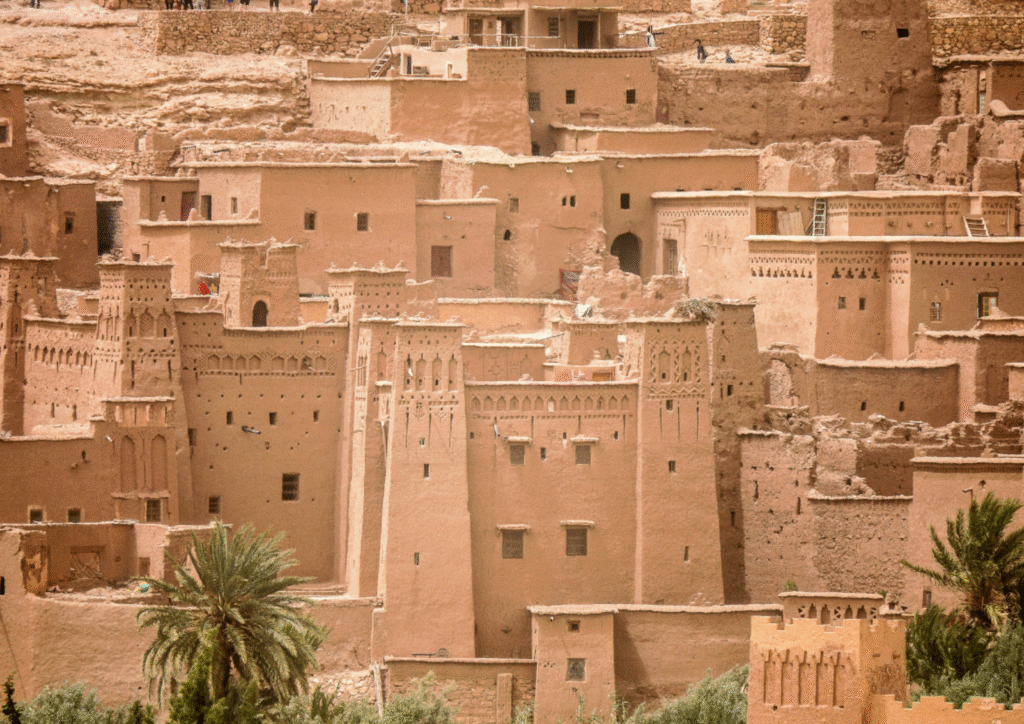
Christopher Nolan filmed key scenes of The Odyssey in Morocco, using the fortified village of Aït Ben Haddou as the city of Troy and the Atlantic coastline of Essaouira for the Trojan Horse sequence. I’ve spent more than ten years guiding travelers through these same landscapes, and I’ve written this guide to separate what’s actually confirmed from what’s simply being repeated online.
Let’s start with a quick summary, then go deeper.
The Odyssey Filming Locations in Morocco at a Glance
| Location | Status | Role in the Film | Nearest City | Visitable Today |
|---|---|---|---|---|
| Aït Ben Haddou | Confirmed | Built out as the city of Troy | Ouarzazate | Yes, year-round |
| Essaouira | Confirmed | Trojan Horse coastal sequence | Essaouira | Yes, year-round |
| Marrakech, Tahannaout, El Haouz | Reported | Additional scenes, details unconfirmed | Marrakech | Yes |
| Atlas Studios | Not confirmed for this film | Commonly misattributed; not verified | Ouarzazate | Yes, as a general studio tour |
| Sahara dunes near Merzouga | Not a filming location | Popular itinerary extension only | Merzouga | Yes |
What Is Christopher Nolan’s The Odyssey? (Quick Answer)
The Odyssey is Christopher Nolan’s 2026 adaptation of Homer’s ancient Greek epic, starring Matt Damon as Odysseus, Anne Hathaway as Penelope, and Tom Holland as Telemachus. The film was shot on IMAX 70mm across six countries and territories over a 91-day production, with Morocco standing in for the ancient city of Troy and parts of the Mediterranean coast.
The Odyssey (2026): Cast, Release Date, and Premise
The film opened in theaters on July 17, 2026, and quickly became one of Nolan’s biggest global openings. Alongside Damon, Hathaway, and Holland, the cast includes Zendaya, Robert Pattinson, Charlize Theron, and Lupita Nyong’o.
The story follows Odysseus on his ten-year journey home after the fall of Troy, staying close to Homer’s original structure while giving Nolan room to shoot almost everything practically, on real locations, rather than in front of a green screen.
Nolan is known for preferring physical sets and natural locations over digital recreation, which is exactly why Morocco became such a key part of the shoot.
Why the Film Sparked a Morocco Travel Boom
I started fielding messages about “the Odyssey tour” within weeks of the film’s release. Morocco has hosted film productions for decades, but a Nolan blockbuster reaches a different scale of audience, and international press coverage tends to name-drop locations without explaining how to actually visit them responsibly.
This guide exists to fill that gap: which locations are genuinely confirmed, what you’ll actually see if you go, and how to plan a trip that respects both the landscape and the communities who live there.
Local Expert Insight: In my experience, misinformation about filming locations spreads faster than corrections. Within a month of a major release, I’ll typically see two or three itineraries advertising a location that was never actually used. When you’re researching, look for sources that name a specific scene or sequence, not just a country.
Why Did Christopher Nolan Choose Morocco for The Odyssey?
Nolan chose Morocco for reasons dozens of productions have before him: landscapes that convincingly stand in for the ancient Mediterranean, decades of film infrastructure, and experienced local crews.
Landscapes That Double for Ancient Greece and the Mediterranean
Morocco’s High Atlas foothills, Atlantic coastline, and centuries-old earthen architecture give filmmakers a version of the ancient world that doesn’t need much digital enhancement. Aït Ben Haddou in particular has stood for millennia, its rammed-earth walls carrying the kind of texture and weathering that CGI still struggles to replicate convincingly.
Morocco’s Film Infrastructure and Studio Access
Ouarzazate has earned the nickname “Ouallywood” for good reason. The city and its surrounding region have supported international film productions since the 1960s, and that history means production companies arrive to find soundstages, equipment rental houses, and experienced local fixers already in place.
Local Crews, Permits, and Production Experience
A production the size of The Odyssey depends on hundreds of local hands, from builders who construct temporary set structures that read as ancient ruins to location scouts who know exactly which angles hide modern infrastructure from camera. That expertise comes from decades of Moroccan crews working alongside international productions, which is exactly why filmmakers keep coming back.
Local Expert Insight: A lot of the same construction crews who build temporary film sets around Ouarzazate also work on restoration projects at sites like Aït Ben Haddou during the off-season. That overlap is part of why the temporary structures built for productions tend to blend so convincingly with the real architecture.
Climate, Incentives, and a Country of Contrasts
Southern Morocco offers reliable sunlight most of the year and a dry climate that keeps shooting schedules on track, while decades of government incentives streamline permits for large productions. Add mountains, desert, coastline, and centuries-old architecture within a few hours’ drive of each other, and it’s easy to see why Morocco keeps appearing on major shoots, Nolan’s included.
Every Confirmed The Odyssey Filming Location in Morocco
I’ve marked each location below as Confirmed (verified by multiple independent production reports or official sources) or Reported (mentioned by credible outlets but with less corroborating detail). I won’t pretend a rumor is a fact just because it makes a better headline.
Aït Ben Haddou: The Ancient Kasbah Turned Troy — Confirmed
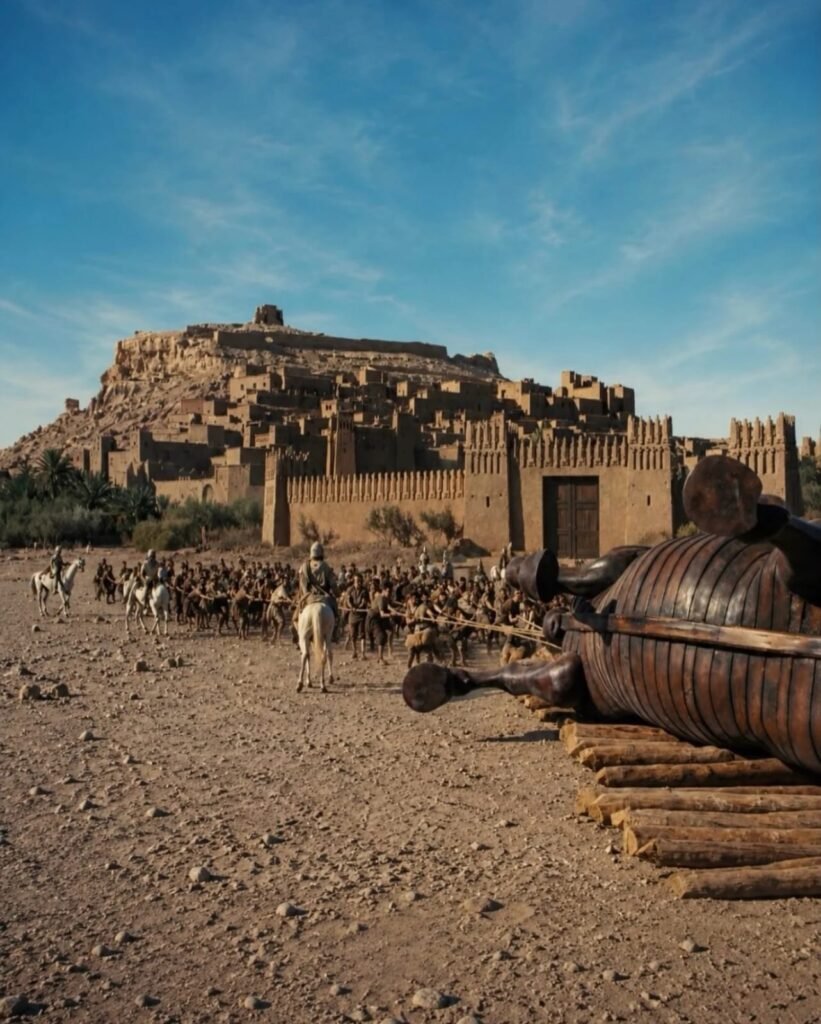
Aït Ben Haddou, a UNESCO World Heritage Site about 30 kilometers from Ouarzazate, served as the city of Troy in The Odyssey. The crew added dozens of temporary structures around the existing ksar, including a recreated “Temple of Athena,” then removed them after filming wrapped. What you see today is the real, permanent kasbah that has appeared in Gladiator, Lawrence of Arabia, and Game of Thrones.
The site sits on the old caravan route between the Sahara and Marrakech, in the foothills of the High Atlas. Climbing to the top grants a view over the Ounila Valley, through narrow lanes, past working artisan shops, and worn stone steps.
Best season: Spring (March–May) and autumn (September–November), when temperatures are comfortable for the climb. Time needed: 2 to 3 hours for a proper visit, longer if you want to photograph it without crowds. Nearby attractions: Ouarzazate town, the Kasbah of Taourirt, and the road toward the Dades and Todra Gorges.
Local Guide’s Tip: Visit Aït Ben Haddou after 4:30 PM. Most day-trip buses have already left by then, the light softens for photography, and you’ll experience the ksar with a fraction of the daytime crowd.
Local Guide’s Tip: The best panoramic view of the kasbah is from across the river, not from inside it. Cross the Ounila early in the morning for the clearest photographs and fewest visitors in frame.
Essaouira: The Atlantic Coast Behind the Trojan Horse — Confirmed
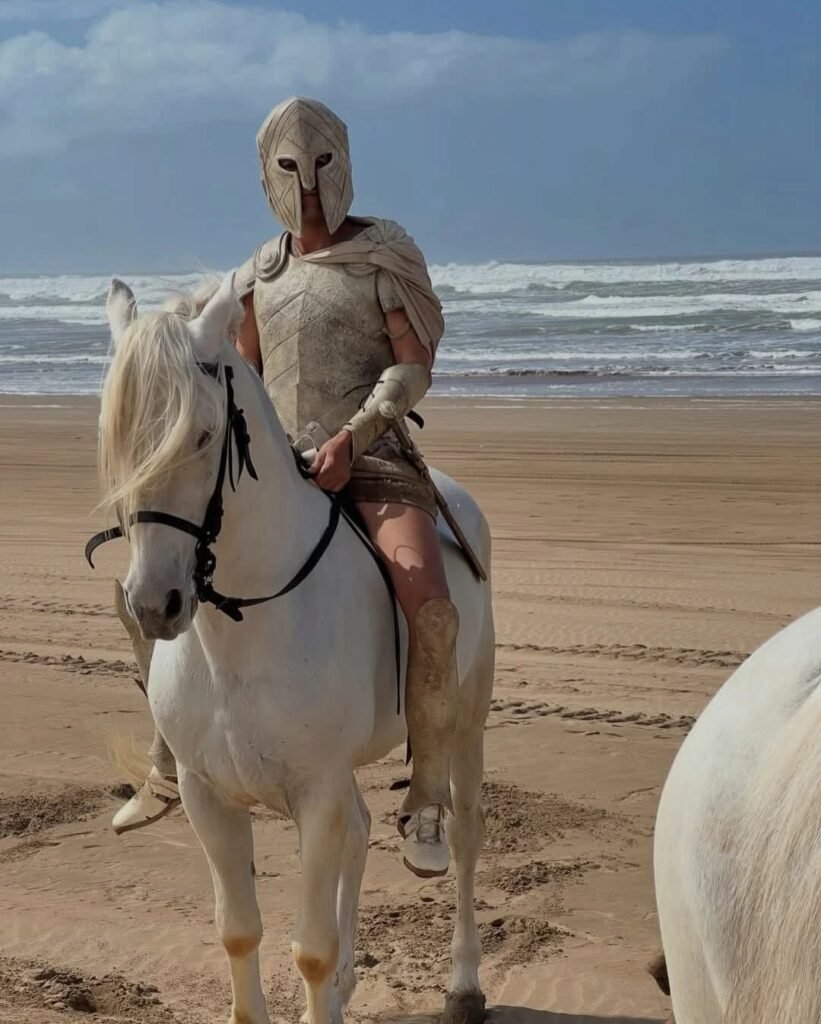
Essaouira’s historic sea walls and Atlantic coastline were used for the Trojan Horse sequence, including the moment the Greeks’ deception is discovered and Odysseus launching his journey home. The city’s centuries-old ramparts and consistent swell gave the production a coastline that reads as both ancient and dramatic on camera.
Essaouira is a working fishing port first, film location second. You’ll find blue fishing boats stacked along the harbor, seagulls circling the ramparts, and a medina that feels far less rushed than Marrakech’s.
Best season: Year-round, though spring and autumn avoid the strongest coastal winds. Time needed: A full day if combined with the medina; a half-day if it’s a quick coastal stop. Nearby attractions: The Skala de la Ville ramparts, the fishing port, and the argan oil cooperatives just outside town.
Local Guide’s Tip: If you’re chasing that dramatic Trojan Horse coastline shot, go to the Skala du Port at sunset. The light hits the ramparts and the Atlantic swell in a way that photographs almost exactly how it looked on screen.
Marrakech and the Surrounding Region — Reported
Production reports, including coverage from BBC’s Countryfile, place additional filming in Marrakech and the surrounding areas of Tahannaout and El Haouz, though specific scenes haven’t been detailed as thoroughly as Aït Ben Haddou or Essaouira, so I’m listing this as reported rather than confirmed. Even without a confirmed scene to point to, this High Atlas scenery just outside Marrakech is worth including in an itinerary on its own merits.
Local Expert Insight: “Reported” doesn’t mean untrue, it means I can’t independently verify the specific scene. I’d rather flag that honestly than dress it up as a confirmed fact. If official location credits or a production featurette confirm more detail later, I’ll update this guide.
Atlas Studios: Setting the Record Straight
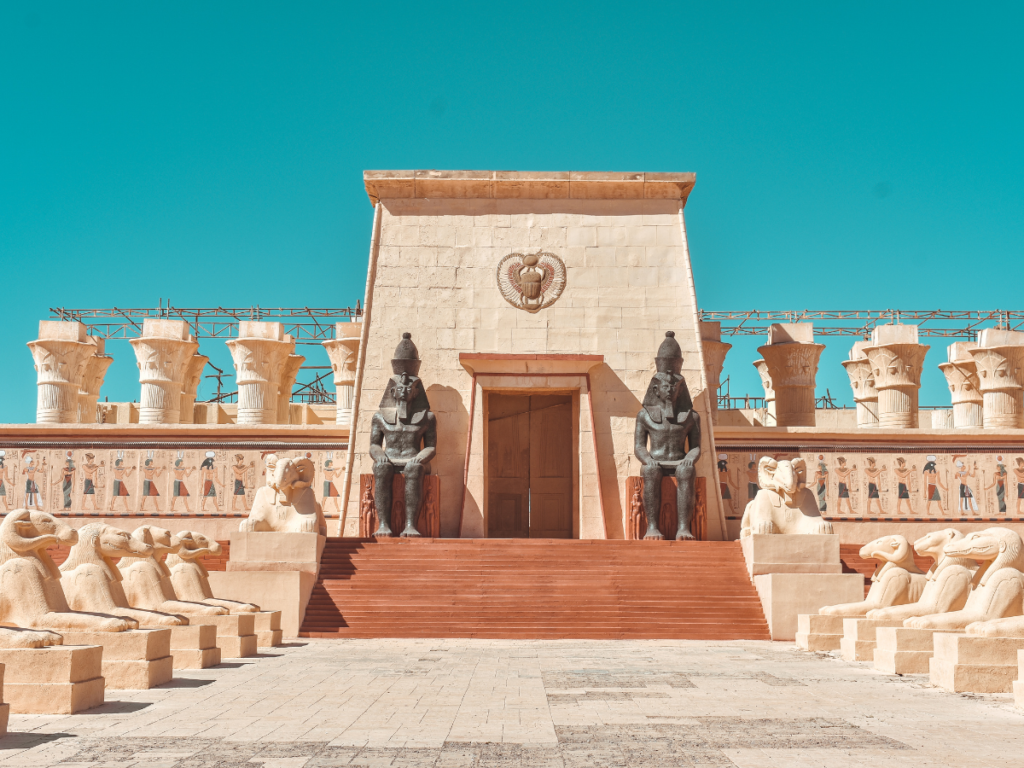
I want to correct something here, because I’ve seen it repeated in a few places online. Atlas Studios, near Ouarzazate, is genuinely one of the largest film studios in Africa and has hosted major productions for decades, but the evidence for The Odyssey points to Troy being built beside the real Aït Ben Haddou ksar, on location, not on a studio backlot.
If an itinerary advertises an “Odyssey set at Atlas Studios,” treat that claim with skepticism. It’s still worth visiting for its own film history, just don’t expect to see Odyssey props or sets there.
Local Expert Insight: I still recommend Atlas Studios to travelers, just not as an Odyssey stop. Its prop warehouses and standing sets from decades of productions tell a broader story about Morocco’s film history that’s worth an hour of anyone’s time.
How to Visit The Odyssey Filming Locations
Once you know what’s actually confirmed, planning becomes much simpler. Most travelers combine Aït Ben Haddou and Essaouira with a broader Morocco itinerary, since both sit within a reasonable driving distance of Marrakech.
Itinerary Options
3-Day Option: Marrakech on day one, the Tizi n’Tichka pass into Ouarzazate with a stop at Aït Ben Haddou on day two, return or onward connection on day three.
5-Day Option (recommended): Adds breathing room around Aït Ben Haddou, a night in or near Ouarzazate, and a Sahara extension that rounds out a Morocco trip in a way most visitors don’t regret.
8-Day Option: Combines Aït Ben Haddou, Essaouira, Marrakech, and one or two imperial cities like Fes, giving time to absorb each place rather than treat it as a photo stop.
Luxury: Pair a private guide and driver with an upgraded desert camp and boutique riads.
Family-Friendly: Slow the pace, break up the Tizi n’Tichka crossing with stops, and avoid cramming Essaouira and the desert into one trip unless you have six or seven days.
Local Expert Insight: The most common planning mistake is treating the Tizi n’Tichka crossing as “just a drive.” It’s roughly three hours of mountain switchbacks with some of the most scenic stretches of your entire trip. Build in at least one roadside viewpoint stop.
| Duration | Locations Covered | Best For | Flexibility | Experience | Starting Price |
|---|---|---|---|---|---|
| 3-Day Private Tour | Marrakech, Ouarzazate, Aït Ben Haddou | Short getaways, layovers | High | ⭐⭐⭐⭐ | $ 399 |
| 5-Day Private Tour | Above, plus Sahara desert extension | Most travelers | Very High | ⭐⭐⭐⭐⭐ | $ 599 |
| 8-Day Private Tour | Above, plus Essaouira and imperial cities | Complete Morocco experience | Maximum | ⭐⭐⭐⭐⭐ | $ 750 |
Exact pricing depends on season, group size, and accommodation level. Ask for a quote tailored to your dates.
Why a Private Movie Tour Offers the Best Experience
I only guide private tours, so treat this section as my honest opinion, shaped by years of watching group itineraries rush past places that deserve more time.
Why Flexibility Matters When Visiting Filming Locations
Fixed-departure group tours run on a schedule set months in advance. If the light is perfect at Aït Ben Haddou at 5 PM, a group itinerary won’t wait for it, and neither will a bus full of other travelers waiting to move on. On a private tour, you decide how long to spend at each stop, whether that’s thirty minutes or two hours, and a long mountain drive can include a coffee stop or a photo pull-off instead of sticking to someone else’s schedule.
Personalized Experiences with a Local Guide
A private guide can adjust the day’s route based on your interests, whether that’s photography, history, architecture, or simply wanting fewer crowds.
Better Photography Opportunities
Photographers in particular benefit from private scheduling. Arriving at Aït Ben Haddou before sunrise, or staying at Essaouira’s ramparts past sunset, isn’t something a group tour timetable typically allows.
Local Expert Insight: I’ve picked up travelers mid-trip who switched from a group tour after realizing their bus only stopped at Aït Ben Haddou for forty-five minutes, barely enough time to climb halfway up. That’s not a flaw in the destination, it’s a scheduling problem built into fixed-departure tours.
How to Choose the Right Private Tour
Not every traveler wants the same itinerary:
- Couples: the 5-day route, with a desert camp night and a slower pace through Aït Ben Haddou at golden hour
- Families: the 5-day or 8-day route with built-in rest days and shorter driving stretches
- Luxury travelers: an 8-day itinerary with boutique riads, a private guide throughout, and an upgraded desert camp
- Photography enthusiasts: any itinerary built around early-morning and late-afternoon arrivals rather than midday stops
- Christopher Nolan fans: the 3-day or 5-day route focused on Aït Ben Haddou and Essaouira, the two confirmed locations
- First-time visitors: the 8-day itinerary, which balances filming locations with imperial cities for a fuller picture of the country
Other Famous Movies and Shows Filmed in Morocco
The Odyssey joins a long list of productions that have used Morocco’s landscapes and film infrastructure over the decades.
| Film/Show | Year | Morocco Location Used | Still Visitable Today |
|---|---|---|---|
| Lawrence of Arabia | 1962 | Ouarzazate region | Yes |
| Jesus of Nazareth | 1977 | Ouarzazate | Yes |
| The Mummy | 1999 | Ouarzazate, Erfoud | Yes |
| Gladiator | 2000 | Ouarzazate, Atlas Studios | Yes |
| Kingdom of Heaven | 2005 | Ouarzazate, Aït Ben Haddou | Yes |
| Prince of Persia | 2010 | Atlas Studios, Ouarzazate | Yes |
| Game of Thrones | 2013 | Aït Ben Haddou, Essaouira | Yes |
| Mission: Impossible – Rogue Nation | 2015 | Marrakech, Fes | Yes |
| The Odyssey | 2026 | Aït Ben Haddou, Essaouira | Yes |
Notice how many of these overlap with The Odyssey‘s confirmed locations. Aït Ben Haddou in particular has become something of a recurring character in its own right, standing in for a different ancient world almost every decade.
Local Expert Insight: Guides who’ve worked in this region long enough can usually point out exactly where a previous production built a gate, a wall, or a tower that no longer exists. Aït Ben Haddou carries an invisible layer of film history that most visitors walk straight past without knowing it’s there.
Best Time to Visit The Odyssey Filming Locations
Best Months and Shoulder Season
March through May and September through November offer the most comfortable temperatures for exploring Aït Ben Haddou on foot and enjoying Essaouira’s coastline without extreme heat or wind. Late October and November bring fewer visitors while still offering pleasant daytime temperatures, a smart shoulder-season window if you’d rather avoid spring crowds.
What to Expect During Summer Heat
July and August bring intense heat to the Ouarzazate region, often exceeding 40°C (104°F) in the afternoon. If you’re traveling in summer, plan Aït Ben Haddou visits for early morning and treat midday as rest time.
Local Expert Insight: If your trip falls during Ramadan, plan around it rather than assuming it won’t affect you. Some cafés and shops in smaller towns near Aït Ben Haddou adjust their hours, and a guide familiar with the local calendar can help you plan meals and stops accordingly.
Travel Tips for Visiting Morocco’s Filming Locations
Getting There: Marrakech as Your Base
Marrakech’s airport has the most international connections, within a comfortable drive of Aït Ben Haddou (around 3.5 hours via the Tizi n’Tichka pass) and Essaouira (around 2.5 hours).
What to Wear and Pack
Layered clothing works best, since mornings and evenings in the Atlas foothills stay cool even when afternoons are hot. Comfortable, closed walking shoes matter more than most travelers expect.
Local Guide’s Tip: Wear shoes with good grip, not just comfortable ones. The narrow stone paths inside Aït Ben Haddou get genuinely slippery after rain, and the incline catches people off guard.
Local Etiquette at the Kasbahs
Ask before photographing local residents, particularly inside inhabited parts of the ksar. A little Arabic or Tamazight goes a long way, even just a greeting.
Local Guide’s Tip: Ask your guide about Amazigh history and architecture while you’re there. Understanding why these buildings were built the way they were makes the visit far more meaningful than photographs alone.
Photography and Drone Rules
Drone use in Morocco requires prior authorization, and flying one without permission at heritage sites like Aït Ben Haddou can mean confiscation. Arrange permits well ahead of time through a local operator if aerial footage matters to your trip.
Safety Tips for Independent Travelers
Both Aït Ben Haddou and Essaouira are well-established destinations with reliable infrastructure. The main safety consideration is the mountain driving between Marrakech and Ouarzazate, manageable but best done with an experienced local driver, especially outside daylight hours.
Local Guide’s Tip: Bring cash when visiting smaller villages around Aït Ben Haddou. Cafés, craft shops, and independent guides in the area often don’t accept cards.
Local Guide’s Tip: Stay one night in Ouarzazate instead of rushing straight back to Marrakech after Aït Ben Haddou. You’ll see the town after the day-trip crowds leave, and you’ll start the next morning fresh rather than facing a long drive at the end of a tiring day.
Quick packing checklist:
- Comfortable, grippy walking shoes
- Layered clothing for temperature swings
- A scarf or light cover for sun and wind protection
- Cash in Moroccan dirhams for small purchases
- A reusable water bottle
- Sunscreen and a hat, even in cooler months
Frequently Asked Questions
Where was The Odyssey filmed in Morocco?
Aït Ben Haddou (Troy) and Essaouira’s Atlantic coastline (the Trojan Horse sequence) are confirmed. Marrakech and the surrounding High Atlas foothills have been reported as additional filming areas, with fewer confirmed details.
Can you visit The Odyssey filming locations?
Yes. Aït Ben Haddou and Essaouira are open to visitors year-round; you’re visiting the real historic locations, not a preserved movie set.
Is Aït Ben Haddou open to the public?
Yes, it’s a UNESCO World Heritage Site with public access and a small entrance contribution toward upkeep.
How far is Ouarzazate from Marrakech?
Roughly 3.5 to 4 hours by road, crossing the Tizi n’Tichka pass through the High Atlas Mountains.
Do you need a guide to visit Atlas Studios?
Atlas Studios wasn’t confirmed as an Odyssey location, but guided tours are the standard way to see its backlot and prop collections if you visit for its own film history.
What other movies were filmed at Aït Ben Haddou?
Gladiator, Kingdom of Heaven, Game of Thrones, and Lawrence of Arabia all used this location before The Odyssey.
Is Ouarzazate worth visiting without a movie connection?
Yes. The Kasbah of Taourirt, the surrounding Atlas scenery, and the town’s film history make it worth a stop regardless of any single production.
How many days do you need for a Morocco movie tour?
Three days covers the essentials; five to eight days allows a more complete Morocco experience alongside the filming locations.
Is Aït Ben Haddou a UNESCO World Heritage Site?
Yes, it was designated in 1987.
How do I get from Ouarzazate to Essaouira?
It’s roughly a 5 to 6 hour drive, typically broken up with a stop in or near Marrakech.
Why Travel With Journey Via Morocco
I’m Jawad, an Amazigh guide who has spent over a decade leading travelers through this exact region, long before any film crew arrived.
I run Journey Via Morocco as a private, no-intermediary operation. When you book, you’re working directly with the person planning and often guiding your trip, not a call center relaying requests to a subcontracted driver you’ll never speak to beforehand.
Every itinerary is built around your interests and pace, and vehicles, guides, and desert camps are chosen for genuine quality, not just convenience.
Local Expert Insight: When you’re comparing operators, ask who will actually be guiding you, by name. A vague answer is usually a sign your trip will be subcontracted out to whoever’s available that day, rather than planned by someone who knows the region firsthand.
None of that requires a movie to justify it. But if The Odyssey is what brought you here, I’m glad to show you the real places behind it, and everything else Morocco has to offer along the way.
Conclusion: Plan Your Own Odyssey Through Morocco
Aït Ben Haddou stood on the edge of the Sahara for nearly a thousand years before a single camera arrived, and it will still be standing long after this film leaves theaters. The reason it convinced millions of moviegoers they were looking at ancient Troy is the same reason travelers have been drawn here for generations: it’s real, it’s lived-in, and it doesn’t need a green screen to feel epic.
You don’t need to be a Christopher Nolan fan to feel that at sunrise over the Ounila Valley, or at golden hour on Essaouira’s ramparts. The film is simply what brought you to the map; what happens once you’re standing there is your own story, and I’ve spent more than a decade helping travelers write it, at their own pace, without a bus timetable deciding how long they get at each stop.
When you’re ready, reach out and tell me your dates. We’ll build something that’s yours, not a copy of anyone else’s itinerary.
Ready to experience the real landscapes behind The Odyssey? Contact Journey Via Morocco today to receive a personalized itinerary and start planning your own cinematic adventure from Marrakech to the Sahara.
