
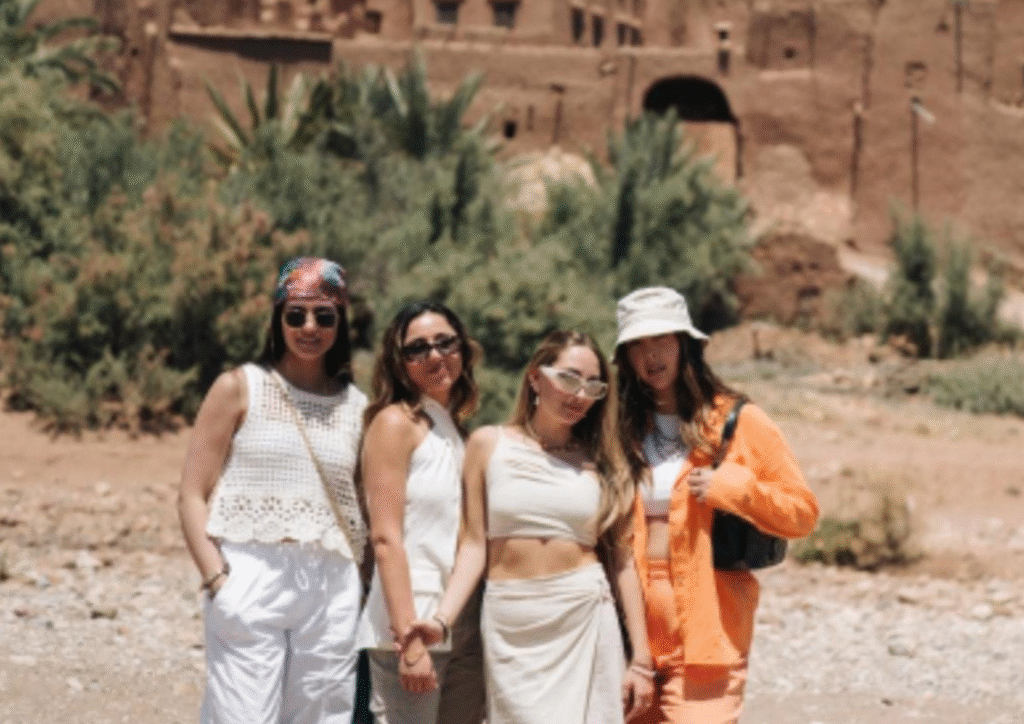
There is a specific moment that stays with me from a family trip I guided two years ago. We were parked at the edge of the Dades Valley, just past the Roses Festival season, when a nine-year-old girl stepped out of the vehicle, looked at the canyon walls folding into the distance, and said nothing for about forty seconds. Her parents had been nervous the whole flight over, wondering if Morocco was “too much” for kids. That silence was the answer.
An 8 day deluxe Morocco trip is, in my experience, one of the most genuinely family-compatible itineraries in the world, but only when it is designed correctly. The route matters. The pacing matters. The accommodation choices matter enormously. And not every stop on the classic Marrakech to Sahara circuit carries equal weight when you are traveling with children under fourteen or teenagers who need more than beautiful scenery to stay engaged.
This article is for families who want to do Morocco properly. Not the rushed coach tour version, not the over-packaged resort week, but a thoughtful, private, expertly guided road journey through landscapes and cultures that will actually mean something, long after the luggage is unpacked.
What Does “Deluxe” Actually Mean in the Context of a Morocco Trip?
The word gets used loosely. In the luxury travel industry broadly, “deluxe” has become almost meaningless, attached to anything with a marble bathroom or a premium airport transfer. In Morocco, however, it can mean something genuinely different, if the operator understands the country.
A truly deluxe Morocco tours is not about five-star ratings alone. Morocco’s most extraordinary accommodations are often small, family-owned riads in medina alleyways that no global hotel chain has reached, kasbah lodges built from rose-red pisé earth in the Draa Valley, or luxury desert camps in Merzouga where the silence at 4 AM is so complete that you can hear your own breathing. These properties exist well outside the international luxury hotel tier. And they are, in every sense that matters, more luxurious than a corporate resort.
For families, deluxe means private. It means a dedicated driver and local guide who adjust the day to your children’s energy levels. It means flexible meals, spacious rooms without shared walls, and an itinerary that has room to breathe. The scenic Sahara route from Marrakech covers genuinely varied terrain over eight days, and a well-paced private itinerary allows you to stop when the landscape demands it, rather than chasing a group schedule.
Morocco has evolved significantly as a luxury destination. A decade ago, the high-end segment was thin. Today, the country sits comfortably among the top tier of culturally immersive luxury travel destinations globally, with a growing infrastructure of private guides, premium riads, and architecturally remarkable desert camps specifically designed for discerning international travelers.
Why Families Choose Private Morocco Travel Over Package Tours
I have spoken with hundreds of families after their Morocco trips. The ones who feel let down almost always share a version of the same story: they booked a group package, the pace was rigid, the children were bored on the long coach segments, and the accommodation felt generic.
The ones who come back glowing tell me something different. They had a private driver who knew where to stop. Their guide adapted the Fes medina walk to thirty minutes instead of three hours when the youngest hit a wall. The riad owner in Erfoud brought mint tea and board games at 6 PM without being asked.
Private Morocco travel addresses the core tension of family travel, which is that adults and children experience the same landscape at completely different speeds. Children need moments of engagement, physical freedom, novelty, and rest, not in a predictable cycle but on demand. A private itinerary accommodates that. A group tour cannot.
There is also the emotional dimension. Parents traveling with children carry a specific kind of pressure. They want the trip to be meaningful for the whole family, not just themselves. They want their children to absorb something real about the world, not a sanitized version of it. Morocco, when approached through local expertise rather than a foreign operator’s packaged version, delivers that authenticity with surprising consistency.
The 8 Day Deluxe Morocco Trip Route, Stop by Stop
This is the core of what you need to understand before booking anything. On an 8 day deluxe Morocco trip running from Marrakech to the Sahara and back, not every stop carries equal value for families. Here is my honest breakdown, based on years of designing and guiding these journeys.
Marrakech, Days 1 and 2
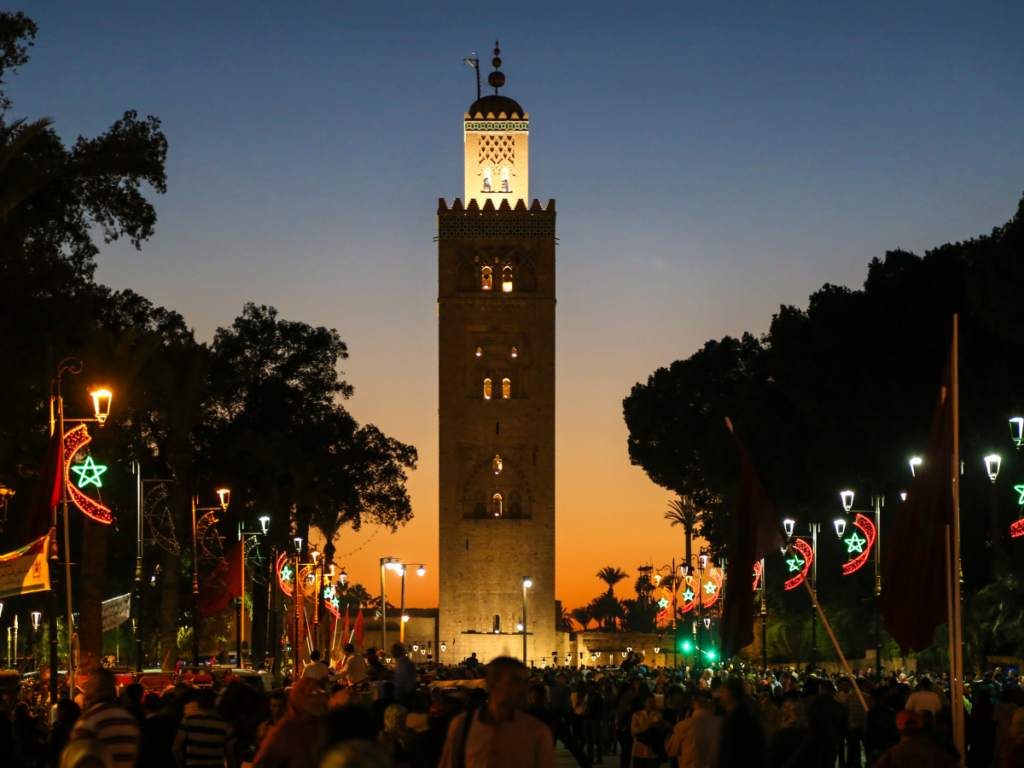
Marrakech is stimulating in a way that requires management with young children. The medina is extraordinary, but it is also genuinely disorienting, loud, and physically demanding. For families, I recommend arriving a day before the road journey begins, staying in a riad inside the medina walls for the sensory experience, and doing the Jemaa el-Fna square in the early evening, around 7 PM, when the food stalls are starting and the energy is festive rather than chaotic.
Day 2 in Marrakech works well with a morning visit to the Majorelle Garden, which children respond to visually, and a private cooking class in the afternoon. The cooking class is, consistently, one of the highest-rated family experiences I see in post-trip feedback. Children who would not eat a tagine at home eat three portions when they helped make it from scratch.
Marrakech is a strong family stop. It sets the Morocco context before the landscape takes over.
Ait Ben Haddou and the High Atlas, Day 3
The drive from Marrakech through the Tizi n’Tichka pass of the High Atlas is, without question, one of the most cinematic road experiences on the continent. For children who have only seen mountains from cable cars or ski lifts, the raw, unguarded scale of the Atlas is a genuine physical shock, in the best sense. The Marrakech to Merzouga roadtrip experience begins here, and it announces itself immediately.
Ait Ben Haddou, the UNESCO-listed ksar that has appeared in more films than most children realize (Gladiator, Game of Thrones, Lawrence of Arabia), is a remarkable family stop. The walk through the fortified village takes about ninety minutes at a comfortable pace, and local guides who specialize in explaining the Berber history to children can make the stories land in a way that a standard commentary cannot.
For families, the overnight here at a quality kasbah hotel is recommended over pressing on to the Dades in one day. The Dades Valley deserves its own morning light.
Dades Valley and Todra Gorge, Day 4
This is, in my view, the single most underestimated stop for families on the entire circuit. The Dades Valley unfolds over roughly sixty kilometers of road between rose-red kasbahs and almond orchards, with the Atlas in the background. It moves slowly and does not demand anything of you. Children who have been in the car for several days respond to this landscape with a kind of calm that surprises their parents.
Todra Gorge, a forty-minute drive from the Dades, is the physical highlight of the trip for older children and teenagers. The gorge walls rise to 300 meters and narrow to fifteen meters at the base. You walk along the riverbed. It is cold, it echoes, and it feels genuinely wild. For adventurous families, local operators offer short via ferrata and gorge walking experiences that add an activity layer to what might otherwise feel like another scenic stop.
Merzouga and the Sahara, Days 5 and 6
The Sahara segment is what most families book the trip for, and it delivers. But the delivery depends almost entirely on the quality of the desert camp.
The Marrakech to Merzouga with private driver route over three days is the classic approach, and it allows for the kind of pacing that transforms what would be a tiring journey into a genuine road adventure. Arriving in Merzouga in the late afternoon, when the Erg Chebbi dunes shift from orange to deep rose in the falling light, is a moment that requires no explanation and no commentary.
The Morocco luxury desert camp experience, when done correctly, means private or semi-private tents with proper beds, en-suite bathrooms, and heated interiors for the cold desert nights. For families, the critical detail is the camel trek to the camp, which should be scheduled for sunset rather than midday. Children handle the forty-five minute ride well at that hour. The Berber music around the fire, the dinner under the stars, and waking before dawn to see the sunrise from the top of a dune: these are the moments that travel builds memories from.
Fes Medina, Day 7 and 8, and Why Families Respond Differently Than Expected
Fes is the city that I approach most carefully when designing family itineraries. It is Morocco’s most complex urban experience, a medieval medina of roughly nine thousand streets, which no mapping software can fully render, where the tanneries smell strongly of pigeons and natural dye, and where the visual density is near total.
Families with children over ten typically love it, with proper guidance. The leather tanneries, seen from the terrace above, are spectacular. The Medersa Bou Inania, with its carved plasterwork and cedar latticing, shows a level of craft that children who have never considered architecture tend to look at very carefully. The Marrakech to Fez desert drive, which cuts through the Middle Atlas on a route that passes cedar forests with wild Barbary macaques, is itself a half-day highlight.
For younger children, I recommend a focused two-hour medina walk with a specialist guide who knows how to pitch the history at their level, followed by a broader afternoon at the riad with a traditional Moroccan cooking or pottery experience. Full-day medina immersion with children under eight is not something I would recommend without very specific timing and energy management.
Which Traveler Personas Get the Most From This Route?
Not every family arrives at Morocco the same way. Over the years, I have noticed that this 8 day deluxe Morocco trip resonates most deeply with specific types of travelers.
Families who have done the standard European summer vacation circuit and feel it has lost meaning. They come to Morocco wanting their children to experience something that cannot be replicated on a resort terrace: a conversation with a Berber artisan, a night under stars so dense they look poured, a morning call to prayer echoing across a medina they walked through the evening before.
Families with older children, twelve to seventeen, who are increasingly difficult to impress. Morocco’s visual and cultural intensity consistently cuts through teenage detachment. The Sahara does it almost universally.
Parents who were adventurous travelers before children and have been waiting for the right moment to return to that version of travel. This itinerary is that moment.
And couples traveling with extended family, grandparents included, for whom the private vehicle, flexible pace, and high-quality accommodation make participation genuinely comfortable across generations.
Why This Route Matters for Cultural Preservation and Responsible Travel
This is something I feel strongly about and do not mention enough in standard itinerary descriptions. When a family chooses a desert roadtrip designed by locals rather than a foreign-operated package, they are making a choice with real economic consequences.
The riads, the desert camps, the Berber guides, the cooperative women’s argan oil cooperative outside Agadir that we sometimes stop at on southern extensions: these businesses exist within Moroccan communities. When the revenue flows to them rather than to international hotel chains or foreign-owned tour operators, the impact on local families, school access, artisan preservation, and community infrastructure is direct and measurable.
Berber cultural experiences built into a private itinerary, a bread-baking session in a traditional home, an evening learning the rhythms of Gnawa music, a morning in a mountain cooperative making natural dye, are not tourism activities in the typical sense. They are exchanges. Families who engage with them come home changed in ways that a hotel pool or a city walking tour does not produce.
Morocco’s cultural fabric is irreplaceable. Authentic Morocco experiences, when designed with intentionality, protect it rather than commodify it.
How an 8 Day Deluxe Morocco Trip Compares Globally
Parents researching family trips at this price point often compare Morocco to Southeast Asia, East Africa, or Southern Europe. Each has legitimate strengths. But the 8 day deluxe Morocco trip occupies a competitive position that is genuinely distinct.
Unlike East Africa safari travel, Morocco’s cultural density is woven into the journey itself. You are not driving between wildlife reserves; you are moving through a living civilization that has been continuous for over a millennium. The Sahara is accessible on this itinerary without a flight, which matters for families with young children who find long-haul connections stressful.
Unlike Southeast Asia, the physical scale is manageable. The time zone difference from Europe and the Americas is minimal. The food is, without question, one of the most reliably excellent in the world for families, with tagines, couscous, fresh bread, and grilled meats that consistently work for children with mixed palates.
Unlike Southern Europe, Morocco is genuinely transformative rather than familiar. The culture is distinct enough to produce the kind of worldview expansion that parents who travel with intention are looking for. And the value at the high end of the market, for a luxury Morocco tour of genuine quality, remains significantly stronger than comparable experiences in France, Italy, or Greece.
For families who want to give their children something real, this is, in my considered professional view, one of the strongest itinerary options in the world right now.
FAQs
Is a private driver necessary for an 8 day Morocco itinerary?
For families, yes. The route covers mountain passes, desert tracks, and medina transfers that require genuine local knowledge. A private driver allows flexible stops, adjusts timing to children’s energy, and removes logistical pressure from parents. It is the single most important booking decision on this trip.
What is the best time of year for a family Morocco trip?
March to May and September to November are the best windows. Spring offers mild desert temperatures and blooming valleys. Autumn brings cooler nights ideal for Sahara camping. Summer temperatures in Merzouga regularly exceed 45°C, which is not suitable for children. Winter works in Marrakech and Fes but mountain passes may close.
What is the best age for children on an 8 day deluxe Morocco trip?
Children from age six upward manage this itinerary well on a private tour. The Sahara suits all ages. Fes medina works better for children ten and older. For ages two to five, shorter daily drives and a rest day or two built into the schedule make it workable. A private itinerary adapts in ways a group tour simply cannot.
Conclusion
An 8 day deluxe Morocco trip works for families when three conditions are met: the route is paced correctly, the accommodation is genuinely high quality rather than simply rated as such, and the guiding is local and expert rather than scripted and generic.
The stops that carry the most consistent family impact, in order, are the Sahara at Merzouga, the Dades and Todra section, Ait Ben Haddou with the High Atlas crossing, and Marrakech with a focused two-day approach. Fes rewards families with older children who can absorb its complexity.
If you are considering this journey and want to design it around your specific family, with the pacing, accommodation, and cultural depth that transforms a trip from pleasant to formative, I would welcome the conversation.
Journey Via Morocco is a licensed Moroccan tour operator specializing in private, culturally immersive travel. Availability for peak season (March to May, September to November) is limited. Early inquiry is strongly recommended.
